Yearly Archives - 2016

TOP 5 Most Interesting Large Sculptures in the World

TOP 5 Most Interesting Large Sculptures in the World

It’s a well-known fact that technology does not stand still, and the fantastic world of fine art is no different. As a result, the technique of creating paintings and large sculptures changes every year. However, among a great variety of traditional, modern, and antique items, there are several absolutely unique large art pieces that occupy a special place in the hearts of art lovers. Here is our top 5 list of the world’s most interesting large sculptures!

1. The Mustangs at Las Colinas

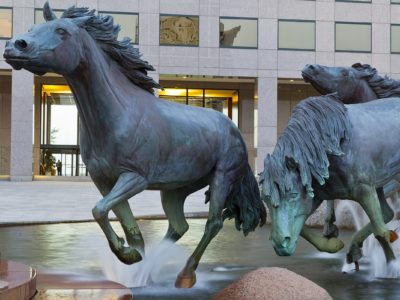
This bronze outdoor sculpture installed in 1984 is actually a group of large sculptures that decorate Williams Square in Las Colinas, Irving, Texas. Created by Robert Glen as a memorial to the evolving culture in North America, it has become an epitome of the unfettered lifestyle, initiative, and drive inherent to Texas in its pioneer days. Today, this art installation represented by nine wild mustangs running through a watercourse is considered the largest equestrian outdoor sculpture in the world.

2. The Force of Nature

The Force of Nature is a series of bronze, aluminum, and stainless steel large sculptures located in the United States, England, Singapore, Monaco, and some other countries. It was created by the Italian artist Lorenzo Quinn, who had witnessed for himself the destruction caused by hurricanes in the Southern U.S. and Thailand. Each outdoor sculpture from this series represents Mother Nature pivoting planet earth around with a piece of cloth. Such a furious and powerful image is another reminder of the false sense of security people hold toward the power of nature.

3. The Engagement

This art installation created by Dennis Oppenheim in 2005 is definitely one of the most unusual sights of Vancouver, Canada. It represents two 30-feet diamond engagement rings made of aluminum, stainless steel, and translucent plexiglass boxes. Such a fantastic illuminated outdoor sculpture, as well as its variations located in Nevada, California, Finland, and Austria, symbolizes the power of love and the strength of marriage.

4. Nelson Mandela Capture Site

This impressive outdoor sculpture created by Marco Cianfanelli to honor the South African politician Nelson Mandela is placed near the town of Howick, KwaZulu-Natal, South Africa. The beauty of this art installation consisting of 50 laser-cut stainless steel columns cannot be seen at a glance. However, if you look at it from the right angle, you will see a profile portrait of Mandela. It’s interesting that this piece of modern large sculptures is positioned close to the spot on the road where this great man was captured in 1962.

5. De Vaartkapoen

The last on our list of the most interesting large sculptures in the world is the De Vaartkapoen statue created by the talented Belgian artist Tom Frantzen in 1985. Such a humorous outdoor sculpture of a toppling policeman illustrates the famous cartoon serial about Quick and Flupke. Located in Molenbeek, Belgium, this unusual and a little bit childlike piece of art represents an idea of overthrowing authority.


Fine Art Shippers

How to Pack Your Freight for Shipping

No one wants to open the long-awaited package just to discover that its contents were damaged during transportation. Unfortunately, this sometimes happens, and the main reason for this is improper packing. To help you avoid the disappointment, we have prepared a few tips you can use to protect your freight.

Packing Tips, or How to Protect the Freight

1. Business shipping

When it comes to business shipping or shipping multiple and larger items, it’s better to palletize your freight for extra security. If you cannot do it yourself, turn to professional shipping and packing company for help. At Fine Art Shippers, we offer packing and crating services for any need, from crating pallets to shrink wrapping.

2. Furniture shipping

Forget about shipping your furniture without disassembling it first. Otherwise, it can be easily damaged. For instance, you have to remove cushions from sofas and legs from tables and crate each of these details separately.

3. Electronics shipping

The best packaging you can use to protect your electronic devices during transportation is their original packing materials created specifically for them. Thus, if you are going to ship your TV, DVD player, and so on – use its original packaging when possible.

4. Boxes

If you want to protect your freight, you should use only thick and sturdy boxes able to withstand long distance transportation. In this way, look for extra thick or double wall boxes with several layers of protection.

5. Packing supplies

No matter the contents of your freight, make sure you use only high-quality packing supplies. Moreover, don’t forget about bubble wrap, foam peanuts, packaging chips, and other packing materials to cushion items. However, do not overfill the box!

6. Shipping fragile items and unbreakables

The best way to protect your treasures is to pack each item separately. In case you cannot do it, at least, separate breakables from unbreakables. Make sure, all fragile items, like dishes, glasses, and fine art pieces, are put in separate boxes/containers. Use bubble wrap for wrapping and limit their movement within the boxes as much as possible. Seal each box with high-quality packing tape.

7. Shake test

Once you pack the box, give it a shake. If the item is still moving around – the package is not secure. Add more packing materials and pass the shake test once more.

Follow these simple freight tips, and your items will arrive at the destination safe and sound! However, if it comes to valuable fine art objects, large sculptures, and antique pieces, turn to Fine Art Shippers for help! We provide professional customized packing and crating services and guarantee the safe shipment of your possessions across the US and internationally. Whatever you need to ship – Fine Art Shippers will find for you the smartest, safest, and, what is also very important, the most economical solution. Call us today!

Fine Art News

Fine Art News

Sotheby’s is going to launch Museum Network for art content created by and about the leading museums from all over the world. The antique engraving was found at the flea market in France. The Gagosian Gallery failed to pay New York State sales taxes on over $4 million. David Bowie’s art collection will be displayed for the first time. This is the most talked-about fine art news at this moment! So let’s take a closer look at each of them!

International auction house Sotheby’s launches Museum Network

The new Sotheby’s digital hub scheduled for August 29 is intended to entice digital natives with unique video content created by such museums as London’s Tate Modern and New York’s Metropolitan Museum of Art. Except for these renowned museums, some of the famous institutions founded by private art collectors, including Los Angeles’ Petersen Automotive Museum and Moscow’s Garage Museum of Contemporary Art, will also share their video content through Sotheby’s Museum Network. Besides, the auction house is planning to create its own series about the world’s leading museums and art collections starting with the 13-part series dedicated to the Duke of Devonshire’s art collection and Chatsworth House.

Antique engraving by Albrecht Durer was found in France

As you know, lots of fine art pieces were lost during World War II for various reasons. One of them is a beautiful copperplate engraving created in 1520 by German Renaissance artist Albrecht Durer. However, not so long ago, this almost 500-year-old artwork titled “Maria Crowned by an Angel” suddenly appeared in France. It was bought at the flea market by an art collector for just a few euros. What’s more, the new owner, who preferred to remain anonymous, has recently donated this antique engraving to the Staatsgalerie Art Museum in Stuttgart so that soon it will be displayed to the public.

The Gagosian Gallery must pay $4.28 million to New York State

The Gagosian Gallery is a successful contemporary art gallery known throughout the world that is directed and owned by Larry Gagosian. According to the New York State attorney general’s office, one of the gallery’s affiliates located in California failed to pay sales tax on nearly $40 million in art sold and shipped to customers in New York over the last 10 years. The investigation has concluded that now they have to pay $4.28 million in back taxes. The Gagosian Gallery has accepted the attorney general’s decision and is ready to pay the specified sum.

David Bowie’s private art collection will be displayed before the auction

David Bowie’s art collection that includes paintings, sculptures, and other objects of fine art will go under the hammer at Sotheby’s in early November. However, before the auction, it will be introduced to the public in London, Los Angeles, New York, and Hong Kong. This unique art collection that has never been displayed before consists of a broad range of artworks, most of which belong to the modern and contemporary art streams. Among the highlights are “Head of Gerda Boehm” by Frank Auerbach, “Air Power” by Jean-Michel Basquiat, and “Witness” by Peter Lanyon. The whole collection is expected to bring about $13 million.

Art Packing Supplies: Do’s and Don’ts

Art Packing Supplies: Do’s and Don’ts

Safe shipping of fine art pieces largely depends on the quality and type of packing supplies you use. There are actually lots of packaging materials in today’s market so choosing the most appropriate ones is not a problem anymore. However, whether you are shipping fragile items or large art pieces, you should consider the following do’s and don’ts to know exactly what packing supplies and materials you need. Here goes!

Art packing supplies you DO need:

1. Foamcore

Foamcore or foam board is a lightweight and easily cut material used for safe shipping, packing, moving, and storage of flat fine art pieces. It is available in different degrees of thickness and can be purchased at almost all frame, craft, or art supply stores.

2. Acid-free paper

PH-neutral, acid-free paper of archival quality is a must-have for all those who want to protect their artwork from being damaged during moving and storage. The fact is that this packaging material won’t have any chemical interaction with fine art pieces it contacts, and, therefore, it is just perfect for wrapping. Moreover, we recommend you to use glassine that is not only PH-neutral but also grease, water, and air resistant.

3. High-quality packing tape

When we say high-quality packing tape, we mean it. In this way, when choosing packing tape, pay attention to whether it can ensure fully sealed seams and protect the package contents from moisture getting in.

4. Bubble wrap

Bubble wrap is one of the best options when you need reliable packing supplies that can be used as filler or padding. There are two main reasons for this. Firstly, bubble wrap prevents the movement of your artwork within the packaging, and, secondly, it cushions it in case of impact.

5. Corner protectors

Cardboard or plastic corner protectors are used to protect corners of flat fine art pieces during transportation. You can buy them in any art or moving supply store or simply make them yourself.

Art packing supplies you DON’T need:

1. Trash bags

Don’t make your artwork look like garbage, especially if you send something to one of your buyers or art collectors. Therefore, if you don’t want to leave a bad impression, never use packing materials that are not intended for shipping art. The same applies to second-hand filler.

2. Tissue paper of non-archival quality

To use anything that is not of archival quality for wrapping is a very bad idea. As it has been written above, if you want to protect your artwork, you need only PH-neutral, acid-free paper.

3. Low-quality packing tape

The use of low-quality packing tape can result in packaging being damaged, not to mention that such a tape is additionally more difficult to apply, which makes the packing process more time- and effort-consuming.

In general, always keep in mind that cheap and low-quality packing supplies can eventually cost you much more if your artwork gets damaged. So don’t spare money on high-quality packing materials if you want your packaging to arrive at its destination in safe and pristine condition!

Fine Art Shippers

TOP 5 New York Art Exhibitions You Can Visit Right Now

With its numerous art galleries and museums, thousands of art dealers, and a great variety of outdoor art installations, New York is rightly called the art capital of the world. So once you are here, make sure to catch the most significant shows! To help you with that, we have prepared a list of the top 5 must-see New York City exhibitions that are held right now in prominent art institutions, from The Metropolitan Museum of Art to the New Museum of Contemporary Art. Here goes!

1. Alma Thomas (Studio Museum in Harlem)

This New York retrospective is dedicated to Alma Thomas (1891-1978), an African-American artist who is usually associated with Abstract Expressionism due to her very distinctive style of painting consisted of short strokes. However, taking into account bright colors and focus on the light, Alma Thomas can also be referred to as Impressionist. The exhibition features paintings from the artist’s entire career, starting from famous pieces of canvas art drawn from public and private art collections to rare watercolor paintings and examples of modern abstract art. It is on view until October 30, 2016.

2. Turner’s Whaling Pictures (The Metropolitan Museum of Art)

The exhibition is focused on four amazing marine paintings created by a well-known British landscape painter Joseph Mallord William Turner better known as J.M.W. Turner (1775–1851). Each of them represents a certain whaling scene painted by the artist near the end of his career. It’s interesting that this New York exhibition not only brings Turner’s whaling paintings together for the first time but also shows their influence on Herman Melville and his whaling epic, Moby-Dick. It can be viewed till August 7, 2016.

3. Saint Clair Cemin: Psyche (Paul Kasmin Gallery)

This retrospective actually presents a single work by a renowned Brazil postmodern sculptor Saint Clair Cemin (born in 1951) who lives and works in Beijing and New York City. The exhibited work dedicated to Classical Antiquity is called Psyche, referencing the myth of Psyche and Eros. This beautiful piece of large sculptures is represented by a 30,000-pound marble boat measuring 16 feet in length that is mounted on a standing armature made of bronze. It is on view through August 19, 2016.

4. The Keeper (New Museum of Contemporary Art)

The Keeper is a unique exhibition dedicated to the act of preserving important paintings, images, works of fine art, and other precious objects. It is represented by lots of imaginary art collections, museums, and assemblages to demonstrate the technique of displaying art and the devotion of those who create such sanctuaries for antique and fine art objects in real life. The show can be visited until September 25, 2016.

5. Peter Piller: Erscheinungen (Andrew Kreps Gallery)

This New York exhibition represents a retrospective of the latest works of a well-known German artist Peter Piller (born in 1968) who is known for appropriating different archival images and photographs from magazines and newspapers to explore the relationship between disparate images. However, the current New York exhibition is focused on the portrayals of women in advertising Piller photographed himself during his countless trips. It is on view until August 19, 2016.

Fine Art Shippers

Tips on How to Pack a Painting for Shipping

Whether you are going to ship a stand-alone canvas or a framed print, the last thing you need is your package being damaged during transportation. Unfortunately, this sometimes happens largely due to not following the basic rules of safe packing, handling, and couriering. For this reason, if you want to protect your artwork, make sure you have all of the needed packaging materials, tools, and a reliable art courier as well. Take advantage of the useful tips we have prepared in order to help you pack your painting the way it should be. However, please note that the following guide cannot be used for shipping high-valued and Old Master paintings. In such a case, you will need professional packing services provided by fine art shipping companies.

So, if you want to ship a reasonably sized painting securely and safely, first of all, make sure you have all of the following material and tools:

  • Good-quality cardboard box (it’s better to use a 3-ply corrugated cardboard box)
  • Foam board or bubble wrap
  • Foam sheets
  • Plastic bags
  • Special packing tape or sellotape
  • Stanley knife or scissors

Step 1: Protect the glass

In case you need to ship a glass framed artwork, start with deconstructing the frame. It should be done to protect the glass and the artwork itself against scratching. Use thin foam sheet for wrapping and then reconstruct the frame.

Step 2: Protect the frame

Use plastic corner protectors to protect the most vulnerable parts of the frame. This step is optional and doesn’t need to be used for stand-alone pieces of canvas art.

Step 3: Protect from dust

No matter what painting you are packing for shipping, you need to protect it from dust and damp. It’s quite easy to do. Just use a plastic bag for wrapping your artwork. Once completed, seal the package with the strong packing tape or sellotape.

Step 4: Protect the artwork

Use foam board to make a sandwich. You will need to cut out two blocks of the same size as your artwork. In case you don’t have foam board, you can also use bubble wrap instead of it. Once your painting is “sandwiched” in foam or neatly wrapped in bubble wrap, use packing tape or sellotape to seal it.

Step 5: Prepare duplicate documents

Whether you prepare your artwork for international shipping or shipping across the country, don’t forget to prepare copies of all the needed documents. You have to put them inside the packaging together with the artwork. These may include a packing list, customs documents, shipping labels, your business card, and so on.

Step 6: Place your package into the box

Place your wrapped package together with the duplicate documents and labels into the cardboard box of good quality. You can also fill the space around it with foam peanuts, packaging chips, or another packing material.

Step 7: Seal and label the box

Seal the box with strong packing tape to ensure it is robustly secured. Pay special attention to the corners. Don’t forget about all necessary shipping, delivery, and unpacking labels.

Step 8: Choose a professional art shipping company

If you want your package to be delivered in its pristine condition, use services of a reliable art shipping company, like Fine Art Shippers. Our professional team of experts will take care of your painting and your satisfaction!

Art Shipping Services from Fine Art Shippers

Fine Art Shippers: Best Services at Affordable Prices

If you have art to ship, you are in the right place! Fine Art Shippers ship, pack, crate, store, and install antique and fine art pieces of any size. Located in the heart of New York City, in convenient proximity to Newark, LaGuardia, and JFK airports and the seaport of Elizabeth, we are the best choice for people who need to ship art across the USA and internationally. Our customer base includes museums, art galleries, art dealers, private art collectors, and artists from all over the world. Moreover, all professional services provided by Fine Art Shippers are available at very affordable prices. This simply means that turning to us is a wise decision for all those looking for the customized approach, high quality, and the lowest possible cost! Our services include:

Local and international shipping

No matter whether you need to ship art across the USA or internationally, our highly trained staff is ready to pick up your possessions in any city, pack them safely to make sure everything will arrive in perfect condition, and deliver your fine art pieces wherever you want. We are always on hand to ship art from individual items through to whole art collections.

Packing and crating services

We have many years of experience packing and shipping art, as well as other antique and collectible pieces, all over the world. Our team of professional art handlers, packing specialists, and carpenters do their best to provide maximum protection for every particular item so that it remains in its pristine condition throughout transit. Furthermore, for the most valuable and fragile art pieces, we offer high-quality custom crates that provide additional protection against impact, vibration, and shock. Even the most demanding customers will be satisfied with our work!

Art storage

Secure art storage is an integral component of the art transportation process. Therefore, we have equipped our warehouse with a sophisticated alarm system, fully automated fire sprinkler system, and modern security system that guard your precious possession 24/7. You can entrust us with the most valuable piece of art, as we guarantee that it will be stored safely under our full responsibility.

Art installation

If you want your art installation to be moved and installed in compliance with all fine art handling standards, you definitely need professional moving services provided by Fine Art Shippers. Turning to us for help with your artwork transportation and handling problems, you may rest assured that the entire art installation, no matter its size, will maintain its integrity and artistic appeal. Besides, we can also offer collection management and collection design services provided by our reliable partners.

Except for professional shipping, packing and crating, art storage, and art installation services, we can also help you with piano and grands moving, hand-to-hand courier delivery, furniture moving, international insurance, art appraisal, and more. Fine Art Shippers offer a wide range of services for any taste and need – everything at an affordable price suitable for all budgets!

Choosing Modern Art for Your Collection

Choosing Modern Art for Your Collection

They say that many people make mistakes trying to invest in modern art just because they don’t understand it, hence the widespread prejudice that pricing in this market defies the laws of logic and common sense. However, it’s not the case! So how to make the right choice when buying works of modern and contemporary art? There are actually several important things to consider before making such an investment.

  1. History

It can be quite difficult for novice art collectors to assess a particular artwork at a glance as this process requires extensive knowledge about its author, context, elements of artistic technique, and other important things. Therefore, if you want to understand modern art, start with learning its history. However, in case you have no time for specialized courses, you can always use the services of a professional art dealer or an international expert who can easily help you make the right choice.

  1. Own impression

If you really like a particular work of modern art, buy it with confidence! Sometimes it’s the main deciding factor for even the most experienced art collectors. However, if you have any doubts, it’s better not to hurry. Take your time and think about it at least a day. If you still want to buy it the next day, then go back and do that. Always follow your heart!

  1. Budget

How to determine a budget? First of all, visit your local museums of modern art, galleries, exhibitions, and art fairs. This will give you an idea of the average cost for different kinds of art. Try to understand what exactly affects the pricing. The most common factors usually include expenses for materials, especially if it comes to large sculptures or an art installation, time spent on the creation, and the popularity of the author.

  1. Forms of art

Think about different kinds of modern art. Which one will better suit your home’s interior design and fit your budget? What’s more, when choosing a piece of art, you should also consider whether you have enough space for its storage or you will need a special art storage facility. For instance, people often start their art collections with the smallest and most affordable pieces, like graphics and photography. The next step of collecting includes paintings, sculptures, and, finally, art installation.

  1. Uniqueness

Another important factor to consider is the uniqueness of the chosen artwork. It goes without saying that items created in a single copy or limited edition are valued much higher than those existing in many copies. This choice depends only on your aims and budget.

In this way, if you want to start your own collection, carefully think about all of the above. Learn the history of modern art and listen to your heart – this is the only way to make the right choice. Moreover, you can always turn for professional help or ask for advice. Lastly, don’t forget that even if you cannot afford to buy one of Picasso’s amazing paintings, there are lots of other talented and serious artists, whose works are also worthy of your attention.

How to Pack Collectible Glassware for Safe Shipping?

How to Pack Collectible Glassware for Safe Shipping?

Everyone knows that glassware is very fragile and, therefore, should always be packaged carefully, especially when it comes to international shipping. However, there are still people who don’t take the time to do it right. As a result, lots of rare collectibles and antique pieces of glass are damaged every year while this can be easily prevented. The fact is that shipping fragile items, including glassware, porcelain figurines, valuable pottery pieces, and other fine art collectibles, is a delicate process that requires extra care and much attention at every stage. One of such stages is certainly packing. In this way, no matter whether you are going to ship your family heirloom to your daughter or an expensive piece of antique glass to your customer, make sure that everything is done properly. So how to pack collectible glassware? Just follow these simple steps!

Steps for packing glassware for safe shipping:

1. Wrapping

First of all, take care of the most delicate areas like bases and handles. Wrap each of them with bubble wrap. After that, wrap the whole piece of glass with several other layers of bubble wrap and secure it with special packing tape. Do not overdo it, as a too-tight wrapping can also cause damage. Repeat the same procedure with all other glass objects of your art collection. 

2. Inner box

Use a sturdy cardboard box that is just a little bit larger than the item being shipped. Place the wrapped object within the box and surround it with bubble wrap, foam peanuts, or other packing material. This is required to prevent the item from moving around inside the box in transit. Seal the box with packing tape.

3. Outer box

Place the inner box inside the larger one and fill the space around it with more bubble wrap, foam peanuts, or other packing material. Make sure the smaller box with your piece of glass is secured enough and won’t jostle around within the larger box during shipment.

4. Identification notes

Place a packing list, your business card, invoice, note with your address and “return to” information, or any other identification you need in the package before sealing it.

5. Sealing

Use durable packing tape to seal the box. Pay special attention to its bottom edges, as they should be secured even better than the top of the box.

6. Labeling

Write your name, complete address, instructions on how to open the package, and all other information necessary for shipping, delivery, and unpacking directly on the box. You can also use special stick-on labels for that. Moreover, don’t forget about other important shipping labels, like “Fragile,” “Handle with care,” “This side up,” “Top load only,” and so on.

This box-within-a-box packing method is the most reliable one used for shipping fragile items. However, if you need to transport a truly unique collection of antique glassware, it is better to use professional shipping services specializing in the local and international transportation of fine art pieces. At Fine Art Shippers, we will take care of your precious possessions providing them with the protection they need – and all this at an affordable price!

How to Store Pottery?

How to Store Pottery?

No matter whether you have antique pieces of pottery or just beautiful creations by your children from the school year – you should treat them all with precision and care, especially when it comes to their moving and storage needs. In fact, any pottery collection deserves as much attention as any other collection of fine art. Let’s see why!

Fine Art Pottery

There are four basic categories of pottery: porcelain, ceramic, stoneware, and earthenware. The main difference between them lies in the clay used in the process of creation and the temperature needed for firing. The term “fine art pottery” can be applied to any of these categories, as history knows many examples of important and valuable pottery pieces, from small, fragile items to large sculptures. Some of them you can see in the world’s best museums, such as The Metropolitan Museum of Art (New York), The Museum of Modern Art (New York), The Victoria and Albert Museum (London), The Hermitage (St Petersburg), The Louvre (Paris), The American Museum of Ceramic Art (Los Angeles), The National Museum of Modern Art (Kyoto), The Schein-Joseph International Museum of Ceramic Art (New York), and others.

Where to Store?

The first thing to remember is that any category of pottery can be easily damaged because of sudden or frequent changes in humidity and temperature levels. For this reason, never store your beloved collection of fine art pottery in even the most reliable self-storage unit or garage. Use a special climate-controlled storage room or at least your living area for its preservation.

How to Prepare Your Pottery Art Collection for Storage?

  • Cleaning

If you have unglazed and unfinished pottery pieces – dust them carefully before packing. As for the glazed and finished items – you can wash them gently with soap and warm water. Never use chlorine bleach! Moreover, before attempting to clean valuable items, try your cleaning method first on an inexpensive pottery piece.

  • Wrapping

Use a clean, soft cloth (for example, muslin or linen) or acid-free paper. Then carefully wrap each piece with bubble wrap.

  • Packing

If you are going to store your collection in a box, lay two or three layers of bubble wrap on its bottom first. Place the wrapped pottery pieces inside the box and make sure they won’t rub and knock against each other. Fill the rest of the box with foam peanuts until each item is firmly supported. Finally, add some more layers of bubble wrap on the top and close the box.

  • Storage

Although you can keep your pottery collection together, it is still more safely to store each piece individually. So if you have enough space at home – use it wisely.

Anyway, the most precious and antique pieces of pottery should be stored only in a special climate-controlled storage facility. This is where we can help you professionally. Contact Fine Art Shippers to preserve your art collection for future generations!

Fine Art Shippers

Museums Filled with Antique Treasures

If you love historical treasures as much as we do, you know that there is nothing like visiting museums and other places that are full of original art, antique furniture, and home decor pieces created years ago. Here is our list of the most important American homes from the past, distinguished by their amazing furnishings and collections of art.

Winterthur

Winterthur is a childhood home of Henry Francis du Pont (1880–1969), a famous collector of antique furniture, international expert, and horticulturist. This magnificent 175-room house located in Winterthur, Delaware, was opened to the public almost 60 years ago and now serves as a museum of decorative and fine art. Intended to preserve du Pont’s antique collection that consists of nearly 90,000 items of early American decorative art and furniture, this beautiful manse will easily delight any antique enthusiast. Moreover, Winterthur has a stunning 60-acre naturalistic garden that is considered one of the best in the US.

Winchester Mystery House

Winchester Mystery House, the former home of Sarah Winchester (1840–1922) located in San Jose, California, is an extravagant, bizarre, baffling, marvelous, and at the same time awesome maze of Victorian craftsmanship. It is much more than just another architectural museum – it is a true gem for lovers of mysterious treasures. Here you can find a number of magnificent Tiffany glass windows and many other precious antique pieces that are still part of this unusual 160-room home, not to mention a large collection of Winchester rifles.

Newport Mansions

Newport Mansions located in Newport, Rhode Island are extravagant “summer cottages” from America’s Gilded Age, filled with numerous antique pieces. These fabled mansions, which once were homes to the ultra wealthy, perfectly portray the opulence, glamor, and elegance of a bygone era. Each “cottage” has its own unique personality, but the grandest one is probably The Breakers. This luxurious home with no less luxurious antique furnishings, which belonged to Commodore Cornelius Vanderbilt (1794–1877) years ago, can impress even the most pampered visitor.

Mount Vernon

Mount Vernon located in Mount Vernon, Virginia is a plantation home owned by George Washington (1732–1799) and his wife, Martha. Its diverse collection includes unique antique furniture, sculptures, prints, paintings, clothing, tools, textiles, glass, metals, ceramics, and many personal accessories. You can even see here Washington’s presidential chair and a pair of his dentures that are, by the way, not wooden contrary to the well-known legend.

Monticello

Located just outside Charlottesville, Virginia, Monticello is another excellent plantation home that belonged to Thomas Jefferson (1743–1826). This autobiographical masterpiece of the third President of the United States is filled with interesting antique objects and beautiful works of art, which fully reflect the ideals and personal ideas of Jefferson. It is also interesting that many of the furnishings you can see inside the home were made in Monticello’s own joinery by enslaved craftsmen, making them even more significant in historical terms.

Bayou Bend

Bayou Bend located in Texas is a house museum for American paintings and decorative arts used or made in the US between 1620 and 1876. Initially owned by the famous philanthropist Ima Hogg (1882–1975), it is now an extension of the Museum of Fine Arts, Houston (MFAH). Its amazing art collection of American furnishings, paintings, ceramics, and silver is one of the finest in the world. Moreover, the house itself sits on 14 acres of organically maintained gardens that were intended as outdoor rooms for entertaining and living. The Bayou Bend Collection and Gardens is definitely worth seeing by all connoisseurs of art and antiques!

What You Should Know about Packing Collectible and Antique Items

What You Should Know about Packing Collectible and Antique Items

Safe shipping is always very important, no matter whether it comes to furniture shipping or art shipping. However, it is especially crucial for those collectible and antique items that cannot be easily replaced in case of damage during transportation. For this reason, even if your unique objects don’t look particularly fragile, you should take care of their secure packaging. This is also true for those who have a collection insurance policy, as, most likely, you would rather have your precious artworks than the money paid for them. After all, the damaged antique object can become the end of the family story.

Specifics on packing collectible and antique items for shipping

First of all, you should learn everything about your art collection as each type of collectibles and antiques has its own specifics. Thus, different porcelain figurines require two boxes of the proper size, mirrors should always be positioned vertically when packing into a moving truck, and it’s better to use plastic bags when it comes to vintage clothing and textile. In general, you should take into account different packaging materials, types of containers, and even what else to include inside the box for each particular type of collectible or antique items being shipped. Therefore, if you have any difficulties or questions about secure packaging, consider seeking advice from professional art shipping companies specializing in this field.

How to save on packing materials?

In some cases, you can use recycled packing materials, such as foam peanuts, bubble wrap, and clean corrugated boxes. However, please avoid everything that is soiled or holds an odor, like food wrappers, boxes from feminine products, opened TV dinner boxes, and so on. There is a significant difference between “garbage” and “recycled packing materials.” Moreover, be careful when packing and shipping fragile items and antique pieces as not every box (even the clean one) can be used twice, not to mention that not all artworks can be packaged in recycled materials. Most of them still require specific packing supplies.

When to employ a professional art shipping company?

If your art collection includes fragile, cumbersome, unusual, or unique items, it’s better to order professional art shipping and packing services. This is exactly where Fine Art Shippers can help! We always pay special attention to our clients’ belongings, no matter whether it comes to cast iron collectibles, antique toys, exclusive home decor, dining room furniture pieces, oil paintings, large sculptures, or vintage jewelry. We know like no other that moving art, collectibles, and antiques requires extra care, and, therefore, Fine Art Shippers is among the most experienced and reliable antique and fine art movers. You can easily entrust us with your most valuable pieces as we will treat every item with the finest professional care!

Fine Art Shippers

Unfinished Paintings by History’s Greatest Artists Are Now at The Met

Can unfinished paintings also be complete? This is exactly the question raised by the curators of the New York’s Metropolitan Museum of Art, who have brought together nearly 200 paintings by history’s greatest artists, from Van Gogh to Leonardo da Vinci to Tintoretto. The new fine art exhibition titled “Unfinished: Thoughts Left Visible” explores the difference between finishing and completing the artwork. So let’s find out the reasons why the Renaissance masters, as well as many of the modern artists, left their works incomplete?

The “Unfinished: Thoughts Left Visible” exhibition features paintings that were not completed by masters due to certain circumstances, thus giving us an idea of the process of their creation, and also intentionally unfinished paintings created according to the special non-finito technique used by such great artists as Cezanne, Turner, Rembrandt, and Titian. Approximately 40% of these paintings dating from the Renaissance to the present are drawn from The Metropolitan Museum’s own collection of fine art while others are represented by international and local loans from the world-known museums and private art collections. It is also worth noting that a similar exhibition was held in London last summer. However, New York’s one examines the term “unfinished” in its much broader sense. Moreover, it demonstrates The Met’s unique ability to show the best examples of modern and contemporary art within a unique historical context, combining scholarly resources with a rich fine art collection.

The highlight of the exhibition is one of Vincent Van Gogh’s oil paintings, titled “Street in Auvers-sur-Oise.” This urban landscape was created in 1890, a year of the artist’s death. For today, it is recognized as unfinished, but there is also reason to believe that this piece of Van Gogh’s paintings is just another work created in the non-finito technique. One more perfect example of the “unfinished” works displayed at The Met’s fine art exhibition is “Saint Barbara” by Jan van Eyck, which was created in 1437. The nature of this refined artwork is the subject of much dispute. Some New York and international experts insist that it is a completed drawing with color inspired by manuscript illumination while others claim that it is a drawn preparation for an exquisite unfinished painting.

Frankly speaking, no one can definitely say whether this or that artwork is completed or not, especially given the fact that the non-finito technique has been taken in entirely new directions by such contemporary and modern artists as Robert Rauschenberg, Jackson Pollock, Lygia Clark, and Janine Antoni, who have extended the boundaries of finished and unfinished paintings into both time and space. The “Unfinished: Thoughts Left Visible” exhibition is on view at The Met Breuer through September 4.

How to Choose Art for Your Home?

How to Choose Art for Your Home?

Your home should be a reflection of your character, attitude towards life, and personal style. For this reason, you should surround yourself with beautiful and functional things that speak to you in some way. This applies not only to modern or antique furniture but also to home decor and fine art pieces as well. The truth is that by investing in things you really like, you make your home more harmonious and comfortable. In this way, no matter whether you are choosing modern living room furniture, trying to expand your art collection, or looking for specific fine art pieces for your home, this exciting adventure can become a source of enjoyment for years to come. Besides, there are no strict rules for selecting art for private homes. The key to success is figuring out what exactly you wish to see in your home and how it will fit into your interior design style. Furthermore, your choice should be a result of what you feel about the particular piece of art. Thus, if you do love it – buy it without hesitation! However, there are still some guidelines that can help you make the right choice for your home.

Interior design style

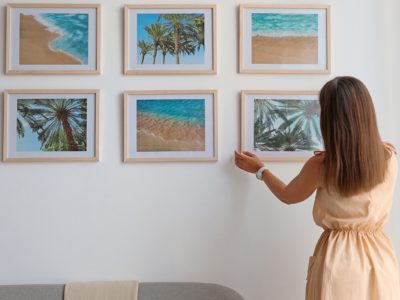
Shape, color, and size are important considerations when selecting works of fine art for your home. The fact is that artworks have much more impact if they fit into your already existing interior design style. Furthermore, you should take into account the furniture and the wall color in your home as they can easily underline the whole art collection or its separate pieces. Besides, don’t forget about general rules for displaying fine art!

Originality

Although choosing something trendy and universally appealing from mass-produced pieces of modern art may seem a good idea, owning a one-of-a-kind, original artwork still has a certain thrill. This does not necessarily mean that you have to purchase multi-million dollar paintings. You can just commission a talented artist able to take your needs and desires into consideration to create something unique for your home.

Affordability

Always consider your budget as the purchase of fine art should not become a road to bankruptcy. For today, there are lots of different places where you can find exceptional artworks without breaking the bank. Thus, you can visit your local galleries and art festivals, check discount and thrift stores, look for something unusual at flea markets and estate sales – each of these options is a good chance to find worthwhile art pieces within your budget. However, you can always try your luck at the fine art auction.

Choosing art for your home is certainly a pleasant experience, but it can also take some time in case you want to find things that will perfectly fit into your interior design style. Just be patient, and you will succeed!

Tips on Choosing the Wall Color to Underline Your Art Collection

Tips on Choosing the Wall Color to Underline Your Art Collection

No matter whether you are a fine art collector or an artist creating modern art paintings, most likely you don’t want to hide your beloved art collection somewhere in the attic of your home. What you want is to enjoy its visual beauty, experiencing emotions and sensations caused by each particular work of fine art. However, it may not be enough! You can enhance the qualities of every separate artwork or draw attention to it by carefully considering the wall color in your home. Here are some tips on choosing the right background for your art collection:

Historical colors

When displaying fine art pieces related to a particular historical era, many museums try to use the same colors that were common at that period of time. You can turn to this idea too when showcasing the art collection in your home. However, do not overdo it! If the color you choose is too intense to be used on all walls, apply it only to focal walls.

Complementary colors

If you want to attract attention to a colorful piece of modern art, the best way to do it is to use a complementary backdrop with the help of the so-called complementary colors. You can find these colors on the opposite sides of the color wheel. For instance, if one of your paintings has a great deal of yellow in it, paint the wall purple for the eye-catching juxtaposition.

Matching colors

If your art collection consists of similar works or you own several paintings by one artist, you can use the colors prevailing in these fine art pieces. Just select the most appropriate one and use it for the background. However, don’t use absolutely the same color – take a tint or a shade of it with a bit of white or black added.

Neutral colors

Neutral colors (white, off-white, gray, black, taupe, beige, and light brown) are probably the most commonly used for showcasing paintings and other fine art pieces. In fact, they are traditionally used by museums and galleries all over the world. Thereby, if your art collection consists of very different works, you should create a uniform background to unite all of the genres, styles, and colors. Walls painted neutral can be the way out. What’s more, such a solution is perfect for all types of private homes. So if you have colorful paintings, collages, photographs, drawings, and other fine art works that you want to display together, take advantage of neutrals. Otherwise, if your art collection includes objects that are in neutral colors themselves, then it’s better to use another, more contrasting background.

Finally, if your art collection is frequently rotated, paint the walls fairly neutral with just several brighter colors on a few focal walls. This will save you time and money! Anyway, if you are not sure about the right color of the background, you can always order professional interior design and art installation services.

How to Store a Small Collection of Art?

How to Store a Small Collection of Art?

Even those collectors who have small art collections need secure and safe storage for their possessions. Thereby, whether your collection consists of prints, paintings, or other fine art objects, make sure you have the appropriate place to store it. Moreover, even if your art collection is safe in your home, there are still situations that require specific storage solutions. For example, you may need professional art storage services in case:

- you are preparing for relocation;

- you are going to leave your home on an extended trip;

- you need all your fine art pieces to be easily accessible when preparing for a gallery exhibition;

- you want to protect your art collection from debris and dust during an extensive remodel of your home;

- hurricanes, tropical storms, or other acts of nature threaten to make landfall next to your home.

No matter the reason, the first thing you should do is prepare your art collection for storage. It is much better to use services offered by professional art shipping companies, but you can also make this on your own. In such a case, you will need blankets or other thick materials that can be used as padding, a shelving unit or a special storage rack, dry and clean cloths to cover your fine art objects, acid-free paper for unframed paintings, and a climate-controlled room that can be used as a storage. Furthermore, before you start packing, make sure you don’t have any jewelry on your hands in order not to accidentally scratch the artworks. Besides, always handle only one fine art object at a time!

Long-term storage

If you need long-term storage for your art collection, the best you can do is rent a unit at a temperature- and humidity-controlled storage facility intended to store objects of art. Such facilities can withstand the wind, flooding, and fire damage, not to mention that they are equipped with modern security and alarm systems guarding 24 hours a day. Professional moving and storage companies can also carefully pack, move, and unpack your items for an additional fee.

Temporary storage

Temporary storage also requires special preparation. For instance, framed paintings and different 3D art pieces should be necessarily wrapped with light padding, clean cloths, or bubble wrap to prevent them from dust. Don’t forget to use acid-free paper between the wrap and the surface of the painting. Besides, always use heavy padding between your fine art pieces and the concrete. Never place them directly on the floor!

Even the smallest art collection deserves attention and respect. So if you want your precious possessions to maintain their value over time, invest in the right types of storage facilities and quality materials. Contact Fine Art Shippers today to avoid any risk of damage!

Fine Art News

Fine Art News

Christie’s New York has announced the spring sale of American Art. The gallery of fake paintings opens in Argentina. Van Gogh’s Ear can be seen in the center of New York. Montana ranch will be turned into a huge center of large sculptures and live music. This is the latest fine art news being talked about by the whole world!

Christie’s American Art Sale in New York

Christie’s New York has announced the spring sale of American Art that will take place in Rockefeller Plaza on May 19. This large-scale auction will include 98 lots including famous paintings by such American modernists like Max Weber, Arthur Dove, and Georgia O’Keeffe, as well as amazing works of 19th-century art by James McNeill Whistler, John Singer Sargent, and Frederic Edwin Church. Furthermore, several private art collections, in particular, the Collection of Lois and Harry Horvitz, Property of H.F. ‘Gerry’ Lenfest, the Collection of J.E. Safra, and the Collection of Kippy Stroud will be presented at the upcoming auction. The highlight of the New York spring sale is one of Georgia O’Keeffe’s well-known paintings, “Lake George Reflection,” which is estimated at $8 -12 million.

Exhibition of fake paintings can be viewed in the Buenos Aires’ Finance Ministry

40 canvas art pieces that look like the works of renowned artists are now on display at an unusual exhibition in the Argentine capital. The most interesting thing is that all of these paintings are actually rip-offs seized in a special raid organized by Interpol that is constantly underlined by the exhibition’s organizers. Some of the copies are very good, but others are clumsily executed. Thus, one of the most notable paintings, which was supposed to be a work by Antonio Berni, represents a portrait with the main figure’s head cut off by the frame. Despite this, the total cost of all canvas art pieces presented at this exhibition is about $600,000. They are on view until mid-May.

Elmgreen & Dragset have brought Van Gogh’s Ear to New York

The Fifth Avenue entrance to the Rockefeller Center in New York has been transformed with a large-scale work of modern art created by artist duo Michael Elmgreen and Ingar Dragset. Van Gogh’s Ear is an outdoor sculpture that takes the form of an ear and a sitting upright swimming pool at the same time. This 30-foot-high construction stands out as a surreal object re-positioned into the surroundings of modern urban life, business centers, skyscrapers, and tourists. Being uprooted from its usual environment, it seems like an absolutely foreign object that has somehow managed to land in the center of New York. This interesting outdoor sculpture can be viewed till June 3, 2016.

11,500-acre park of large sculptures will be opened in Montana

Another outdoor sculpture park opens its doors to the public in the Beartooth Mountains on June 17. Seven large sculptures by such modern artists as Ensamble Studio, Stephen Talasnik, Patrick Dougherty, and Mark di Suvero have been already installed in the rugged canyons outside the town of Fishtail, Montana. Another two works will be placed right before the park opening. One of the most interesting sculptures is Beethoven’s Quartet created by Di Suvero in 2003. It represents a large-scale work of modern art made of steel that additionally produces varying sounds if you strike it with a rubber mallet. It’s interesting that all of the exhibited sculptures are 1-2 miles away from each other so that visitors will hike to them taking special electric shuttles to preserve the pristine landscape. This park of large sculptures and live music is only accessible to 100-150 visitors per day and will close during winter.

Tips for Packing Mirrors

Tips for Packing Mirrors

NY relocation, let alone moving to another city or even country, is a challenging endeavor that additionally requires lots of time in preparation. Certainly, you can facilitate that task by ordering professional moving services that include both local transportation and high-quality packing and crating services. However, you may decide to save some money on self-pack when getting ready for a move. While some of your possessions can be quite simple to pack at home, you may still have difficulties with framed fine art pieces, fragile items, and big mirrors. The latter should be of particular attention not only because they are very delicate but also because of the “break a mirror, face seven years of bad luck” superstition. So let us give you some useful tips that will help you save your valuable items and the prosperity of your family.

Purchase packing supplies

Today, there is a great variety of packing supplies and materials you can easily buy online or in a nearby store. Surely, you may try different improvised home-use items for packing, but the truth is that it is much better to spend some money on quality packing supplies now to save money on potential damage later. You may need the following:

  • polyethylene foam;
  • telescoping box;
  • bubble wrap;
  • packing tape;
  • Styrofoam.

All of these packing supplies are really good buys that practically guarantee a safe move.

Mind the corners

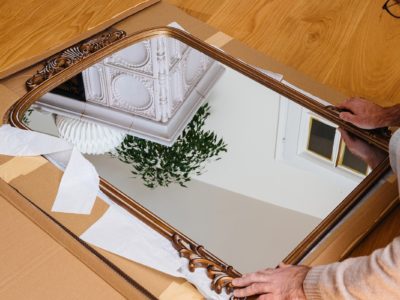
In case your mirror has 90º corners without any ornate frame, it is better to buy special corner protectors at a local shipping company or nearby frame store. You can also simply cut cardboard in order to fit those corners.

X marks the spot

To protect your mirror from shattering if dropped, put several pieces of packing tape over the glass area in an X shape. This will also protect the frame and prevent the glass from spilling into the box if the breakage does happen. 

Wrap the mirror carefully

Use cardboard on both sides of the mirror and then gently wrap it with the help of old sheets and towels. Secure the package with packing tape or bubble wrap. Tape well in full circles to make sure no parts can come loose. 

Never lay the mirror flat

When packing your mirror into a moving truck, make sure that it is positioned vertically. The fact is that mirrors should always be placed on the side, as they cannot take any pressure. So, if you want to prevent breakage, never lay your mirror flat, as well as never place it between too many items that can also cause damage. The best way is to put it between two heavy objects that won’t move around during transportation.

Don’t forget to label it properly

Label the package with “Mirror,” “Glass,” “Fragile items,” or something like that. Make this on all of the sides of the box to provoke attention. Besides, necessarily write which side the glass is so that your mirror can be treated in a proper way. 

Once you are familiar with all of these tips, the technique of packing a mirror is much easier to do. However, if you still have doubts, it’s better to order professional packing and crating services to ensure safe transportation. Please call Fine Art Shippers for any help.

Collection Management Benefits

Collection Management Benefits

People can and actually do collect almost anything. Magnets, works of fine art, antique furniture, vintage cars... This list is endless and depends only on each person’s financial capacity, interests, and preferences. Furthermore, all these things not just provide comfort – collecting them has become pleasurable in itself. The fact is that any collection regardless of its value is our legacy, something special of ourselves that we can leave behind. What is more, we start collecting things early in childhood and continue as we age – from shells gathered on the beach and different fragile items on our shelves to stay-at-home moms keeping track of their children’s toys and accouterments to curating a valuable collection of watercolor and oil paintings in the museum of modern art. Thus, thanks to this tendency, we all practice some form of collection management at one time or another during our lifetime.

All this becomes even more important when it comes to large and unwieldy collections of fine art. In such a case, collection management is crucial not only because you need to know where each object is at any given moment in time but also because of specific tasks related to its care, shipment, and distribution as well. In this way, professional collection management services are vital for dedicated art collectors and those who simply have no time or enough knowledge to properly take care of their fine art collection and its particular needs.

In this way, if you want to know all the details about your precious art objects, then a professional approach is exactly what you need! Here are just a few things you don’t need to worry about anymore if you choose collection management services:

  • Deciding which items from your art collection require conservation services and when exactly this has to be done;
  • Artwork transportation and handling;
  • Providing required resources for financial art appraisal;
  • Implementing proper collection insurance policy and its regular assessment;
  • Tracking fine art pieces during their international or local transportation;
  • Designing and finding appropriate spaces for exhibition purposes;
  • Updating and creating inventories of the collection;
  • Maintaining, designing, and procuring spaces for proper art collection storage.

That is exactly why professional collection management services are so invaluable for all dedicated art collectors and those who don’t know how to organize their acquisitions so that they could look more appealing. At Fine Art Shippers, we can easily help you with artwork transportation, storage, and handling while our reliable partners will take care of your collection management needs. In this way, no matter whether you are preparing for an exhibition, looking for a professional designer, or just want to know everything about your art collection – we are here to help! Visit our Services page to find out how we can assist you or just fill in our free quote to get the best possible offer!

Fine Art Shippers

Famous Fine Art Pieces of Questionable Authenticity

Since ancient times, people have perfectly learned to forge works of fine art. The fact is that thousands of years ago, lots of sacred objects, images, and even large sculptures were required for various rituals and worship of gods. That’s when the first fakes appeared, in particular, due to the fact that original pieces were not enough for all comers. Methods of creation, styles, materials – everything was counterfeited with such skill that even modern international experts and professional art collectors cannot understand whether one or the other fine art object is authentic or not, especially when it comes to paintings. So, let’s look at several famous fine art pieces, the authenticity of which still remains in doubt.

Jackson Pollock’s painting bought almost for free

In 1992, the retired long-haul truck driver Teri Horton bought one of Pollock’s famous drip paintings almost for free. Being unaware of the real value of this masterpiece, she purchased it from a thrift shop in California just for $5 as a gift for a friend. However, the painting appeared to be too large for the friend’s trailer, so Teri set it out at a home yard sale. Fortunately, the work was noticed by a local teacher of art, who pointed to the similarity to Pollock’s painting technique. As a result, it was recognized as authentic, and today, this famous piece of modern abstract art is estimated at about $50 million.

Caravaggio or not?

Another scandal erupted at Sotheby’s. Its international expert committee refused to recognize “The Cardsharps” as authentic Caravaggio. Back in 2006, Sotheby’s evaluators attributed this work to one of the Old Master’s followers, and the auction house sold it for £42,000. However, Sir Denis Mahon, one of the most respected art collectors and historians, stated that it was painted by Caravaggio himself, and its real value was about £10 million. Upon hearing this news, the former owner of the painting, Lancelot William Thwaytes, immediately sued the auction house. Today, “The Cardsharps” is still the subject of international expert debate.

Another mysterious smile by da Vinci

“La Bella Principessa” is a unique painting that until recently was considered the work of an unknown German painter of the 19th century. However, not so long ago, the famous fine art historian and international expert Martin Kemp announced that it was created by Leonardo da Vinci. That was a real shock to the whole world of fine art and especially for Jeanne Marchig who sold this piece of presumably da Vinci’s paintings for $19,000 in 1998. Today, the value of “La Bella Principessa” has increased hundreds of times. Nevertheless, the possibility that it’s just a well-done fake is still discussed.

Rembrandt or his followers?

Everyone in the world of art knows that, despite his fame, Rembrandt led a fairly modest lifestyle, and after he had bought a huge house in one of the most prestigious districts of Amsterdam, the artist went bankrupt. Eventually, he had to move to the outskirts of the city, where he began teaching painting. Today, it’s rather difficult to determine which paintings belong to Rembrandt himself, and which – to his talented students. That is what happened to “The Polish Rider.” While this painting was officially recognized as an original Rembrandt, not all international experts and fine art collectors agree with that.