

Many art owners focus on reducing shipping costs, but the cheapest option is often the most expensive in the long run. Paintings, sculptures, antiques, and collectibles require specialized handling that standard carriers are not designed to provide. Understanding why cheap art shipping leads to losses can help collectors, galleries, museums, and artists make informed transportation decisions and avoid costly mistakes.
Why Cheap Art Shipping Leads to Losses: Hidden Risks Behind Low Rates
Low shipping rates may seem attractive at checkout, but they often come with significant limitations. General-purpose carriers typically prioritize speed and volume over the specialized care required for fine art.
Several factors contribute to the true cost of budget art transportation:
- Nearly 45% of artwork damage occurs during transit.
- Damage claims can exceed the original shipping savings by three to ten times.
- Standard handling procedures increase the risk of impacts, vibration, and improper stacking.
- Delivery delays and routing errors can jeopardize exhibitions, auctions, and sales.
The result is a hidden financial burden that becomes apparent only after something goes wrong.
Common Causes of Artwork Damage
The most frequent losses associated with cheap art shipping include:
- Expensive restoration and conservation costs.
- Insurance gaps that leave owners responsible for damages.
- Cracked frames, punctured canvases, and surface abrasions.
- Exposure to harmful temperature and humidity fluctuations.
- Delays that affect business relationships and client satisfaction.
When valuable artwork is involved, even minor damage can significantly reduce market value and collector confidence.
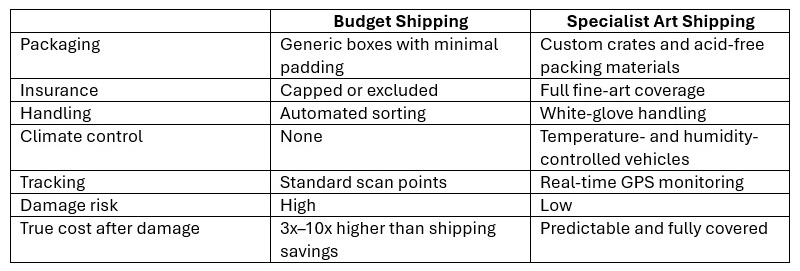
Budget vs. Specialist Art Handling
The Long-Term Cost: Reputational Damage
Many art owners overlook the broader implications when considering why cheap art shipping leads to losses. The financial cost of damaged artwork is only part of the problem. Art transportation directly affects the reputation of artists, galleries, museums, auction houses, and private collectors. A delayed delivery or damaged piece can undermine client confidence, disrupt exhibitions, and negatively impact future business opportunities. For this reason, fine art shipping is about far more than moving objects from one location to another—it is about protecting valuable assets and preserving professional credibility. Investing in specialized art transportation may come at a premium, but it significantly reduces the risks that can result in far greater financial and reputational losses.
FAQs
Is standard carrier insurance enough to protect artwork?
Usually not. Most standard carriers impose coverage limits and exclusions. Specialist art shippers typically provide insurance based on the artwork’s full declared value.
What types of damage are most common in cheap art shipping?
Surface scratches, punctured canvases, cracked frames, corner impacts, and environmental damage are among the most common issues.
When is specialist art shipping financially worthwhile?
Specialist handling is recommended for any artwork with meaningful financial, historical, or sentimental value. The cost of professional transportation is typically far lower than the potential losses resulting from damage.