

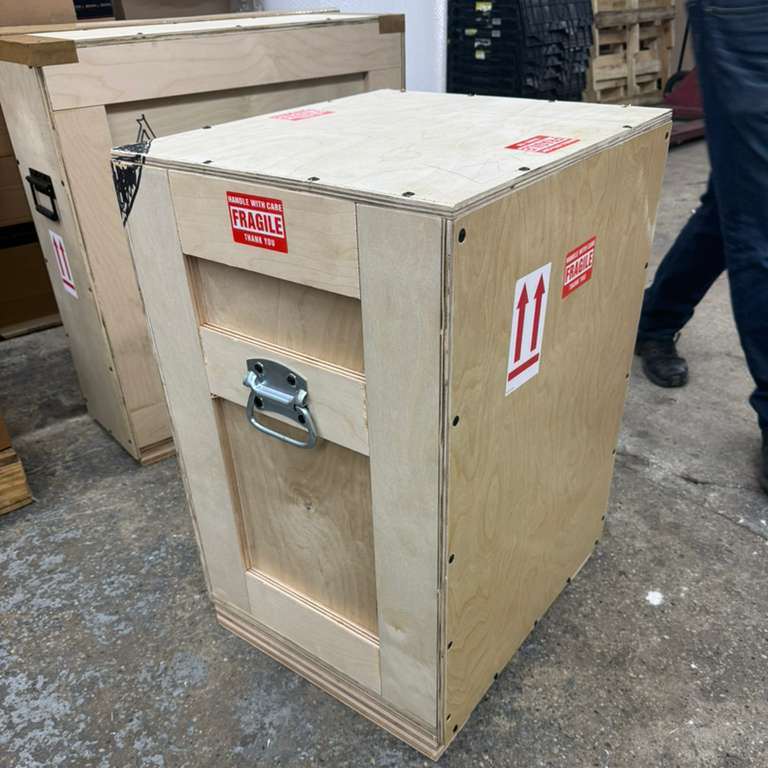
Custom crating is one of the more expensive aspects of fine art logistics. Each crate is engineered from sturdy, museum-grade materials according to an artwork’s unique dimensions and protection requirements. For this reason, some art owners choose to skip custom crating for short-distance domestic shipments. However, in many situations, custom crates are essential, and one effective way to reduce long-term costs is to invest in reusable art crates. Here’s how reusable crate engineering works and when it makes financial sense.
What Are Reusable Art Crates?
A reusable art crate is a custom-built shipping crate designed to protect the same artwork through multiple shipments. Unlike economy crates intended for one-time use, reusable crates are engineered for repeated packing and unpacking while maintaining a high level of protection. They are built according to ISTA transit testing protocols and, when transporting rare or high-value cultural property, should also comply with the guidelines of the American Institute for Conservation.
When Are Reusable Crates Worth the Investment?
Investing in reusable art crates is a smart choice for collections that travel regularly. Museums with touring exhibitions, galleries lending artworks, and artists participating in multiple art fairs or biennales can significantly reduce long-term shipping costs by using the same crate for repeated transportation.
The financial logic is simple: the cost per shipment decreases considerably after two or three uses. Reusable crates become especially cost-effective when you know an artwork will travel multiple times over the coming years and you have adequate storage space for the crate between shipments.
Artwork value and risk profile should also influence your decision. Non-crated shipments often result in higher insurance premiums, while fragile or structurally vulnerable artworks benefit from the additional protection even when crating is not mandatory. Pieces traveling through different climate zones or spending extended periods in storage or customs also benefit from well-engineered crates with optional climate-control features.
On the other hand, reusable crates may not be the best solution for:
- Single-shipment acquisitions.
- Low-value, durable, or easily replaceable objects.
- Projects with tight production schedules that don't allow sufficient time for proper crate engineering.
How Are Reusable Crates Engineered?
Every reusable crate is custom-built for a specific artwork. The process begins with precise measurements and a detailed assessment of the artwork's weight, structure, and transportation risks.
Structural components may include plywood, aluminum, or composite panels, selected according to the crate's required strength, durability, and moisture resistance. Inside the crate, custom cavity foam, cradles, or suspension mounts securely immobilize the artwork and absorb shock during transit. When necessary, climate-control features and environmental monitoring components can also be incorporated to provide additional protection for sensitive artworks during long-distance or international transportation.