

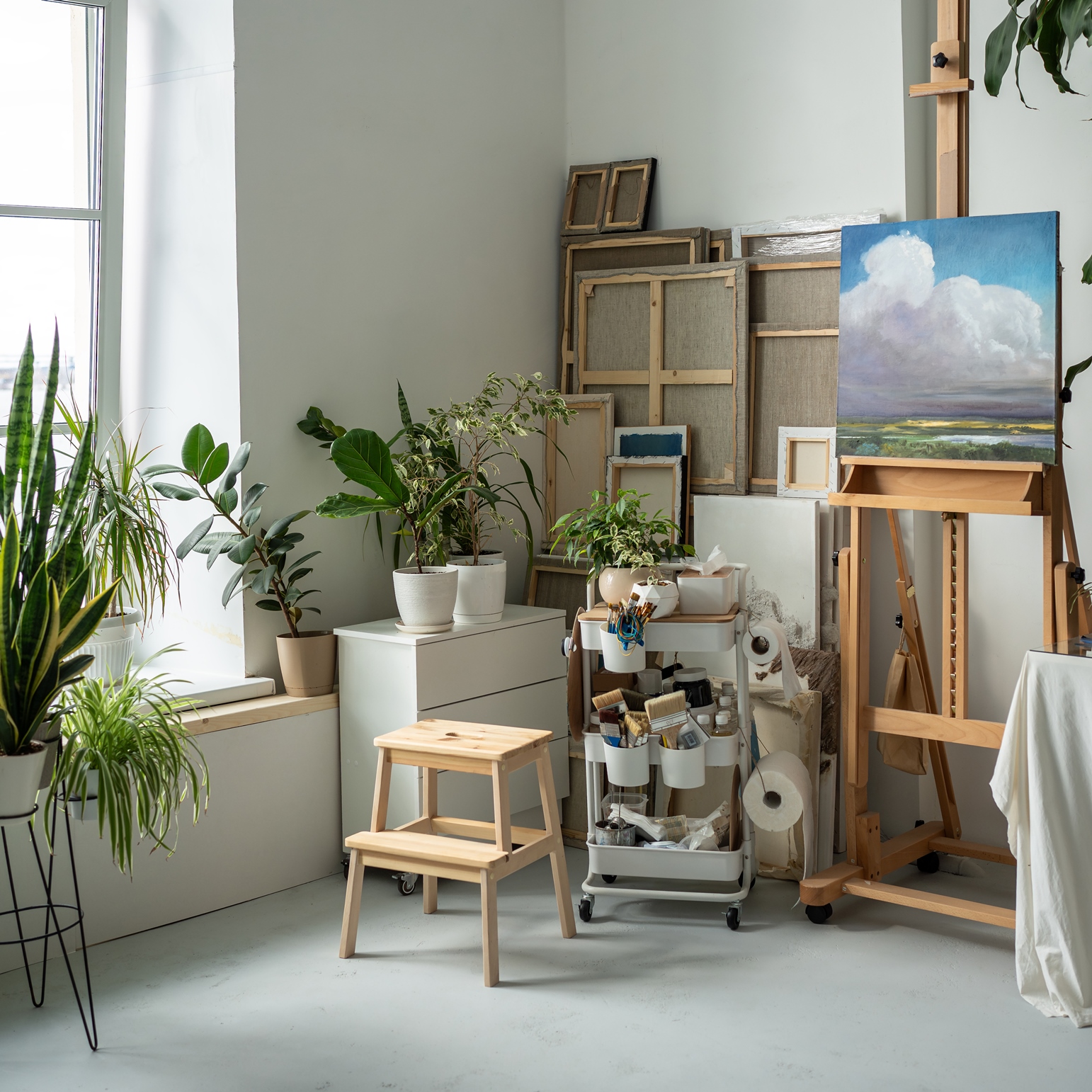
The bitter truth is that much of the damage to artwork during a move can happen before the truck even leaves its departure point. Wrapping an item in bubble wrap and hoping for the best may work for kitchenware, but art requires a different approach. Since canvases, framed prints, and ceramic vases each have different vulnerabilities, they require individual packing methods when moving an art collection to another home.
Moving an Art Collection to Another Home? Pack Items by Type
Paintings on Canvas
The painted surface is particularly vulnerable to scratches, pressure, and contact with unsuitable materials. Bubble wrap should never touch the paint directly, as its texture can leave impressions or marks, especially if the surface is tacky or sensitive. Start with a suitable non-adhesive protective layer, such as glassine or another conservation-grade barrier appropriate for the painting's condition. Secure the protective material around the back without allowing adhesive to touch the artwork. Add cardboard corner protectors to all four corners, followed by bubble wrap or foam cushioning, with the bubbles facing outward. For fragile or valuable paintings, additional backing boards and custom crates may be necessary.
Works Under Glass
Framed artwork with glass glazing faces the risk of breakage during transit. If the glass shatters, loose fragments can scratch or tear the artwork underneath. To reduce this risk, apply low-tack protective tape to the outside of the glass in a grid pattern. This helps hold broken pieces together if the glass cracks. Never apply tape directly to acrylic glazing. It can develop static electricity, which is particularly dangerous for delicate pastels, charcoal, and other powdery media.
Paper-Based Art
Unframed drawings, prints, and photographs are sensitive to moisture, handling, and unsuitable packing materials. Place acid-free tissue between individual sheets and store them flat in a rigid archival portfolio or protective folder. Avoid rolling paper-based artwork whenever possible, particularly if it has been stored flat. Rolling can cause creases or cracks, especially in brittle or fragile works. If a large piece must be rolled, use a wide-diameter tube and an appropriate archival barrier, preferably with guidance from a conservator.
Sculpture and Ceramics
Three-dimensional pieces are particularly vulnerable at their weakest points, including handles, rims, and projecting details. Wrap delicate areas individually with suitable soft padding before cushioning the entire object. The packing should support the sculpture securely and prevent it from shifting during transit. For rare, valuable, or unusually shaped pieces, consider ordering a custom wooden crate with fitted interior supports.
One Collection, Many Packing Methods
Packing by medium when moving an art collection to another home takes longer than wrapping everything the same way. However, it helps address the specific risks associated with each object and reduces the likelihood of transit damage. For valuable, fragile, or oversized collections, professional fine art packing and transportation services offer an additional level of protection.