

Transit damage to paintings includes any physical, chemical, or structural deterioration that occurs during packing, loading, transportation, storage, unpacking, or installation. Damage may be immediately visible or remain hidden for days or weeks after delivery. Understanding what causes damage to paintings in transit is essential for collectors, galleries, museums, and artists seeking to protect valuable artwork.
What Causes Damage to Paintings in Transit: Top Risk Factors
Artwork transportation exposes paintings to several categories of risk. The most common threats fall into three groups: physical impact, environmental conditions, and human error.
Physical Impact Damage
Physical impact is among the leading causes of transit-related artwork damage. Even minor shocks can affect fragile paint layers, aging canvases, or delicate frames.
Common causes include:
- Inadequate crating or insufficient padding
- Improper weight distribution when stacking crates
- Continuous vibration during road, rail, or air transport
- Accidental drops during loading and unloading
- Punctures caused by protruding hardware, nails, or fasteners
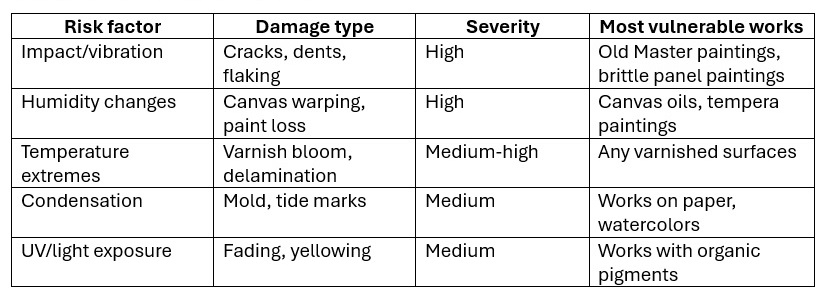
Impact damage often results in cracks, dents, paint flaking, frame distortion, or structural weakening.
Environmental Damage
Any discussion of what causes damage to paintings in transit must include environmental factors. Changes in temperature and humidity can affect artwork even when no physical impact occurs.
Common environmental risks include:
- Rapid humidity fluctuations
- Exposure to extreme temperatures
- Condensation forming inside sealed crates
- Prolonged exposure to direct sunlight
- Mold growth caused by excessive moisture
Environmental damage may appear gradually and can lead to canvas deformation, paint loss, discoloration, varnish deterioration, or biological contamination.
Handling and Human Error
Many transportation incidents result from improper handling rather than equipment failure. Even experienced personnel can unintentionally damage artwork when established procedures are not followed.
Examples include:
- Touching painted surfaces with bare hands
- Lifting artwork by the frame instead of the designated support points
- Positioning paintings face down during transport or installation
- Unpacking artwork before proper acclimatization
- Using unsuitable packing materials
Human error remains one of the most preventable causes of artwork damage.
Risk Factor Reference Table
FAQs
What is the most common cause of damage to paintings in transit?
Physical impact and vibration are the most common causes of transit-related damage. Even small shocks during loading, unloading, or transportation can lead to paint cracking, frame damage, and structural stress. For this reason, proper crating and handling are considered the first line of defense against artwork damage.
Are oil paintings more vulnerable to transit damage?
Different media face different risks. Works on paper are generally more sensitive to moisture and light exposure, while oil paintings are often more vulnerable to impact and vibration. Wooden panel paintings typically face the highest overall risk because they can be affected by both physical and environmental stress.
Does air freight reduce transit damage risks?
Air freight can shorten transit times and reduce the duration of exposure to certain hazards. However, it does not eliminate risk. Aircraft cargo compartments experience pressure and temperature fluctuations, while artworks are still exposed to multiple handling stages throughout the shipping process.