

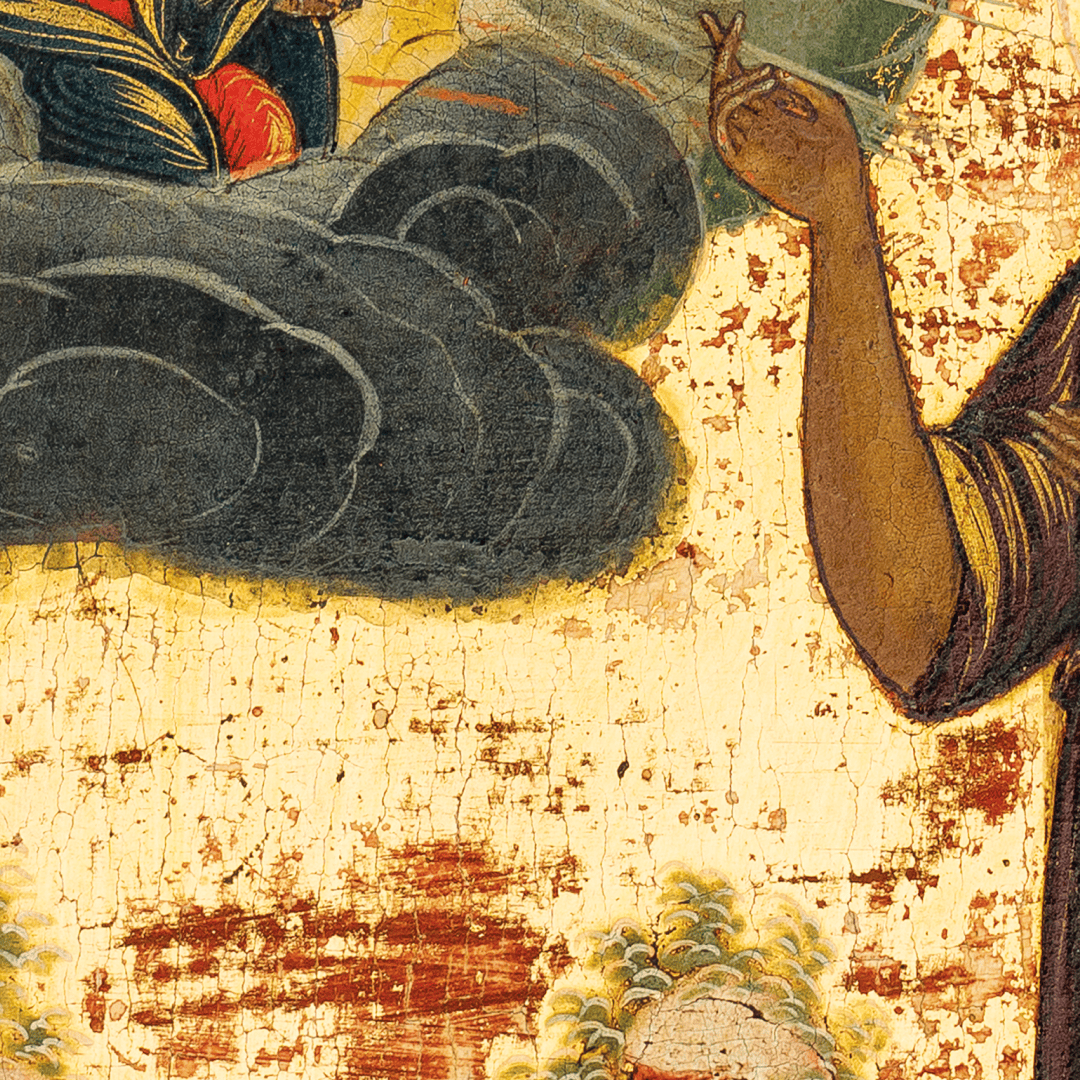
A Russian icon at the time of its creation and the same icon centuries later can look like two different objects. Much of this transformation comes from its layered structure, which typically includes a wooden board, a chalk-and-glue ground called levkas, egg tempera paint, and a protective coating known as olifa, traditionally made with boiled linseed oil. Each material responds differently to environmental conditions and the passage of time. These changes can affect the icon’s appearance without necessarily diminishing its artistic value.
Signs of an Icon’s Age
One of the most noticeable signs of an icon’s age is the darkening of its olifa. Originally transparent or slightly tinted, this oil-based coating can gradually turn yellow or brown as it oxidizes. Dust and soot from candles and incense also accumulate on the surface, making faces, backgrounds, and other painted details increasingly difficult to distinguish.
Craquelure, a network of fine cracks, is another common feature of aging icons. Changes in the wooden support, ground, and paint layers can contribute to cracking and separation. In some areas, the levkas may lose adhesion, causing paint to lift or flake away. It is also important to consider historical overpainting. Many icons were repainted when their original images became obscured by darkened coatings. As a result, a single object may contain several painted layers, each representing a different period in its history.
How Aging Shapes Appearance and Artistic Value
For centuries, darkened icons were familiar features of Orthodox homes and churches. Their original colors and details could become almost invisible beneath aged oil coatings and accumulated grime. In some cases, later repainting helped restore the visibility of the image for worshippers.
Today, collectors and art historians look beyond the darkened surface to understand an icon’s original appearance, artistic technique, and subsequent history. The distinction between natural aging, later additions, and actual damage is important when assessing its artistic value. Aged coatings and visible repairs may provide historical evidence, but they do not automatically make an icon more valuable.
Old Believer Icons as an Example
Old Believers, who opposed Patriarch Nikon’s church reforms in the mid-17th century, placed particular importance on preserving pre-reform religious traditions. Many communities continued to use older iconographic models and valued images associated with earlier practices. Their collections and artistic traditions offer valuable examples of how religious beliefs shaped the preservation and appreciation of icons.
Numerous examples can be explored in Oleg Kushnirskiy’s collection and icon catalog. It features works associated with Vetka, Guslitsy, Palekh, and Mstyora.
Patina Is History
An icon’s aging should not automatically be equated with decay. Darkened coatings, craquelure, and old repairs can reveal centuries of use and changing attitudes toward religious art. Understanding these layers helps collectors appreciate an icon’s history and allows conservators to make informed decisions about its preservation.