

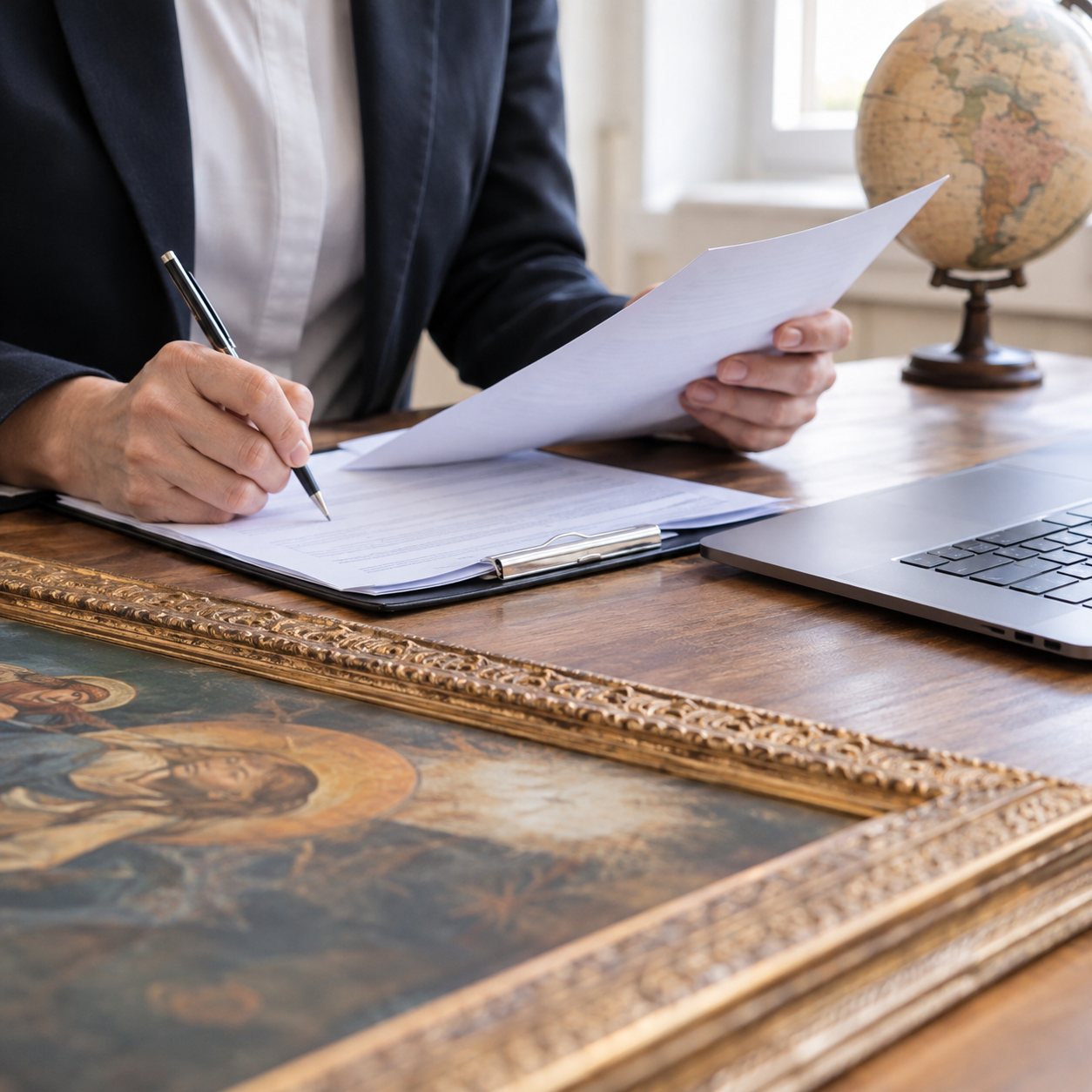
Moving an art object across borders involves more than arranging transportation. Customs paperwork for artwork requires accurate information and, in some cases, specialized expertise. An incorrect tariff code, missing permit, or unsupported value declaration can lead to inspections, unexpected duties or taxes, and delays. Requirements vary by country and type of artwork, but many problems can be prevented with the right assistance.
Who to Hire to Prepare Customs Paperwork for Artwork?
Five types of professionals may help with an international art shipment. You will not necessarily need all of them; the right team depends on the artwork, destination, and purpose of the move.
Fine Art Shipper
An art shipper arranges packing, crating, and transportation, and coordinates shipment details with the client and customs broker. Depending on the service, the company may also organize shipping documents.
Customs Broker
A customs broker assists with customs declarations and clearance, including tariff classification, duties, import taxes, and applicable procedures. Choose a broker familiar with art shipments, especially if the work is entering a country temporarily for an exhibition or loan.
Registrar
Registrars organize collection and loan records, including inventories, provenance, ownership records, and condition reports. Their expertise is especially useful for museum loans, exhibitions, and shipments involving multiple works.
Independent Appraiser
An independent appraiser can provide a professional valuation for insurance or other purposes. This may be useful when there is no recent sale price or an insurer requests an appraisal. However, an insurance appraisal does not automatically determine customs value, which must follow the importing country’s rules.
Art Law Expert
An art law specialist advises on cultural property rules, provenance, export restrictions, and permits. Their help may be important when shipping antiques or culturally significant works.
Mistakes Experts Can Help You Avoid
Preparing customs paperwork for artwork without professional guidance may seem cost-effective, but errors can lead to:
- Incorrect tariff classification or incomplete descriptions.
- Inaccurate value declarations.
- Missing export permits or required documents.
- Overlooked restrictions on materials or cultural property.
- Incorrect procedures for temporary exports and returns.
- Gaps in ownership or provenance records.
These issues can result in inspections, delays, penalties, taxes, or seizure if required authorizations are missing. Customs clearance is smoother when paperwork is accurate and prepared in advance.
Choose professionals with relevant art shipping experience, verify their credentials, and ask for references from galleries, auction houses, or museums whenever possible. The right support can help protect your artwork and make its cross-border journey more predictable.