

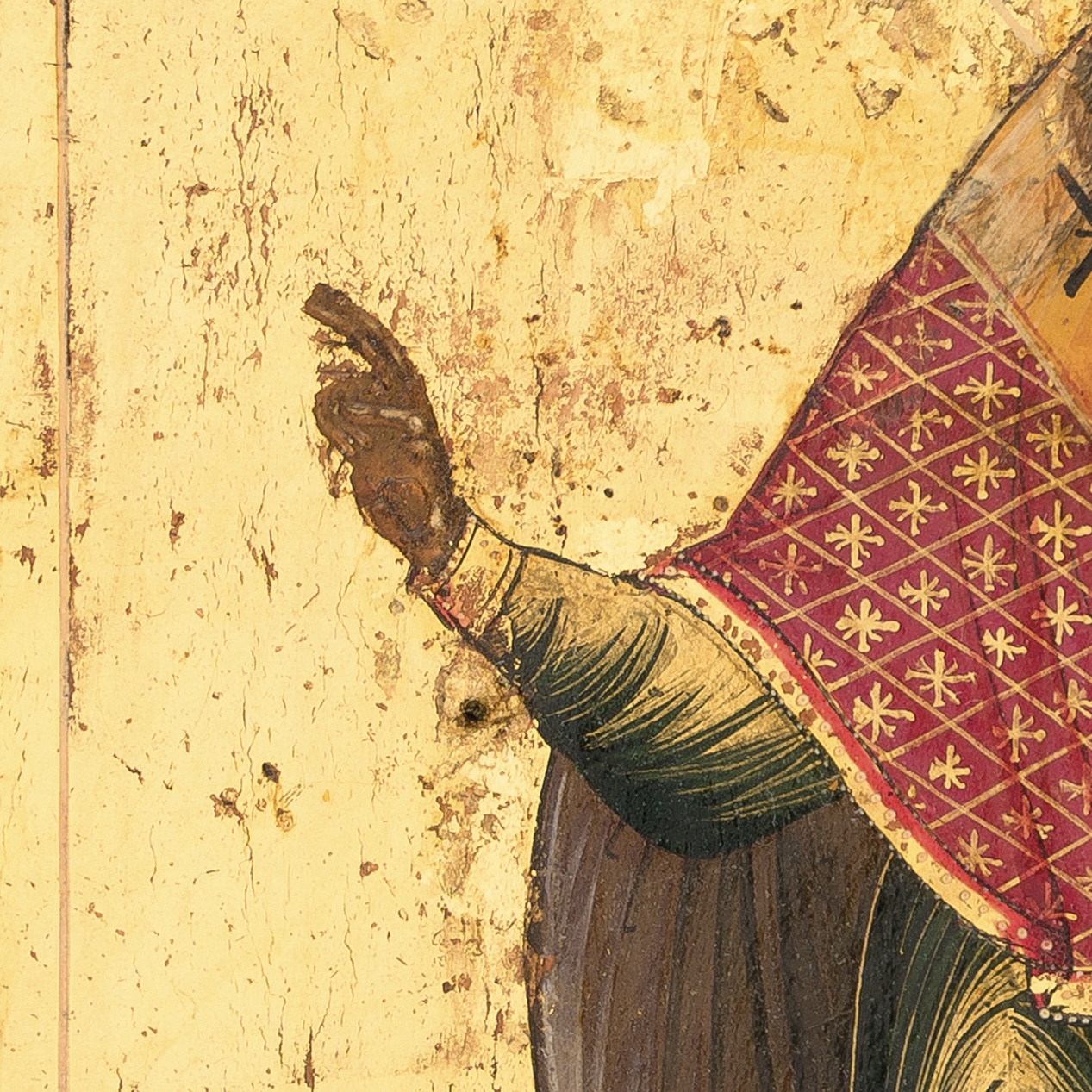
The role and meaning of icons cannot be reduced to those of a painter’s work alone. Centuries of candle smoke, handling, prayer, and changing environmental conditions leave their marks on antique icons. Their age can often be seen in darkened varnish, a fine web of cracks, small paint losses, and softened gilding. An untrained eye may interpret these signs as flaws, but to a conservator, collector, or historian, they form part of the object’s biography. Exploring the history and artistic traditions of Russian icon painting through resources such as this book on Russian icons can deepen our understanding of these remarkable works.
How Time Affects the Wood and Paint of Antique Icons
Many antique Russian icons were painted in egg tempera on a gesso ground applied over a wooden panel. Wood responds to changes in humidity, expanding and contracting as moisture levels fluctuate. Over time, this movement can contribute to warping, open joints, and cracks along the boards. The more rigid ground and paint layers respond differently, sometimes developing a network of fine cracks known as craquelure.
The surface coating also changes with age. Traditional Russian icons often used olifa, a protective drying-oil coating commonly made from linseed oil. Over time, this coating can darken, reducing the visibility of the original image. The degree of change depends on the coating’s composition, thickness, and environmental history.
Age Is Not Equal to Damage
Antique icons can look old and still be in relatively good condition. Stable craquelure, firmly attached paint, and an evenly aged coating may indicate that some changes have occurred gradually without significant active deterioration. However, these characteristics do not prove authenticity. Establishing an icon’s age and origin requires a broader assessment of its materials, technique, history, and provenance.
Active damage presents different concerns. Conservators look for lifting paint along cracks, raised areas sometimes described as “tents,” and loose or flaking paint. Fresh losses with sharp edges may indicate recent impact, while small holes and powdery wood can signal insect activity. Such signs warrant professional examination before handling or transportation.
Protecting the Legacy of Time
Improper handling and transportation can put fragile icons at risk. Owners should avoid touching painted or gilded surfaces and should not attempt to move unstable objects without professional guidance. When handling is necessary, suitable gloves, secure support, and a careful assessment of the icon’s condition are essential.
Packing materials should protect the surface without pressing against it or abrading fragile paint. Custom supports and protective crates may be appropriate for transportation, depending on the icon’s condition and route. Stable environmental conditions during storage and transit also help reduce the risks associated with sudden temperature and humidity changes.
These precautions help preserve the historical character of antique icons while reducing the risk of further deterioration. With informed care and professional handling, collectors can protect these remarkable works of religious art for future generations.