

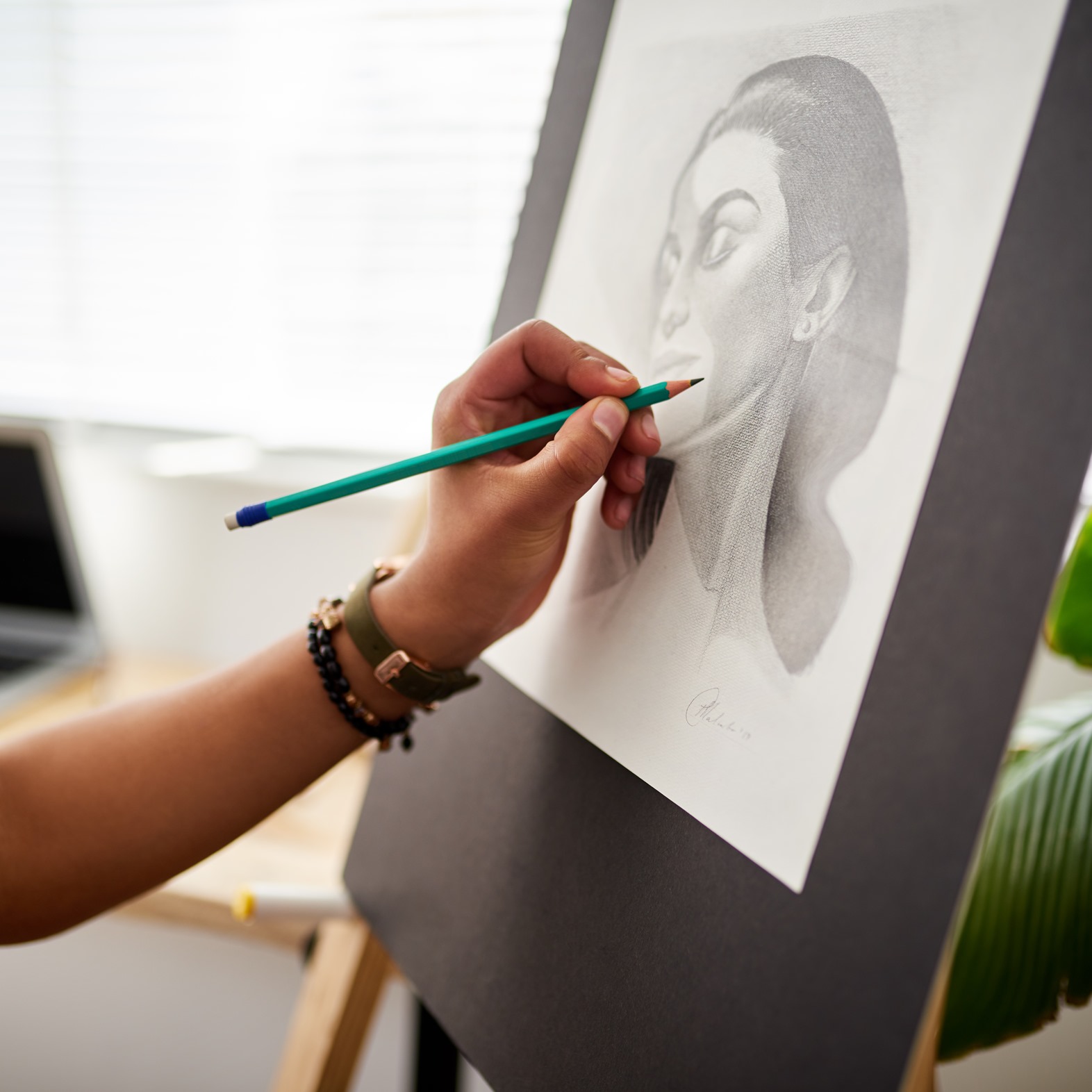
The way you hold a pencil can influence almost every part of drawing, from the precision of a fine contour to the softness of broad shading. Different techniques require different levels of pressure, control, and freedom of movement. A grip that works perfectly for small details may not be the best option for sketching large shapes or creating smooth shadows.
After all, detailed portraits, gesture drawings, landscapes, and technical sketches are not equal. The same applies to the pencil grips used to create them. So how does pencil grip affect art quality, and which grip should you use? Let’s find this out.
Tripod Grip for Fine Details
The tripod grip is probably the most familiar pencil grip. The pencil is controlled between the thumb and index finger while resting against the middle finger, with the remaining fingers helping stabilize your hand.
This position works particularly well when you need maximum control. For example, when drawing eyelashes, architectural details, textures, lettering, or carefully defined edges, holding the pencil relatively close to its tip allows you to make precise movements.
However, make sure you do not squeeze the pencil unnecessarily. A tight grip can restrict movement and make strokes look stiff. Excessive tension may also contribute to hand fatigue during longer drawing sessions. Therefore, aim for stability without making your fingers and wrist rigid.
Overhand Grip for Shading and Sketching
The overhand grip is another useful option, especially when you need broader, more expressive marks. Instead of holding the pencil close to the point as you would when writing, you hold it farther along the barrel, allowing the side of the graphite to contact the paper.
This position is particularly useful for shading. You can create wide, soft strokes instead of narrow lines produced primarily with the pencil point. For example, opt for an overhand grip when blocking in shadows, establishing large areas of value, or creating loose preliminary sketches.
Moreover, holding the pencil this way encourages movement from the elbow and shoulder rather than relying entirely on your fingers. Longer lines can consequently become smoother and more confident.
Grip Pressure and Line Quality
How firmly you hold the pencil matters just as much as where you hold it. A tight grip often encourages greater pressure against the drawing surface. This can produce dark, decisive lines, but those marks may also become more difficult to erase.
A relaxed grip provides greater flexibility. You can gradually build graphite through several layers instead of immediately creating dark marks. This is especially important during preliminary sketching, where light construction lines make proportions, angles, and shapes easier to adjust.
It is also worth noting that moisture can affect how comfortably and securely some people hold drawing tools. Persistent sweaty palms, medically known as palmar hyperhidrosis, can interfere with everyday activities involving the hands, including writing. For artists experiencing significant hand moisture, maintaining a comfortable grip and keeping the drawing surface dry may require additional attention.
Pencil Angle Changes Shading and Texture
Your grip also determines the angle at which graphite reaches the paper. Holding a pencil relatively upright concentrates pressure around the point and creates narrow, sharp marks.
Lowering the pencil exposes more graphite and increases the contact area. Therefore, this position is better suited to broad shading and smooth tonal transitions.
For example, a steep pencil angle can work well for hair strands, wrinkles, cross-hatching, or crisp outlines. A lower angle may be more suitable for backgrounds, skin tones, atmospheric shadows, and gradual changes between light and dark.
Neither position is necessarily better. You simply need to choose the angle according to the effect you want to create.
Different Drawing Styles Need Different Grips
One pencil grip does not suit every drawing style. A detailed graphite portrait requires different movements from a quick gesture drawing.
When working on realistic details, you may want to move your fingers closer to the pencil tip. This gives you more control when refining eyes, facial features, textures, and edges.
For gesture drawing, however, opt for a looser grip farther up the pencil barrel. This position encourages larger movements and makes it easier to capture the overall shape before becoming distracted by small details.
Landscape drawing may require both approaches. Broad strokes can establish clouds, trees, mountains, and large shadow areas, while a controlled grip can later create branches, rocks, buildings, and foreground details.
Hand Position and Drawing Endurance
Comfort is another important consideration, particularly when you draw for extended periods. Holding a pencil too firmly can create unnecessary muscular tension, while keeping your wrist rigid may place more work on the smaller muscles of your fingers.
Therefore, consider changing your grip as the drawing develops. Use movements from your arm and shoulder when establishing large shapes, and reserve smaller finger movements for detailed areas.
Furthermore, short breaks can make a difference during lengthy drawing sessions. Relax your hand, stretch your fingers, and adjust your position when necessary. Maintaining comfortable movement can help you retain consistent control as you work.
Which Pencil Grip Is Best for Drawing?
There is no single pencil grip that guarantees better art. Instead, the most suitable grip depends on what you need to draw.
For fine details, a controlled tripod grip close to the pencil point can provide greater precision. For broad shading, an overhand grip can expose more graphite and create softer marks. When making quick sketches or long lines, holding farther up the barrel provides greater freedom of movement.
Ultimately, pencil grip affects art quality because it changes control, pressure, pencil angle, and range of movement. The best approach is to remain flexible. Once you become comfortable switching between grips according to the task, your pencil becomes a more versatile drawing tool.