

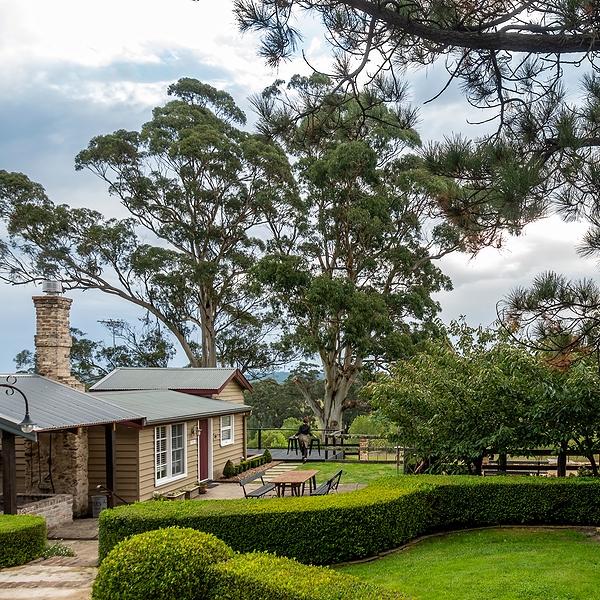
Most advice about relocating art assumes an urban destination. A building with a loading dock, a lift, climate control already running, and a specialist crew twenty minutes away if something needs a second pair of hands.
Take the same collection to a rural property, and every one of those assumptions quietly stops being true. The objects have not changed. The conditions around them have, and the planning has to change with them.
This is what actually differs, based on the problems that recur when a collection leaves the city.
The last leg is the one that breaks things
Long-distance transport is a solved problem. Climate-controlled vehicles, air-ride suspension, experienced drivers: none of that is the risk.
The risk is the final few kilometers. Unsealed roads, a gravel driveway, a cattle grid, a bridge with a weight limit, a gate that is narrower than the truck.
These do not appear on a map, and they rarely come up in a phone conversation, because the person describing the property has driven up it in a car a thousand times and stopped noticing.
The fix is unglamorous. Someone should physically look at the approach before the vehicle is booked, and the question is not whether a truck can get there but whether that truck can get there, turn around, and leave.
Where access genuinely does not allow it, the answer is usually a transfer to a smaller vehicle at a staging point nearby. That is a planned cost. Discovering the need at the gate, with a loaded vehicle and a driver on a schedule, is not.
There is no dock, and often no second crew
City installations assume equipment. A dock at the right height, a trolley that rolls on smooth concrete, a lift rated for the load.
A rural property offers a doorstep, sometimes a step up to a verandah, and a lawn that has been raining on for a week. Everything comes off the tailgate and travels the last twenty meters by hand.
That changes the crew size, the timing, and the sequence. It also changes what should be crated. Items that would travel safely blanket-wrapped in a metropolitan move are better crated when they are going to be carried over uneven ground by people who cannot see their feet.
The other thing worth arranging in advance is somewhere to put things down. A clean, dry, covered staging area at the destination is worth more than an extra hand on the day, and on most rural properties it has to be created rather than found.
Climate is a destination problem, not a transit problem
A vehicle can hold a stable environment for a day. A house in the country has to hold it for years, and this is where collections quietly suffer after a move that went perfectly.
Rural buildings swing further. Older houses in particular are draftier, heating is often intermittent because nobody is home during the day, and humidity follows the weather rather than a thermostat. Add wood heating, which is common and which dries the air aggressively, and you have conditions that no urban apartment would produce.
The practical response is to measure before you install. Put a datalogger in each room you are considering for at least a full seasonal swing if you can, or at minimum several weeks. Choose the hanging locations from the data rather than from the sightlines.
Then avoid the obvious traps: external walls that get afternoon sun, anything above a fireplace or a heater, rooms that are closed off and unheated for months. In a country house, the difference between two rooms is far larger than it would be in a serviced building.
Light is the other one. Rural properties tend to have more glass and fewer neighbors blocking it, which makes for beautiful rooms and difficult conditions for works on paper.
Insurance assumes an address, and the address has changed
Fine art policies are usually written against a location, with conditions attached to that location: alarm systems, occupancy, sometimes specific storage arrangements.
Moving the collection to a property with different security, longer emergency response times, and a different risk profile is a material change, and it needs to be raised before the move rather than discovered at a claim.
Bushfire and flood exposure are the two that come up most in Australia and are worth confirming explicitly because they can affect whether cover is available at all rather than simply what it costs.
Also confirm the gap. Transit cover typically ends when the items are delivered, and the location policy at the new address typically begins when the items are installed. Items sitting crated in a hallway for three weeks can fall between the two.
The local knowledge is worth buying
The instinct is to bring a trusted specialist crew from the city for the whole job, and for the packing and the loading that is usually right.
For the destination, local experience is worth more than most people expect. A crew that regularly works outside the metropolitan area knows which roads take a large vehicle, how far apart the properties really are, and what happens to a driveway after rain.
Someone moving to regional Victoria faces exactly this split. The specialist packing is a city service, while the last leg into the Otways or up past Bendigo is a country job, and the two are frequently better handled as such.
The same is true anywhere the destination is genuinely rural. The value is not in the lifting; it is in knowing what the day will look like before it starts.
Unpack slowly, on purpose
The final difference is timing, and it is the easiest to get right.
In a city move, there is pressure to unpack immediately because storage is expensive and space is tight. In the country, there is usually room, and that is worth using.
Let crated items acclimatize in a stable interior space for a few days before opening them, particularly if they have traveled through a large temperature difference. Unpack in a single controlled room rather than distributing crates around the house. Install last, once the data from your loggers has told you which walls are actually suitable.
A collection that arrives intact and then spends its first winter above a wood heater has not survived the move. It has just failed more slowly.