

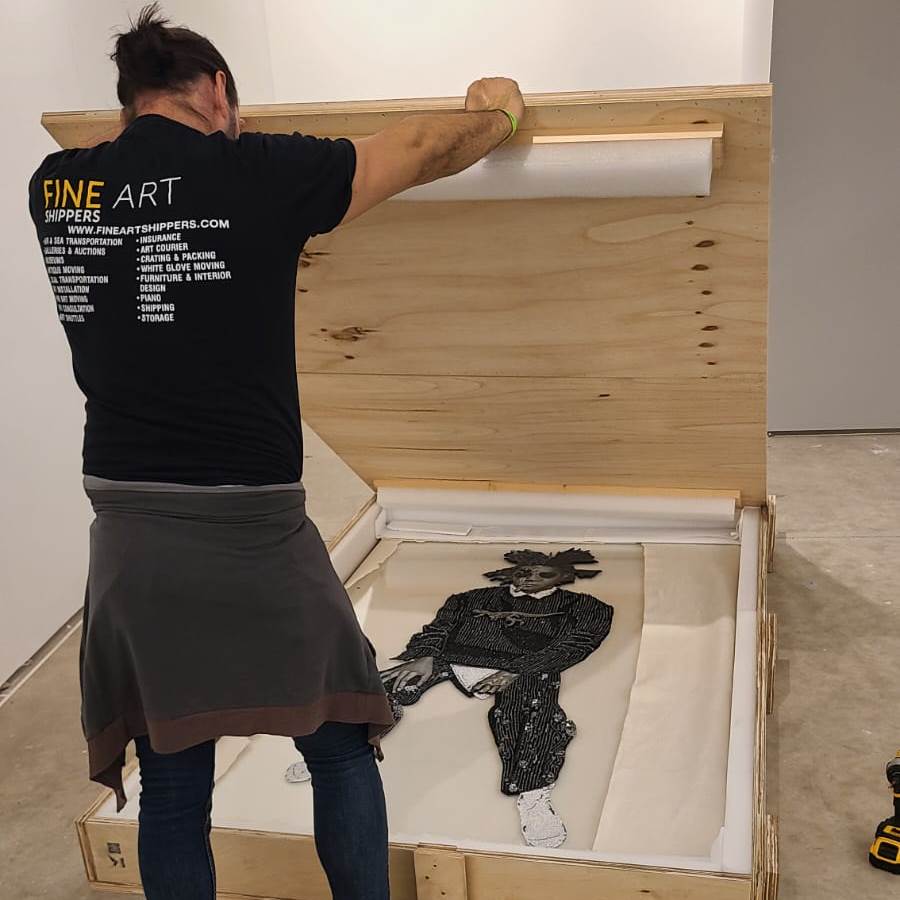
As soon as an old, rare painting or a delicate sculpture arrives at its destination, professional delivery does only half of the job. What happens next can determine the outcome; this is where a white glove unpacking service makes a difference.
What Is a White Glove Unpacking Service?
White-glove unpacking is a premium delivery service add-on that clients may order on demand. It involves trained art handlers who complete the final stage of a delicate art object’s journey: opening the crate or packaging, removing protective materials from the artwork layer by layer, inspecting the arriving object for possible transit damage, and, when requested, installing it according to the client’s preferences. Professionals may hang a painting on a wall, position a sculpture on a pedestal, or place a piece of antique furniture exactly where it is planned to go in a room.
The service’s name is commonly associated with the white cotton gloves that art handlers may wear to avoid transferring oils, dirt, or moisture from their skin onto delicate surfaces. However, the name is not literal, as white glove delivery does not always require gloves, and in some cases, gloves may even be unsuitable for safety or handling reasons.
When Is It Needed?
A white glove unpacking service can be particularly useful when a shipment involves:
- High-value, one-of-a-kind art items.
- Fragile or oversized objects that require specialized handling.
- Museum and gallery transfers.
- Private collections and high-end residential deliveries.
- Cross-country shipments.
What Types of Art Require White Glove Unpacking?
Every artwork type has its own risk profile, which professional art handlers take into account:
- Paintings and canvases are susceptible to punctures, cracking paint, and frame damage.
- Sculptures require trained handling to help avoid chips and fractures during removal from a shipping crate.
- Mixed-media works and installations may contain unstable or unusual materials that do not respond well to standard handling procedures.
- Antiques and historical artifacts are often irreplaceable, leaving little room for handling errors at any stage of delivery.
- Framed works with glass or acrylic glazing are vulnerable to shattering and scratching.
In many of these cases, the concern is not only financial loss. Careful unpacking and installation can help protect the artwork’s condition, structural integrity, and provenance, while reducing the risk of damage during the final stage of delivery.
The Bottom Line
White glove unpacking services come at a premium, but they can provide an important bridge between safe delivery and careful installation. For many private and institutional art collectors, this final stage of art delivery deserves the same level of care and professionalism as transportation itself.