

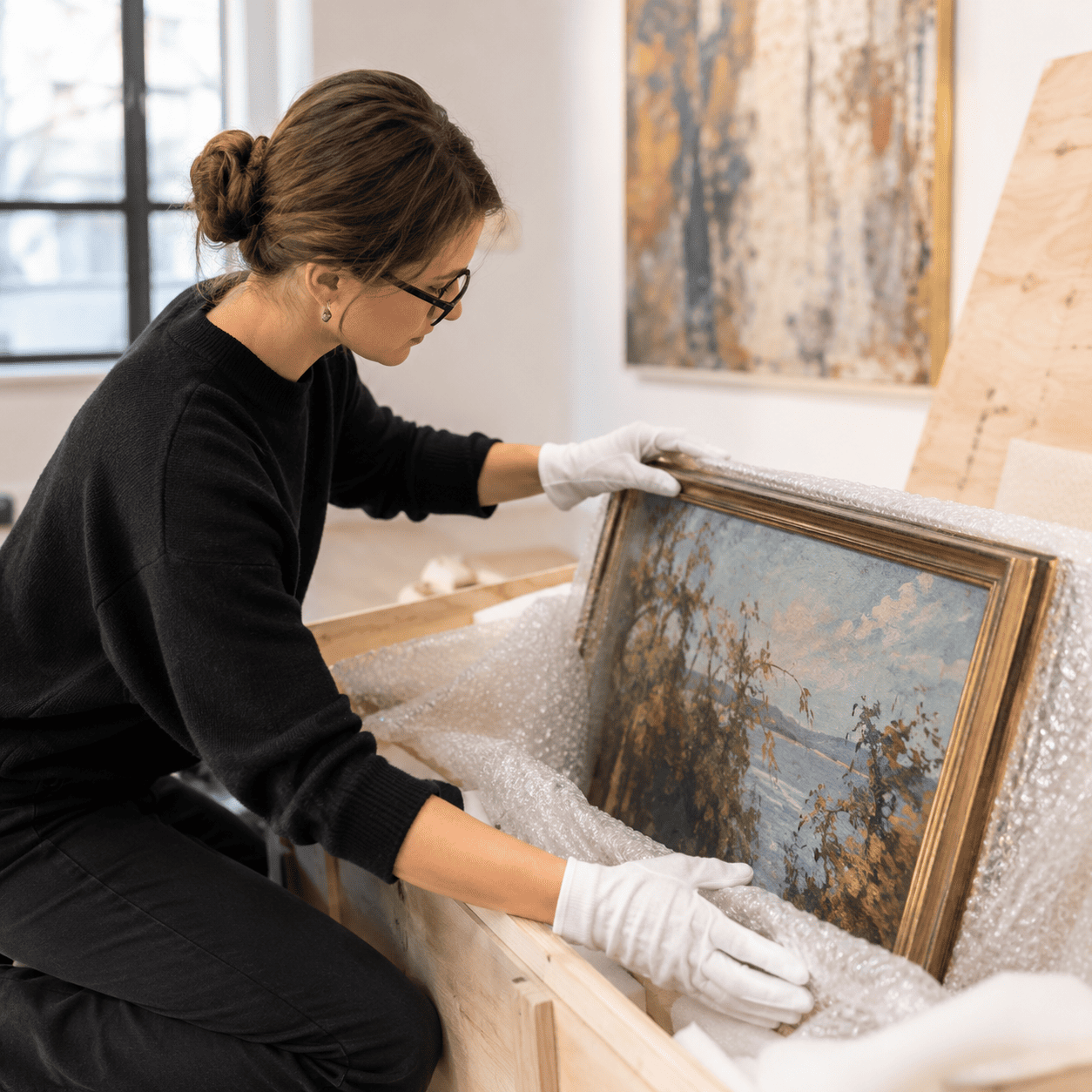
Receiving a long-awaited artwork is exciting, but delivery is also a critical moment. A careful post-shipping artwork inspection can help identify transit damage, preserve evidence, and support an insurance claim. Document the package before opening it and report visible concerns promptly.
Pro Tips for Post-Shipping Artwork Inspection
An initial check may take only a few minutes, although complex shipments require more time.
Check the Packaging Before You Sign
Examine the crate or box for crushed corners, punctures, cracks, torn tape, water marks, or other signs of impact. Check the shipping labels and handling instructions. If tilt or shock indicators are attached, photograph them and note whether they have been triggered. These indicators provide useful information but do not confirm whether the artwork is damaged. If you notice an issue, ask the carrier to record it on the delivery receipt before signing, where possible.
Photograph Everything
Photograph every side of the package, including the shipping label, seals, indicators, and visible damage, before opening the crate. Take a video or additional photos during unpacking, capturing the packing materials, the artwork’s position inside the container, and the work itself. Keep the original, time-stamped images. Do not discard the packaging; it may be needed for a carrier inspection or insurance claim. Learn why art insurance claims are often denied.
Unpack with Care
Prepare a clean, padded surface before opening the crate. Work slowly and avoid using sharp tools near the artwork. Wear clean, well-fitting, powder-free nitrile gloves when appropriate, and avoid touching painted or sensitive surfaces.
Examine the Artwork
Inspect the work systematically:
- Check the frame, corners, joints, and finish for cracks, dents, or separation.
- Examine the glazing for cracks or scratches. If it is broken, do not move loose fragments or let them touch the artwork.
- Look across the surface under good lighting for dents, abrasions, or flaking.
- For paintings, check whether the canvas appears loose or uneven without pressing on it.
- Inspect the back for damage to the stretcher, hanging hardware, labels, or attached documents.
Record and Report
Photograph suspected damage from several angles and note what you observed. Notify the shipper and carrier promptly, follow their claim instructions, and retain all packaging. Do not attempt repairs or remove damaged components yourself. If a professional assessment is needed, consult a qualified conservator. Find out what to do if artwork arrives damaged.
Small Habits Protect Valuable Artwork
A careful post-shipping artwork inspection establishes a piece’s condition after delivery and provides useful evidence if a problem arises. Documenting the package, unpacking safely, and reporting concerns promptly can make the claims process more straightforward.