


All art owners are concerned about the safety of their property in transit. Understanding why sculptures crack during shipping can help collectors, galleries, and art professionals develop a safer sculpture shipping strategy. Cracks can result from impact, vibration, uneven support, pressure, or changes in temperature and humidity. Proper packing and handling are therefore essential for reducing transit risks.
Why Sculptures Crack During Shipping: Main Causes
A sculpture can crack when physical forces or environmental changes exceed what its material and construction can withstand. Shipping damage refers to physical changes that occur between packing and unpacking, including cracks, chips, fractures, loosened joints, and deformation.
The risk depends on the sculpture’s material, construction, size, weight, and condition. Common causes include:
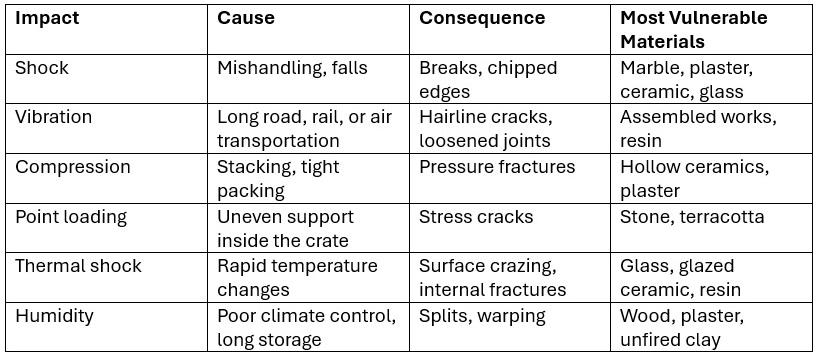
- Shock impact. A sudden drop, collision, or hard movement can transfer force through the sculpture and cause cracks or breaks.
- Vibration. Prolonged vibration during road, rail, or air transportation can create repeated micro-stresses, particularly around joints and existing weak points.
- Compression. Excessive pressure from stacking or tight packing can create localized stress and fractures.
- Point loading. When weight is concentrated on a small contact area, stress can build up faster than the material can tolerate.
- Thermal shock. Rapid temperature changes can cause different materials or parts of a composite sculpture to expand and contract at different rates.
- Humidity changes. Wood, plaster, and unfired clay can absorb or release moisture, potentially causing movement, cracking, or deformation.
- Inherent weaknesses. Natural veins in stone, internal voids, previous repairs, and air bubbles in some resins can create vulnerable points.
Types of Impact Explained
How to Reduce the Risk of Cracking
Now that you know why sculptures crack during shipping, several precautions can help make the shipment safer.
- Use a custom wooden crate with shock-absorbing inserts suited to the sculpture’s weight and shape.
- Support the sculpture evenly and immobilize it inside the crate without applying excessive pressure.
- Protect fragile protrusions with properly fitted padding and internal supports.
- Use climate-controlled transportation when the material or condition of the artwork requires environmental stability.
- Have the sculpture professionally inspected and packed when its material, construction, or value presents elevated transit risks.
FAQs
Which materials are the most vulnerable in transit?
Plaster, glass, ceramic, and some stone sculptures can be particularly vulnerable because they may be brittle or sensitive to impact. Construction and existing condition are also important factors.
Can a damaged sculpture be repaired?
In many cases, yes. A professional art conservator can assess, stabilize, and repair cracks. However, the extent of the intervention and its potential effect on the artwork’s value depend on the material, damage, and conservation history.
Can hidden cracks appear after delivery?
Yes. Hairline cracks or internal damage may not be immediately obvious after transportation. Vibration, temperature changes, and existing weaknesses can cause damage to become more visible after delivery.