

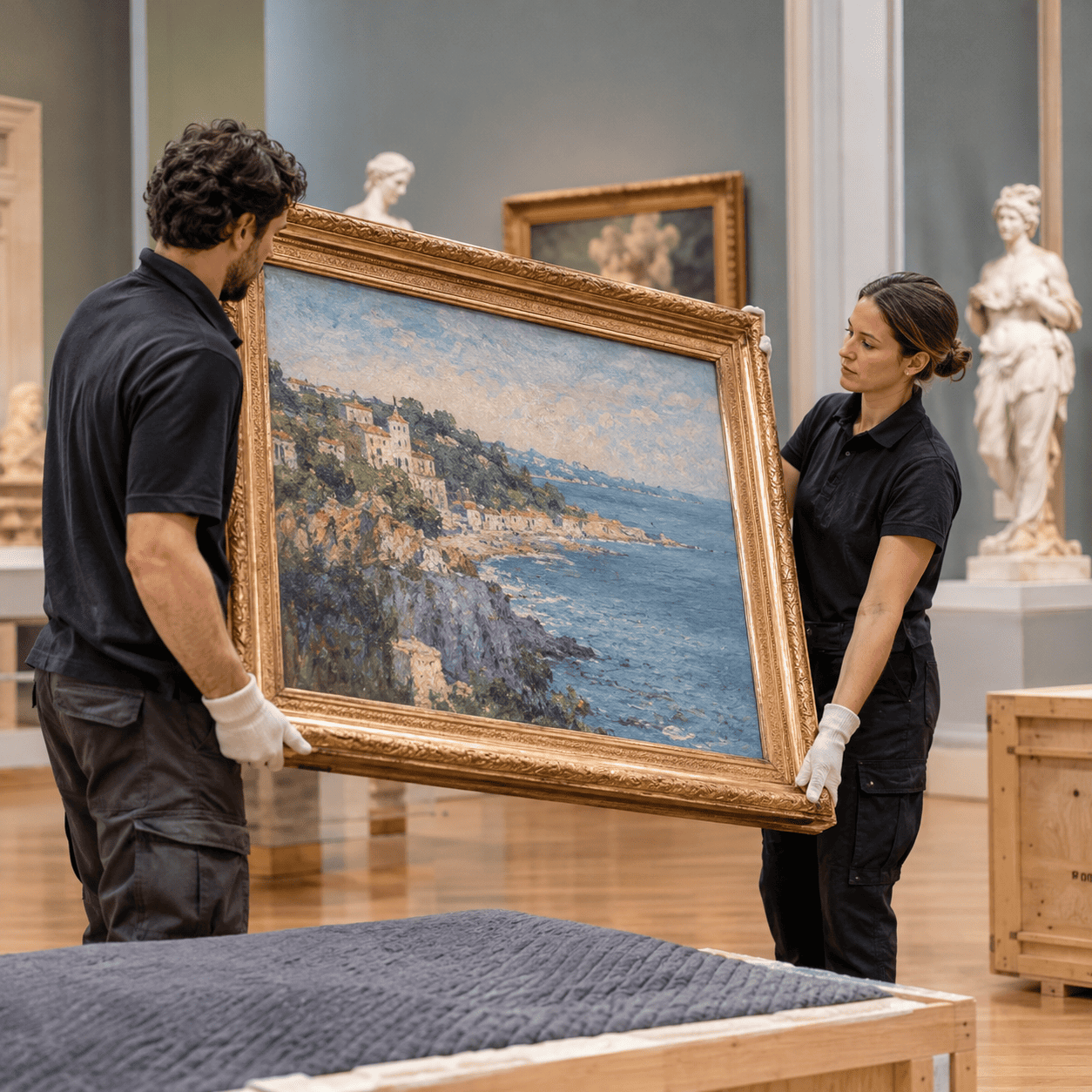
Transporting artwork between museums requires careful coordination and strict safety measures at every stage. If you notice a person standing beside a wooden crate at an airport cargo terminal, watching a forklift ease it onto a pallet, they may be a museum courier. Their responsibility is to oversee the safe transportation of artworks and ensure that the lending museum's handling requirements are followed. Often working behind the scenes, couriers are among the most trusted professionals in the museum world.
What the Job of Transporting Artwork Between Museums Involves
A courier's work starts before the crate is closed. Assigned by the lending museum, they may check the object's condition, review condition reports, and photograph existing cracks, scratches, or paint losses. They also supervise packing and monitor the artwork's handling during transportation. Depending on the loan agreement, they may accompany the shipment by truck, through the airport, and on the same flight.
Museum couriers may spend hours at a loading dock, ensuring that the crate is protected from rain, direct sunlight, and improper handling. At the destination, they supervise unpacking after allowing sufficient time for the crate and artwork to acclimatize, when required. They then participate in a second condition check and oversee installation. Once the work has been inspected and formally handed over to the borrowing institution, the courier's responsibilities are complete.
Why Lenders Insist on Dedicated Museum Couriers
Museums lend valuable artworks to other institutions based on their confidence in the borrower's ability to maintain appropriate safety standards. A dedicated courier represents the lender's interests and helps enforce the agreed handling and security protocols throughout the journey.
For example, a courier may request that loading be stopped if a crate is positioned incorrectly, or postpone unpacking if the gallery environment is unsuitable. They can also raise concerns about unsafe handling procedures and seek instructions from the lending museum before proceeding.
Couriers also help maintain a clear paper trail by documenting condition checks, handling procedures, and any incidents during transportation. These records are important references if damage is discovered. For fragile, high-value, or particularly sensitive artworks, lenders may make an in-person courier a condition of the loan.
Is a Courier Worth It?
Transporting artwork between museums requires careful planning and leaves little room for error. However, dedicated courier services can be expensive. The borrowing museum typically covers the courier's travel, hotel accommodation, and daily expenses. Large exhibitions involving loans from multiple institutions may require several couriers.
Remote courier arrangements are another option. Using live video calls, lending museum representatives can supervise unpacking and installation without traveling to the venue. However, this approach requires prior agreement and is not suitable for every loan. For particularly fragile or valuable works, in-person courier assistance remains an important safeguard.