

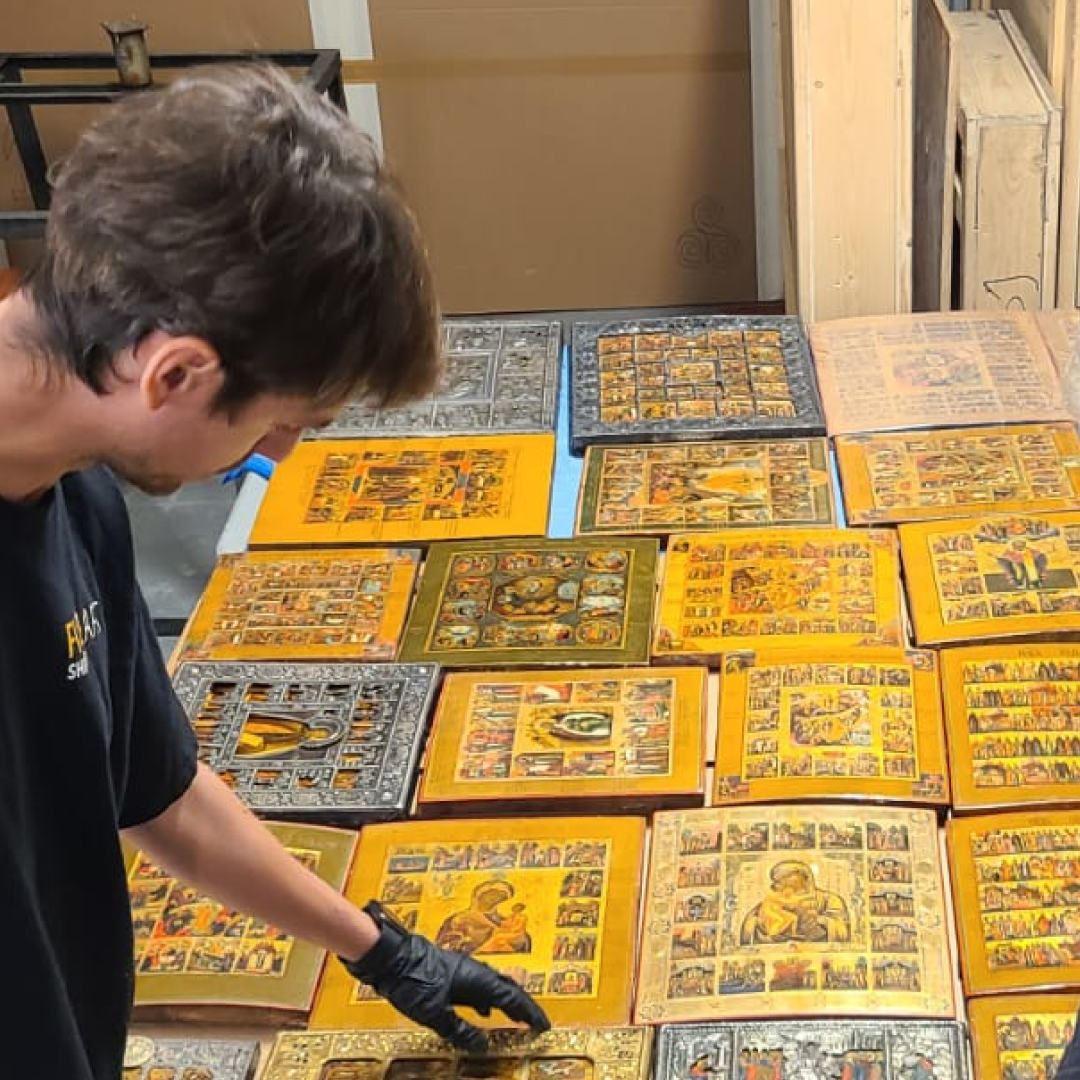
In the broadest sense, icons are visual representations of religious figures, events, and beliefs. Yet, when it comes to sacred art, their meaning goes far deeper. For Orthodox Christians, they are objects of devotion. Antique icons, created centuries ago, also hold historical and cultural value. Their handling, conservation, and transportation therefore require specialized knowledge and care.
Historical and Cultural Value of Sacred Art
Believers have been creating and venerating images of holy figures for many centuries, with the tradition of Christian icon painting emerging in the early Byzantine period. Byzantine icons were produced in a variety of media. While many familiar examples are tempera paintings on wooden panels, icons were also made as mosaics, frescoes, and works in metal or ivory. Like other forms of art, icons preserved through centuries and generations possess cultural and historical significance, offering insight into the creativity, beliefs, and worship practices of the communities that produced them.
Cross-Border Shipment Nuances
Sacred art may be considered cultural property under national laws, which can affect its international movement. However, export restrictions do not automatically apply to every icon. Requirements depend on the country of origin and may be determined by an object's age, value, provenance, and official heritage status. Export permits or other documentation may be required before an icon can cross a border. Collectors and institutions should check applicable rules before arranging international loans, exhibitions, or sales. Proper documentation can help prevent delays and customs complications.
Importance of Professional Packaging and Transportation
Antique objects can be fragile because of age, previous repairs, and the natural deterioration of their materials. Many icons were painted on wooden panels using egg tempera, and their paint layers, ground, and gilding may be vulnerable to humidity changes, vibration, and careless handling. Before shipment, each icon should be assessed for existing damage and deterioration. If necessary, a qualified conservator should recommend stabilization or other conservation measures.
Packaging must be selected for the individual object. Any material that touches an icon's surface should be safe for its condition and must not adhere to, abrade, or leave residues on it. Acid-free tissue or other suitable protective materials may be appropriate, but unstable or flaking surfaces require particular caution. Padding and the outer crate should account for the shipping method, route length, and expected environmental conditions.
Oleg Kushnirskiy, the owner of a vast Old Believer icon collection and co-founder of Fine Art Shippers, understands the care sacred art requires in transit. Fine Art Shippers can assess, pack, and transport icons with attention to their condition and conservation needs.