

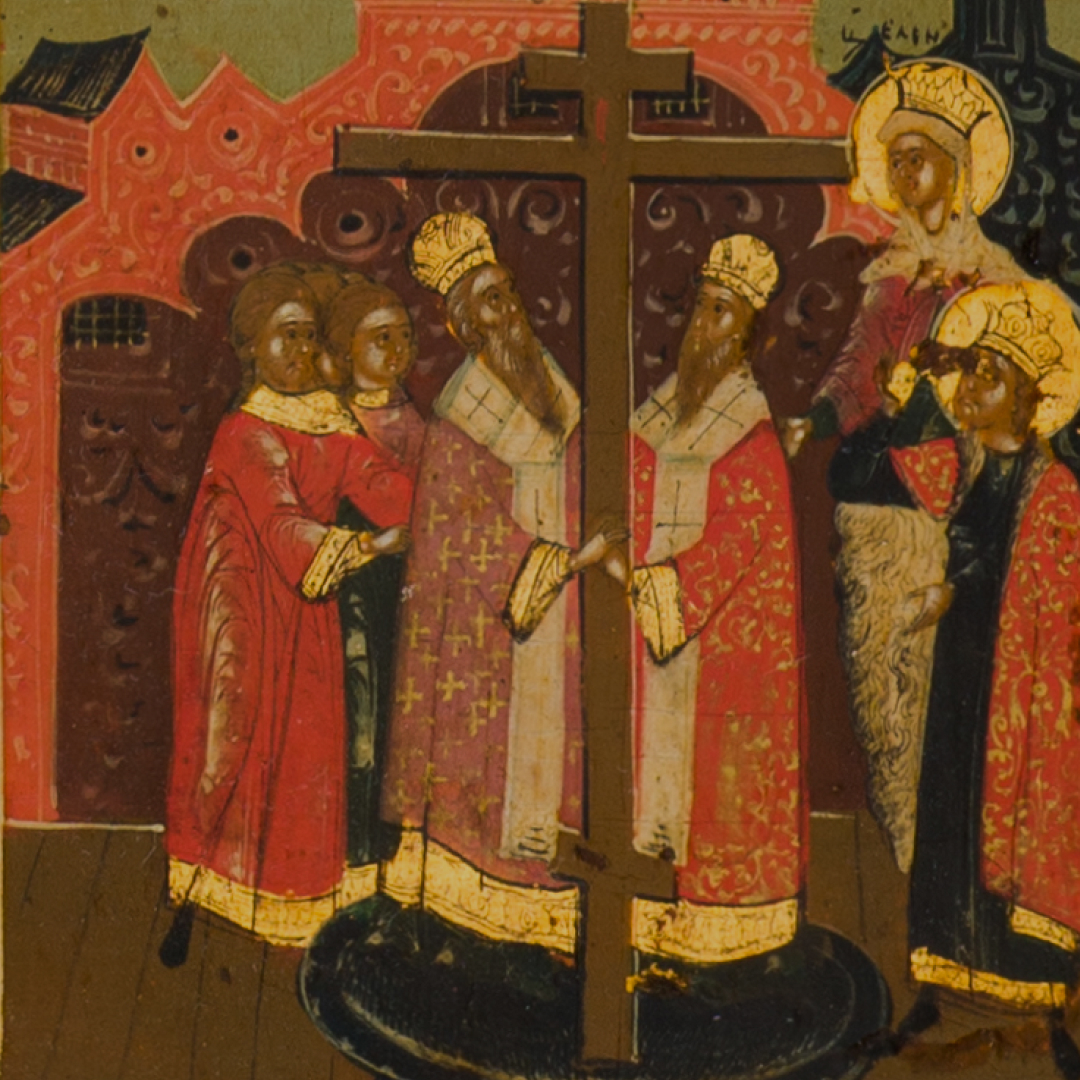
Icons occupy a special place within global cultural heritage because these small objects carry deep meaning and significance for entire communities of believers. A painted wooden panel, typically no larger than a book, can hold centuries of theology, artistic tradition, and communal memory. These peculiarities give icons, which have historically been treated as household worship aids, unique cultural value in modern times.
Icons as a Visual Tradition
Icons are, above all, artifacts containing evidence of the centuries-old visual language of the Christian community. Every color choice, gesture, and proportion follows conventions established many centuries ago. For example, gold backgrounds can signify divine light, while elongated faces of saints express spiritual transformation. In this way, a serious study of icons reveals how communities of believers have conceptualized holiness, beauty, and the relationship between the human and the divine.
Icons as Bearers of Continuity in Cultural Heritage
Icons have been preserved in households for centuries, passed down through generations of worshippers and representing each family’s personal cultural heritage. This symbolic role has turned icons into a link between living people and their ancestors. Turbulent historical times might have scattered relatives across a country or the globe, but the icons they carried helped migrants preserve a spiritual connection to places and people.
Icons as a Sign of Religious Devotion
Nowhere is the unifying role of icons more pronounced than in the history of Old Believers. This Orthodox movement emerged in response to Patriarch Nikon’s sweeping 17th-century reforms, which sought to bring Russian worship practices into closer conformity with contemporary Greek usage. Old Believers rejected these changes, and many communities moved to remote regions to avoid persecution. Their icon painting traditions preserved earlier Russian forms, creating a distinctive visual and spiritual language rooted in pre-reform Orthodox practice.
There are several Old Believer icon collections across the globe, including the icon collection of Oleg Kushnirskiy, bringing together several centuries of Old Believer iconography in one place. These examples of religious art have enormous cultural value because Old Believers preserved icons and artistic traditions that were changed or disappeared from official church practice. Studying Old Believer iconography in depth therefore offers an opportunity to rediscover early Russian art traditions.
Today, icons remind us that cultural legacy is not only about grand objects and striking visual aesthetics. In some cases, the most culturally valuable items can come from the quiet persistence of communities that refuse to let their traditions disappear.