

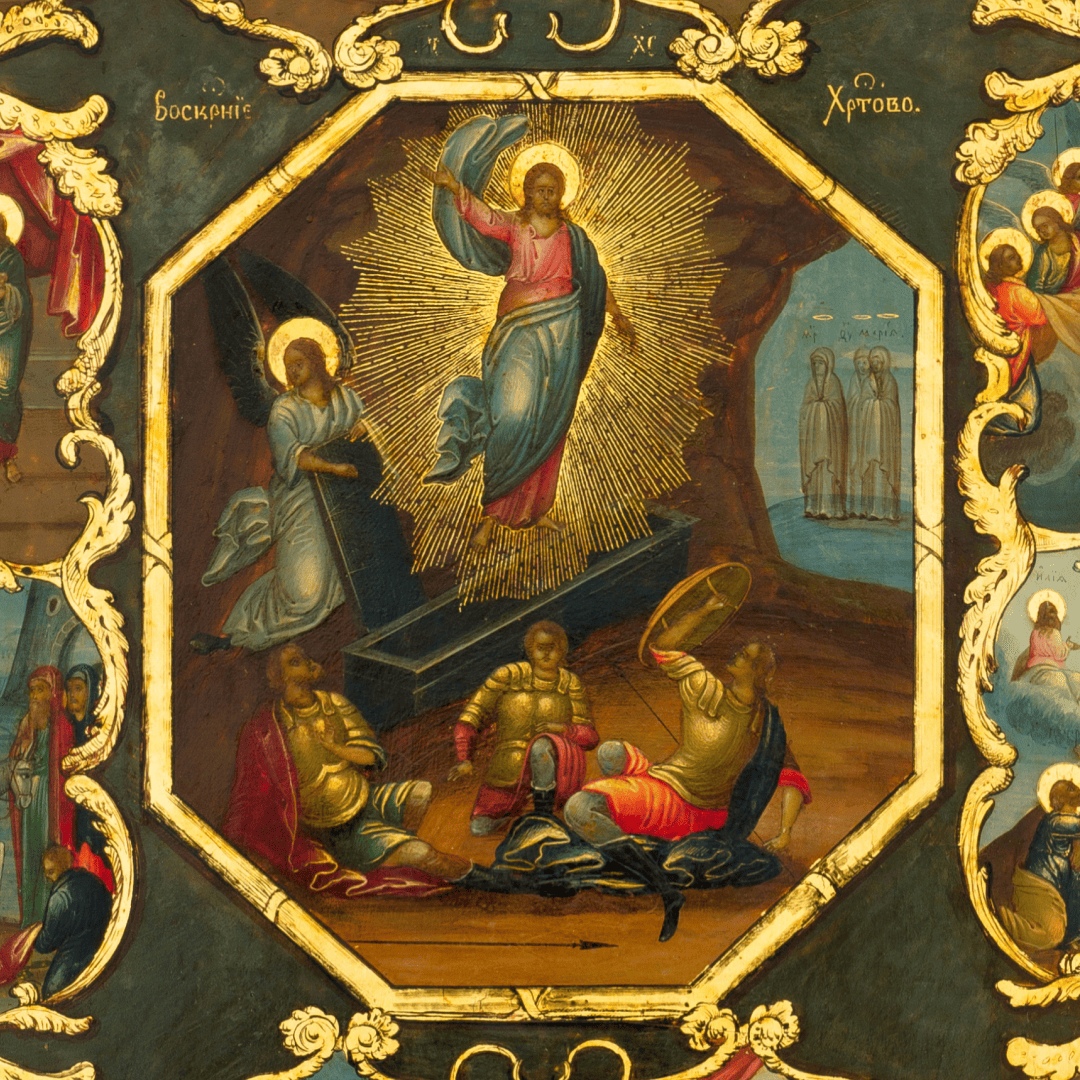
When you step into a gallery of medieval art, you may find a Byzantine icon hanging just a few steps away from an Italian Renaissance masterpiece. Both may depict Jesus Christ, the Virgin Mary, or saints, and both may be classified as religious paintings. Yet, these two forms of art can serve different purposes and speak different visual languages.
Purposes: Prayer vs. Picture
In the Orthodox tradition, icons are not simply objects meant to be looked at. They are objects of veneration, with believers lighting candles in front of them, kissing them, and praying in their presence. The Second Council of Nicaea in 787 affirmed the veneration of icons, distinguishing the honor shown to a sacred image from the worship reserved for God alone. The honor shown to an icon is directed toward the person it depicts.
Western religious paintings have also served devotional purposes, including prayer and contemplation. However, many were additionally created to illustrate biblical stories, communicate religious teachings, or decorate churches and other sacred spaces. The distinction is therefore not absolute: both icons and other religious art pieces can support devotion and convey religious meaning.
Artistic Conventions of Religious Paintings
Icons often favor symbolic space, gold backgrounds, frontal figures, and stylized proportions. Some use reverse perspective, in which lines appear to diverge toward the viewer. Compositions may follow established iconographic types, such as the Hodegetria, in which the Virgin Mary gestures toward the Christ Child. Western paintings, particularly those of the Renaissance and Baroque periods, often emphasize linear perspective, anatomical realism, and natural light.
Neither tradition, however, is uniform. Icons from Constantinople, Novgorod, and Crete can differ significantly, even within the same historical period. Later Russian icons also incorporated Western artistic influences, while some Romanesque frescoes and Gothic panels remained highly stylized rather than naturalistic.
The Artist’s Role
Icons and other religious artworks can also differ in their approach to authorship. Icon painters traditionally worked within established conventions, prioritizing theological meaning over individual expression. Many remained anonymous, although notable artists such as Andrei Rublev are well known today. In Western art, masters such as Caravaggio and Rembrandt became celebrated for their distinctive styles and interpretations of biblical subjects. Nevertheless, artistic individuality existed in both traditions.
From Sanctuary to Museum
During the late 19th and early 20th centuries, the restoration of many Russian icons revealed vivid colors beneath darkened surface coatings, renewing interest in their artistic and historical significance. Many icons subsequently received greater attention from museums, collectors, and art historians.
Today, icons and other religious paintings are appreciated as works of art as well as expressions of faith. For a closer look at Russian icon painting, the illustrated catalog of the Oleg Kushnirskiy Collection explores icons dating from the mid-17th to the early 20th century. These works offer insight into the traditions, techniques, and cultural heritage that make sacred art so diverse.