

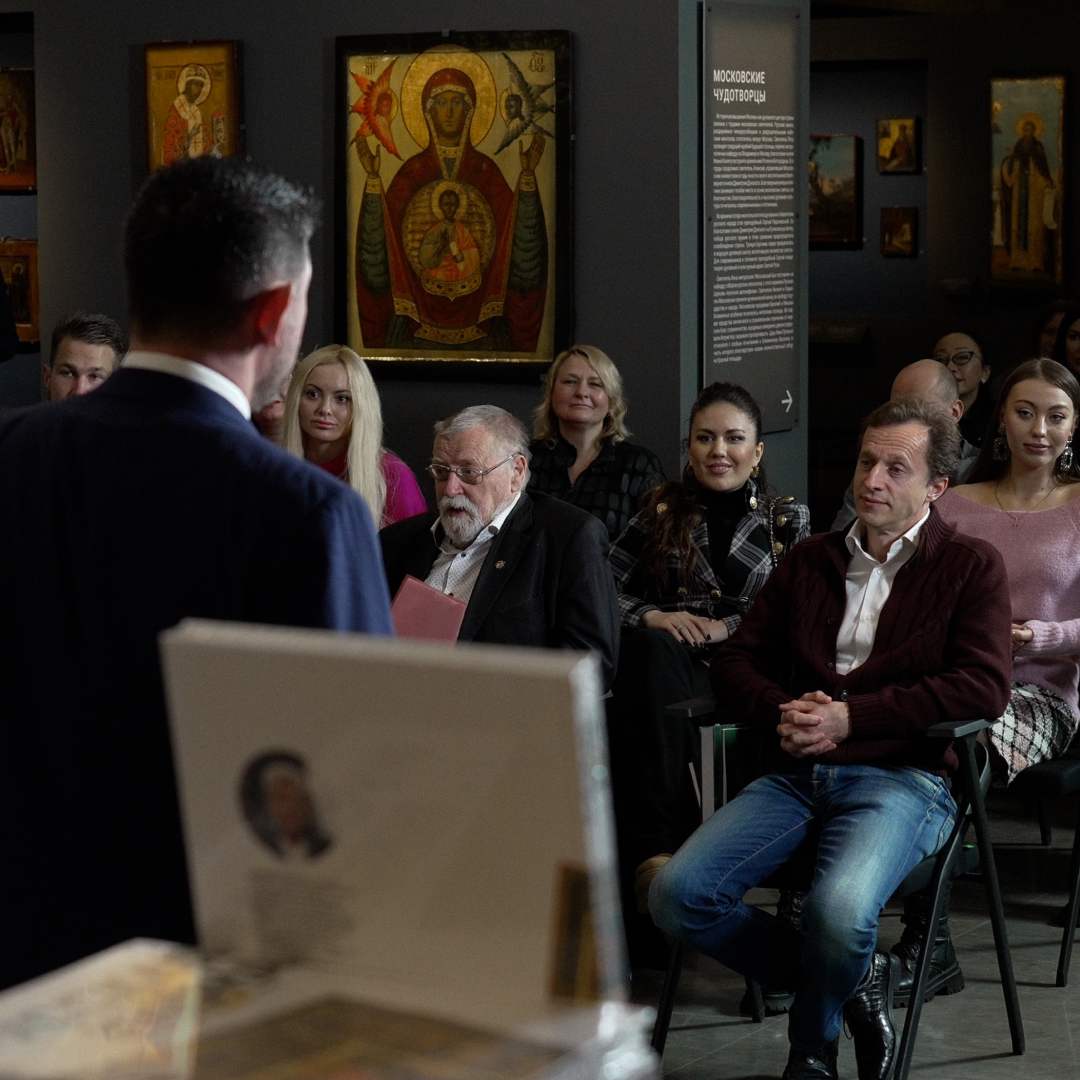
Collecting religious art isn’t identical to collecting other art objects. Icons have never been made purely for decoration. They hold multilayered meanings as devotional objects, so collectors should be familiar with Orthodox symbolism to make informed choices. Before you buy antique Russian icons, research the subject extensively to build a solid foundation for your collecting decisions.
Start with the Object
The starting point should be an in-depth understanding of icons as objects. Traditionally, icons have been painted on wooden panels, often made of linden, cypress, or pine. Battens called shponki were slotted into the back of the icon to help prevent warping. The panels were coated with levkas, a chalk-and-glue gesso ground, then painted in egg tempera and sealed with olifa. The latter is a linseed-oil varnish that may darken to a near-black color over centuries.
Many old icons were made with a recessed central field called a kovcheg, framed by a sloped border. By assessing the battens, the depth of the recess, and the way the wood and painted surface have aged over time, you can gain valuable information about the icon’s historical period, condition, and possible authorship.
Build Competent Judgment
Once the structural composition of icons is clear, you need to read extensively to develop a better understanding of iconographic nuances and periodization. For instance, the icon catalog dedicated to Oleg Kushnirskiy’s extensive collection offers a deep dive into Old Believer iconography, visual grammar, and regional school distinctions. You can also consult authoritative writings and publications by Russian icon experts and scholars.
Supplementing your research with a practical examination of authentic examples at the Tretyakov Gallery, the Russian Museum, or the Museum of Russian Icons in Clinton, MA, can further develop your eye. A close examination of authentic icons under expert supervision is one of the best ways to master the fundamentals of icon appraisal.
Where to Buy Antique Russian Icons?
The next practical question is where it is safe and legal to buy antique Russian icons. We recommend looking for them at established auction houses with Russian art sections. Specialist dealers offer private services and guidance in finding examples with solid provenance documentation. Regional auctions and estate sales in areas where Russian émigré communities have historically settled may also be sources of rare and valuable pieces.
The Legal Side of the Craft
Regardless of where you find an icon, it is vital to check its provenance and make sure the transaction is legal. Please keep in mind that Russian law restricts the export of certain antique icons, while sanctions imposed since 2022 have added complexity to cross-border art transactions involving Russia. Check all documentation carefully before entering into a contract or attempting to move an icon across a border.
Research, provenance, condition, and legal compliance are essential parts of responsible collecting. The more thoroughly you investigate an icon before purchasing it, the better equipped you will be to make a sound decision and preserve the piece for future generations.