

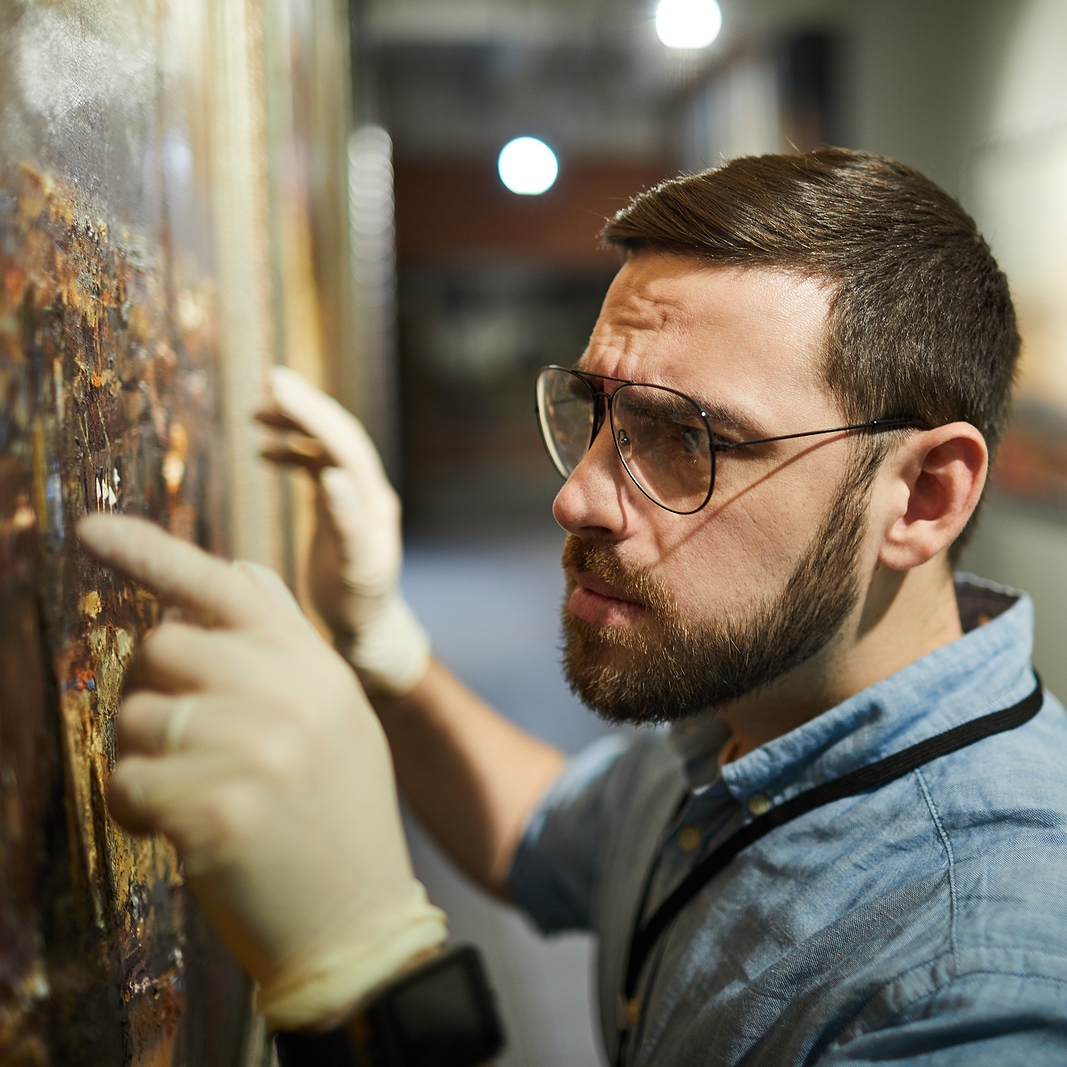
Some transportation-related damage is not immediately visible upon delivery and may become apparent only weeks or months later. A crate may arrive in pristine condition, yet the artwork inside could have been exposed to shock, vibration, or temperature and humidity fluctuations during transit. These factors can cause damage that develops gradually. Recognizing the signs of hidden shipping damage is essential for documenting changes and responding promptly.
Packaging Inspection Comes First
Before opening the package, photograph the crate or box from every side. Look for crushed corners, punctures, and water stains. Fresh screws, tape, or other signs of opening may also warrant attention. These indicators do not necessarily mean the artwork is damaged, but they should prompt a careful inspection. Keep the packaging until the artwork’s condition has been assessed.
Top Signs of Hidden Shipping Damage by Artwork Type
Paintings
Inspect paintings under bright, indirect light. Holding a flashlight almost parallel to the surface can help reveal problems that flat lighting may not show. Look for new cracks, raised or lifting paint, dents, bulges, and slack or rippled canvas. Check the reverse for damage to the canvas and stretcher bars, including areas where the bars may have pressed against the canvas. Tears can also occur near the edges or remain partially concealed by the frame.
Paper-Based and Framed Art
Paper reacts to changes in moisture, so check for cockling (waviness), tide lines, and possible mold growth. Other signs of hidden shipping damage include torn hinges, shifted sheets, or artwork that has slipped inside its mount. Pastel and charcoal works may also show pigment loss or powder deposits on the glazing if the medium has been disturbed during transit. Avoid touching the surface, as loose media can be easily displaced.
Sculpture and Three-Dimensional Objects
Inspect sculptures and other three-dimensional objects around joints, bases, attachments, and previous repairs, which may be particularly vulnerable to stress. Look for new chips, cracks, loose components, and changes in surface finish. Bronze and patinated metal may show fresh abrasions or rub marks. Do not tap fragile ceramics or glass to test for cracks, as this can cause further damage. Suspected fractures should be assessed by a qualified conservator.
What to Do If You Spot Damage
If you notice any suspicious changes, stop handling the artwork and avoid attempting repairs. Photograph the damage and packaging, retain any fragments and packing materials, and compare the artwork with its pre-shipment condition report and photographs. Contact the shipper and insurer promptly to ask about reporting requirements and claim deadlines. Consult a qualified conservator for professional assessment, especially if the damage appears unstable or continues to develop. Early documentation and careful handling can help prevent further deterioration and support the claims process.