

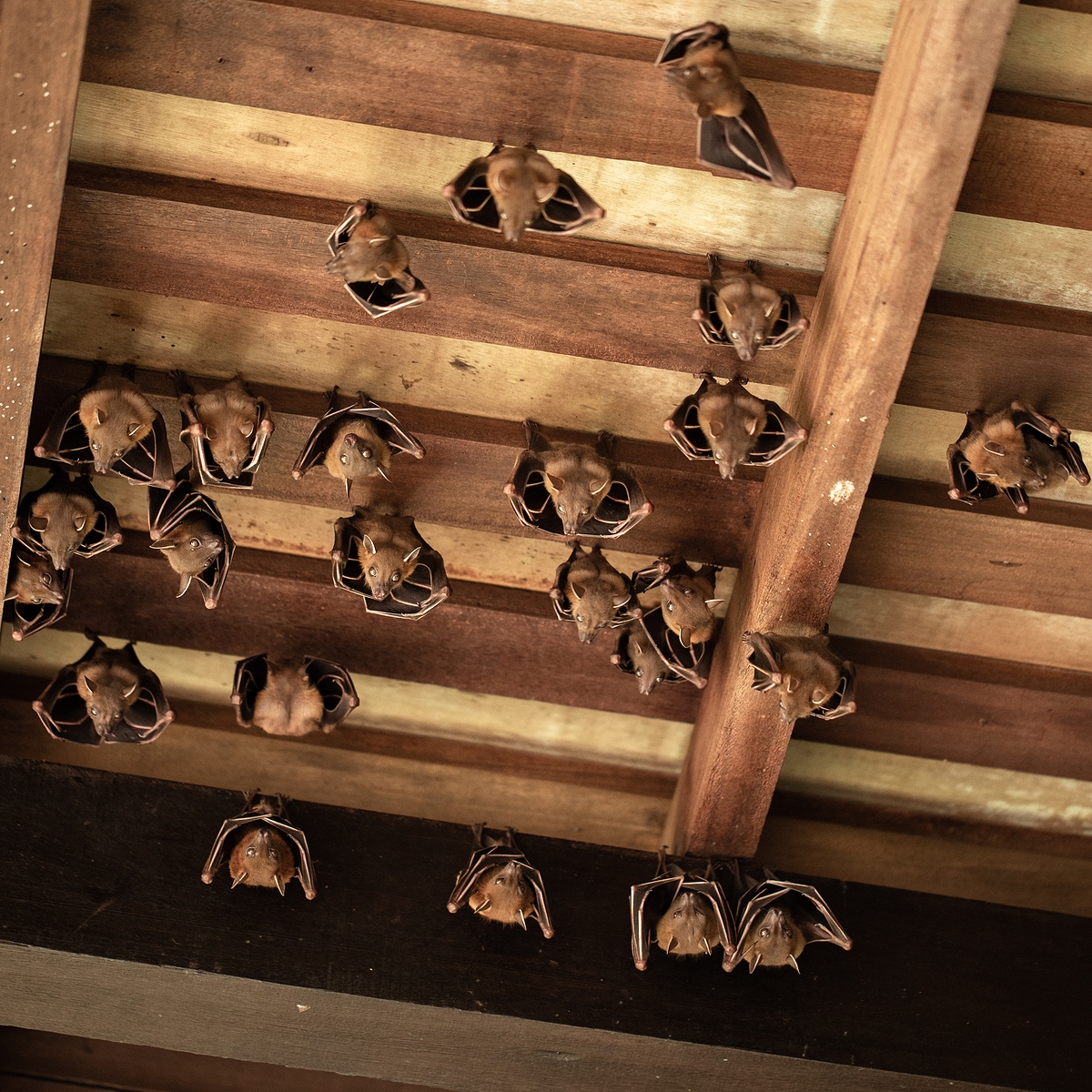
Most conversations about art storage focus on temperature, relative humidity, light levels, and the crates that hold each piece. Wildlife rarely makes the list, yet a colony of bats roosting above a storage room can undo years of careful climate management in a single season. For collectors, galleries, and the facilities that house their works, a bat problem is a collection care issue first and a building maintenance issue second.
Older brick warehouses and converted industrial buildings are especially attractive to bats, and many of those buildings now hold private collections, gallery inventory, and works waiting to ship. Knowing how bats affect stored art, and how to move works safely while the building is treated, helps owners avoid losses that no insurance payout fully repairs.
How Roosting Bats Damage Artwork and Storage Conditions
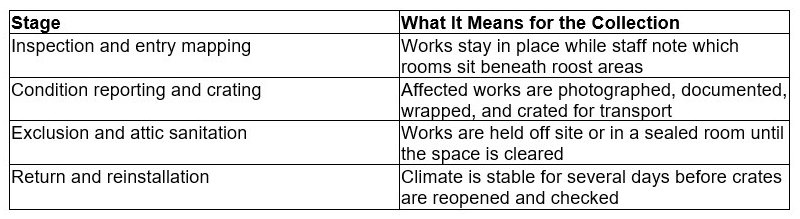
Bats enter through small gaps around vents, eaves, and roof penetrations, then settle in attics and ceiling voids that often sit directly above storage rooms. Facility managers looking into what to do first about bats in the attic in Missouri and similar regions soon learn that sealing every gap right away is a mistake, because bats trapped inside will look for new routes into occupied rooms. The right first step is a professional inspection that maps every entry point before any work touches the roofline or the HVAC system.
Guano and urine are the main threat to the collection itself. Both are acidic, and over time they stain ceiling materials, seep through gaps in older ceilings, and leave an ammonia odor that porous materials absorb. Textiles, works on paper, unvarnished paintings, and wooden frames are the most vulnerable, along with the crates and soft packing that protect works between shipments. Moisture from droppings and from animals moving through insulation can also push relative humidity in nearby rooms out of range, which strains even well-designed climate-controlled art storage.
Moving Works Out Before Exclusion and Cleanup
Exclusion and attic cleanup involve ladders, lifts, removal of contaminated insulation, and dust that should never settle on exposed surfaces. In most cases, the safest option is to move affected works before crews start. Each piece should get a condition report with photographs, so any change found later can be traced to a date. Works are then wrapped, crated, and either moved to a sealed room in another part of the building or transported to a temporary storage facility with stable climate control.
Timing shapes the whole schedule. Wildlife guidance discourages sealing entry points during maternity season in late spring and summer, when young bats cannot fly and would die inside the walls. That can mean a waiting period of several weeks before permanent exclusion is finished, so owners should plan for works to stay off site longer than the cleanup itself would suggest.
Health risk is the other reason handling staff should stay out of affected areas until cleanup is finished. According to the Centers for Disease Control and Prevention (CDC), most human rabies deaths in the United States are linked to bats, and dried guano in enclosed spaces can carry the fungal spores that cause histoplasmosis. Art handlers, registrars, and packers should not enter a contaminated attic or ceiling space, and any crate or wrapping that was exposed should be inspected or replaced before it travels again.
Documentation, Insurance, and Collection Value
Insurers, lenders, and institutional clients increasingly ask how a storage space is protected from pests. A facility that can show inspection reports, exclusion records, sanitation certificates, and condition reports for every relocated work has a clear answer. That paper trail supports an insurance claim if damage is found later, and it reassures collectors that their works sit in a controlled environment.
Records also matter when a work is sold, loaned, or shipped to an exhibition. Condition reports showing that a piece was moved out before cleanup and returned unchanged help confirm its condition history, which affects both its value and the terms a borrowing institution will accept.
Bringing the Collection Back into Storage
Works should return only after the attic has been sanitized, contaminated insulation has been replaced, and the storage rooms have held steady temperature and humidity for several days. Crates should acclimatize in the room before they are opened, and each piece should be checked against its original condition report as it is unpacked.
Bats are a building problem, but the cost lands on the collection when owners wait too long or skip steps to save time. An early inspection, careful packing and transport, and a patient return to storage keep works safe through the whole process. They also leave the owner with records that protect the collection's value long after the last bat is gone.