

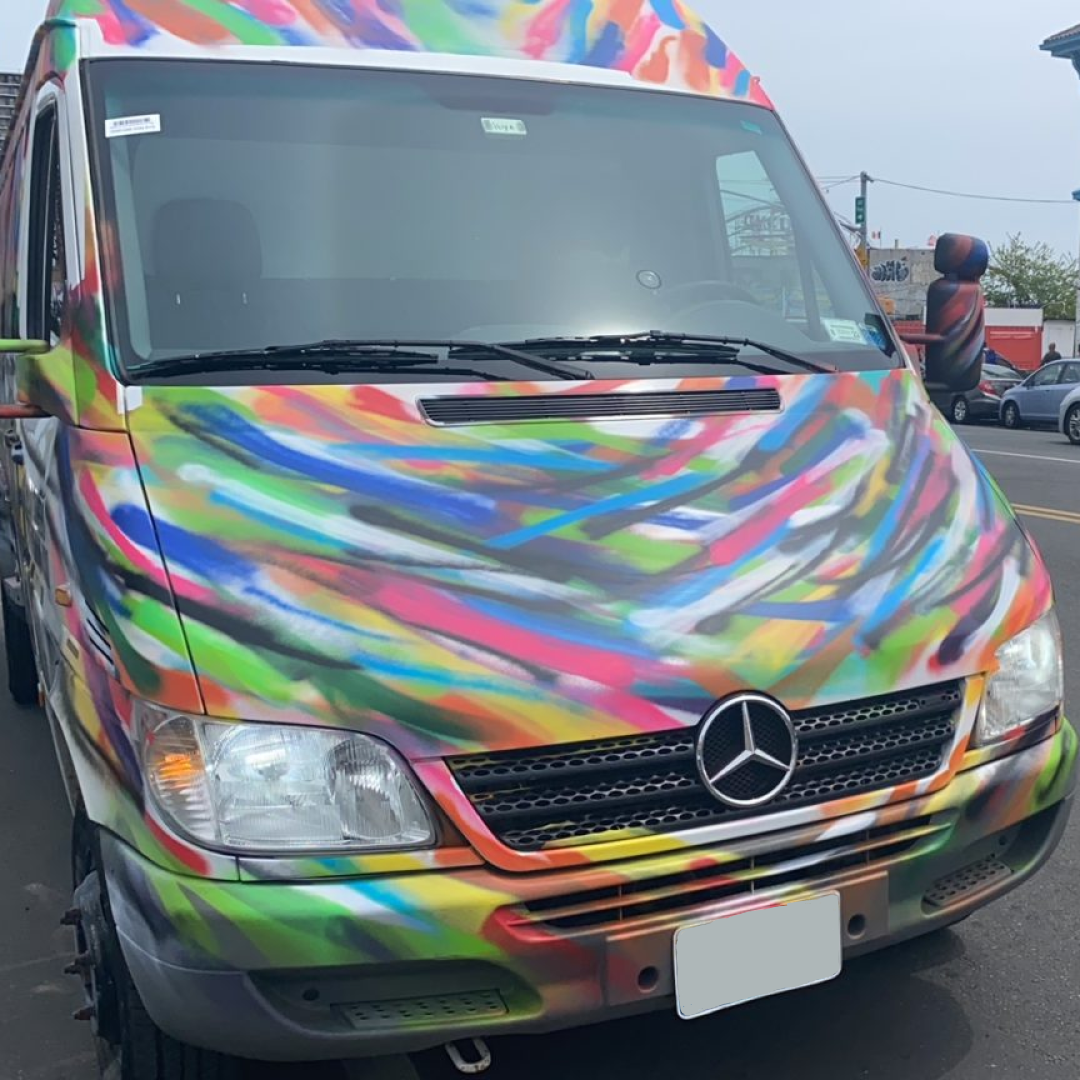
Street art has always been connected with movement, spontaneity, and public interaction. Traditionally, it appeared on city walls, sidewalks, and abandoned buildings, waiting for people to encounter it by chance. Today, however, a new generation of art vehicles is redefining how audiences experience street art. Instead of remaining tied to a single location, these mobile artworks travel directly to viewers, turning everyday spaces into unexpected artistic encounters.
“Da Race on Wheels” by Mitchell Schorr and Fine Art Shippers
One of the most notable examples is Mitchell Schorr’s “Da Race on Wheels,” an art project created in collaboration with Fine Art Shippers. Introduced in 2021, the art van combined fine art logistics with contemporary street art, functioning both as a transportation vehicle and a moving public artwork. Covered with Schorr’s signature imagery, the van traveled across the United States, bringing art directly into neighborhoods, city streets, and public spaces without the formal setting of a gallery or museum.
Projects like “Da Race on Wheels” demonstrate how art vehicles challenge traditional ideas about where art belongs and how it should be experienced. Rather than asking audiences to visit curated institutions, mobile artworks meet people in their daily environments. This creates a more spontaneous and democratic connection between art and the public.
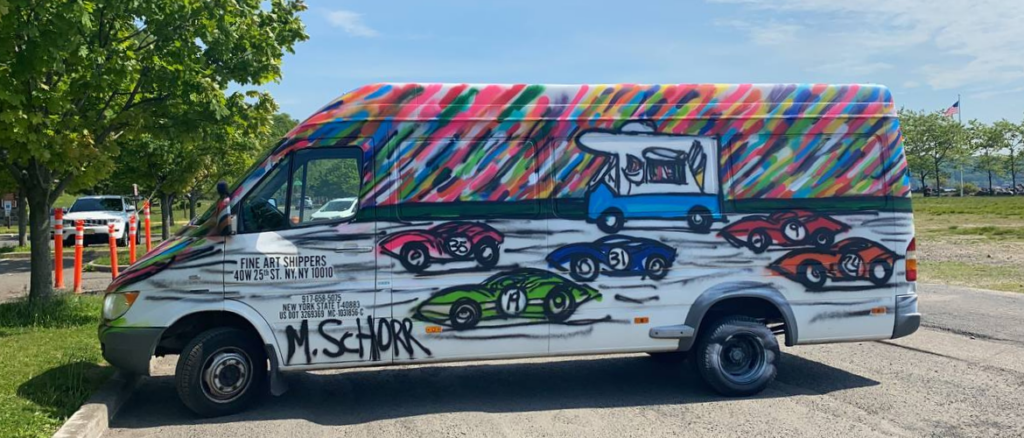
At present, “Da Race on Wheels” is available for purchase, offering collectors a rare opportunity to acquire a one-of-a-kind piece that merges contemporary street art with functional design and mobile public exhibition culture.
Mobile Art as a Cultural Movement
Other artists and collectives have explored similar concepts. The Futurefarmers collective, for example, has used traveling structures and mobile installations to connect rural and urban communities through art. Designer and artist Ron Arad also experimented with mobile exhibition formats that questioned the static nature of traditional sculpture and gallery display.
These projects share a common goal: making art more accessible and integrated into everyday life.
Why Art Vehicles Matter
The growing popularity of art vehicles reflects a broader cultural shift. Contemporary audiences increasingly value accessibility, interaction, and unconventional artistic experiences. Mobile art dissolves the boundary between intentional art viewing and accidental discovery, allowing anyone to become part of the experience regardless of background or location.
Murals painted on permanent city walls often become symbols of a specific neighborhood. In contrast, moving artworks belong to every place they visit and every viewer who encounters them along the way. This mobility transforms street art into a constantly evolving public experience, expanding its reach far beyond the traditional urban canvas.