

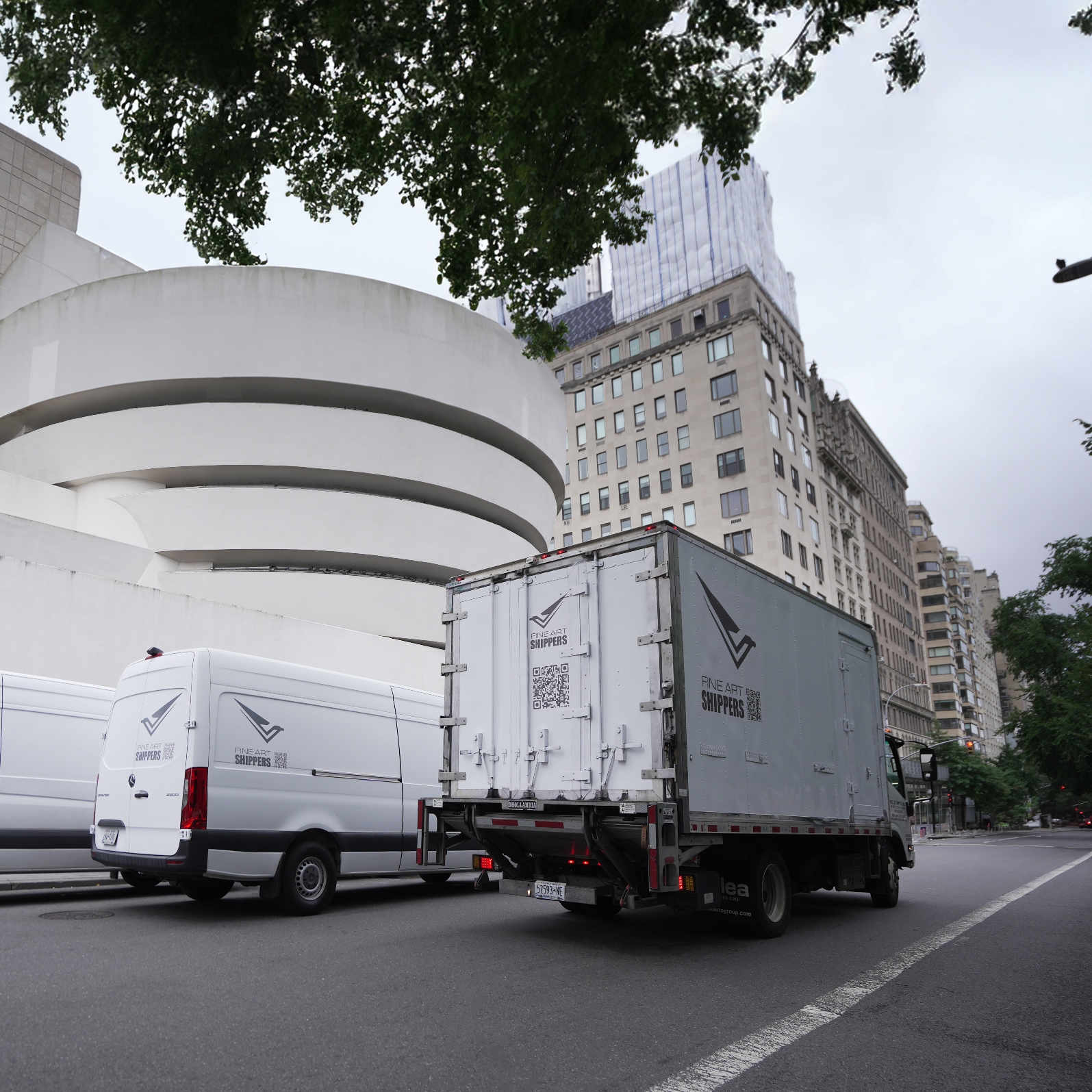
Every artwork responds differently to environmental conditions during transit. While climate-controlled transportation is considered the industry standard for valuable collections, it is not always required. The right choice depends on the artwork's materials, the travel distance, seasonal weather, and the stability of the entire logistics chain. Understanding climate-controlled vs non-climate art transport helps collectors, galleries, and museums balance risk, protection, and transportation costs without compromising artwork safety.
Climate-Controlled vs Non-Climate Art Transport: Understanding Industry Standards
For decades, professional art logistics has followed the well-known "50/70" guideline: approximately 50% relative humidity (±5%) and a temperature of 70°F (±2°F). Today, many museums follow the Bizot Green Protocol, which allows broader environmental parameters of 59–77°F and 40–60% relative humidity for many types of artwork.
These updated standards reflect modern conservation research showing that many artworks can safely tolerate moderate environmental variation when changes occur gradually. As a result, the discussion around climate-controlled vs non-climate art transport has shifted from rigid rules toward object-specific risk assessment.
Why Environmental Stability Matters More Than Extreme Precision
Conservators increasingly agree that rapid fluctuations pose a greater threat than slightly imperfect environmental conditions. Sudden shifts in temperature or humidity cause different materials to expand and contract at different rates, creating internal stress that may not become visible until weeks or months after transportation.
For this reason, professional art logistics focuses on maintaining environmental stability throughout the entire journey. Proper acclimatization, carefully planned loading and unloading procedures, and controlled transitions between vehicles, warehouses, and exhibition spaces often contribute more to artwork preservation than climate-controlled vehicles alone.
Matching Transportation to the Artwork
Different materials require different levels of environmental protection.
- Oil paintings on canvas are highly sensitive because the canvas, ground, paint, and varnish all react differently to humidity changes.
- Paper-based artworks readily absorb moisture, making stable humidity essential for preventing distortion and discoloration.
- Wood panels, antique furniture, and icons are among the most humidity-sensitive objects and may warp, split, or develop structural damage if environmental conditions change too quickly.
- Photographs and film are particularly vulnerable to elevated temperatures, which accelerate chemical deterioration.
- Stone, glass, and metal sculptures generally tolerate wider environmental ranges but should still avoid freezing temperatures and excessive heat that may create structural stress.
The best transportation strategy is always based on the specific needs of the artwork. Professional art shippers evaluate the object's materials, conservation condition, travel route, seasonal weather, handling procedures, and expected environmental changes before selecting the safest shipping method. This tailored approach minimizes unnecessary costs while providing every artwork with the level of protection it truly requires.