

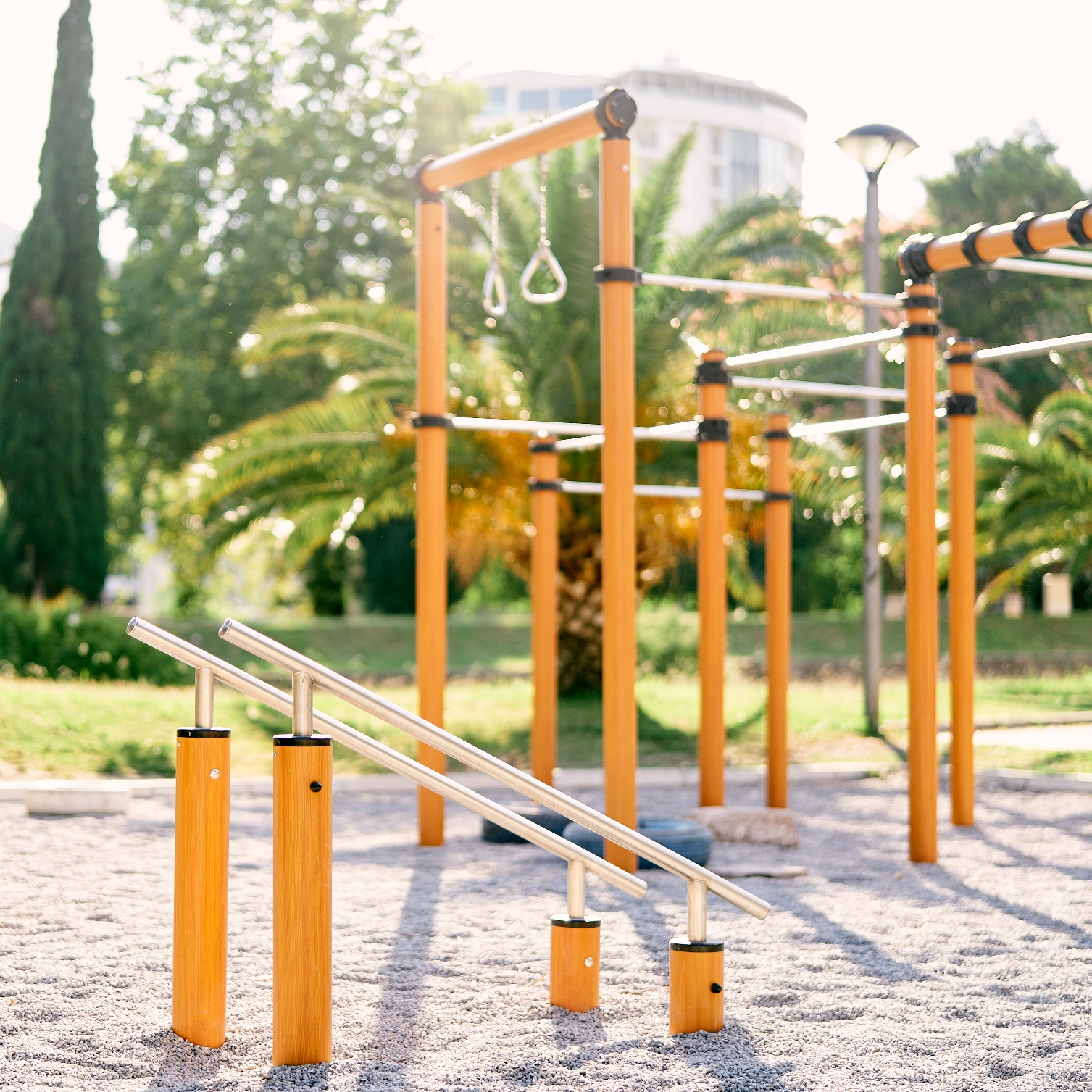
Installation of recreational equipment in public parks moves in stages, and the order of those setups matters more than most people realize. Add sculptures and murals to the equation, and the whole process requires strategic planning. These art pieces require concrete work, drilling, and heavy anchoring. Here is why public art should be installed before outdoor fitness equipment is set up.
1. The Risk of Damage to Public Art
Many public art installations require installers to dig footings and pour concrete. The work can result in crews walking around and hauling materials, and none of that works well with fitness equipment sitting nearby. If the artwork arrives after the fitness equipment, it has to be installed around active machinery and ongoing digging. That raises the chances of a scrape or a crack.
Art installers also need easy access and stable ground to do their job right. Concrete for fitness equipment footings takes time to cure, and drilling into that surface to install art adds vibration risk that can break the piece. Delivering the art first means it goes in before the site turns messy. This makes the difference between an artwork that looks right on opening day and one that requires costly repairs and cleaning before the park even welcomes its first visitor.
2. The Overall Park Design
Public art installations can serve as visual guides to how people move through the park. Once the sculpture is in place, designers can come up with walking paths, view lines, gathering areas, and fitness zones. Bringing the art after exercise machines means workers have to rethink layouts that were already finalized to fit it in. This costs time and money nobody budgeted for.
Placing art first also gives fitness installers a plan to build around it. It is much easier to fit outdoor fitness equipment for parks into a flow that already accounts for a sculpture's footprint than to introduce a sculpture to a layout built entirely around exercise stations. This makes the park design feel like a single connected space rather than an afterthought.
This kind of sequencing also protects sightlines that matter for safety. Fitness zones benefit from open visibility, just like the public art itself. Getting the order right from the start improves accessibility and reduces user congestion.
3. A Better Vision Experience from Day One
Visitors notice when a park seems unfinished, even if they cannot say exactly why. A fitness area surrounded by bare ground where a sculpture will eventually go looks incomplete, no matter how good the equipment itself is. Fixing the art first means the whole fitness area will look intentional as soon as it opens, not assembled in pieces over time.
People using outdoor fitness equipment also respond to their environment. A well-placed public artwork can turn a regular workout stop into something people actually want to visit every day. Parks that skip often end up closing some sections later on or fencing off a finished area just to squeeze in art around equipment that is already in daily use. That kind of disruption can reduce the number of daily visitors.
Endnote
The order of installation has a lasting effect on how a public park functions. Delivering public art before the final outdoor fitness equipment installation protects valuable artworks, supports stronger design decisions, and creates a better experience for visitors. It also reduces unnecessary construction risks and helps project teams complete the space more efficiently. Good behind-the-scenes planning leads to parks that serve communities well for many years.