

Many collectors wonder why artwork arrives damaged even when it appears to have been packed carefully. In most cases, the damage is not caused by a single incident but by a combination of improper handling, inadequate packing, environmental changes, and transportation conditions. Transit damage refers to any change in an artwork's physical condition between the time it is packed and the moment it reaches its destination. This may include visible issues such as cracks, tears, punctures, or broken frames, as well as less obvious problems like warping, paint flaking, discoloration, or condensation. Understanding these risks is the first step toward preventing them and ensuring safe art transportation.
Why Artwork Arrives Damaged: Causes of Damage at a Glance
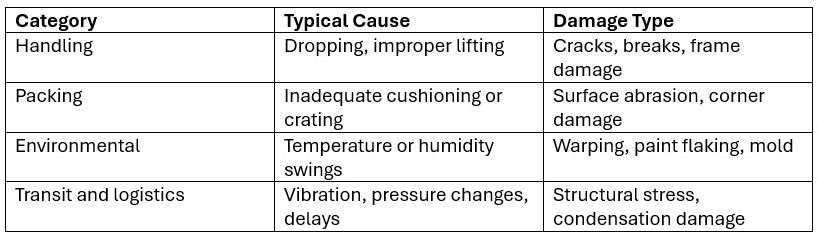
Every stage of the shipping process presents potential risks. The table below summarizes the most common causes of transit damage and the types of problems they create.
Common Causes of Damage, Explained
Understanding why artwork arrives damaged becomes easier when you examine each risk individually.
Handling-Related Causes
Improper handling remains one of the leading causes of transit damage. Common examples include:
- Improper lifting or carrying of oversized and heavy art objects
- Dropping or tipping artwork during loading and unloading
- Incorrect stacking of crates or packages
- Using personnel without specialized fine art handling experience
Improper Packing
Even careful transportation cannot compensate for inadequate packing. The most common mistakes include:
- Insufficient cushioning between the artwork and the walls of the box or crate
- Direct contact between adhesive packing materials and delicate surfaces
- Crates that are either too tight or too loose for the artwork
- Missing corner protectors for framed paintings and panels
Professional custom crating and museum-grade packing materials significantly reduce these risks.
Environmental Factors
Environmental conditions can damage artwork without any physical impact. Common hazards include:
- Rapid temperature changes during transportation in non-climate-controlled vehicles
- Humidity fluctuations that cause wood, canvas, and paint layers to expand, contract, or warp
- Direct sunlight or prolonged UV exposure during loading or temporary storage
- Condensation forming inside sealed crates because of temperature differences
Transit and Logistics
The transportation process itself also introduces several risks:
- Continuous vibration and road shock during long-distance trucking
- Pressure changes during air transportation
- Shipping delays or customs inspections that leave artwork in uncontrolled environments
- Multiple transfers between carriers that increase handling and reduce control over the shipment
Choosing an experienced fine art shipping company helps minimize these risks through specialized handling procedures, climate-controlled transportation, and carefully planned logistics.
FAQs
What is the most common cause of artwork damage?
Improper handling and inadequate packing are the most common reasons artwork is damaged during transit. Insufficient cushioning and poorly designed crates pose the greatest risk to fragile pieces.
Can humidity alone damage artwork in transit?
Yes. Wood panels, stretched canvases, and paint layers are highly sensitive to changes in humidity. Even without physical impact, moisture fluctuations can lead to warping, cracking, mold growth, or paint loss.
How do collectors reduce the risk of shipping damage?
Collectors can significantly reduce shipping risks by working with specialized fine art shippers, investing in custom-built crates, using museum-quality packing materials, documenting the artwork's condition before shipment, and choosing climate-controlled transportation whenever possible.