

Shipping art across borders always raises safety concerns. The journey involves multiple handover points, changing environmental conditions, and a complex chain of custody that you may not always be able to control. Proper packaging helps mitigate these risks considerably. Learn how to pack artwork for international shipping step by step and prepare for the process like a pro.
Peculiarities of Cross-Border Shipping
Careful packing is not just a formality in international shipping. It is the artwork’s primary protection barrier that works even when you are not present. Sharp temperature fluctuations during air travel, high humidity inside sea freight containers, and constant vibrations during road transportation can all affect art integrity. International shipping is a lengthy process with many stages that are difficult to monitor from start to finish.
That is why proper precautions and advance preparation make a real difference, determining how safely your artwork will be handled at every stage of the journey.
How to Pack Artwork for International Shipping Step by Step?
Step 1: Documentation and Condition Check
Before the packing process begins, inspect the artwork carefully and take several photos documenting its original condition. These records will help verify any potential damage that may occur during transportation.
Step 2: Packaging Material Selection
The next step is a layered packaging process. Sensitive surfaces should be covered with acid-free, non-adhesive glassine or archival tissue paper. The following layer should consist of foam or bubble wrap, with the bubbles facing outward and away from the artwork’s surface. Corner protectors are especially important for framed pieces.
Step 3: Inner Package Engineering
By securing the wrapped artwork with a rigid support layer, such as foam board, you provide additional protection during transit. This method creates a protective buffer that helps prevent damage even if the outer packaging experiences pressure or impact.
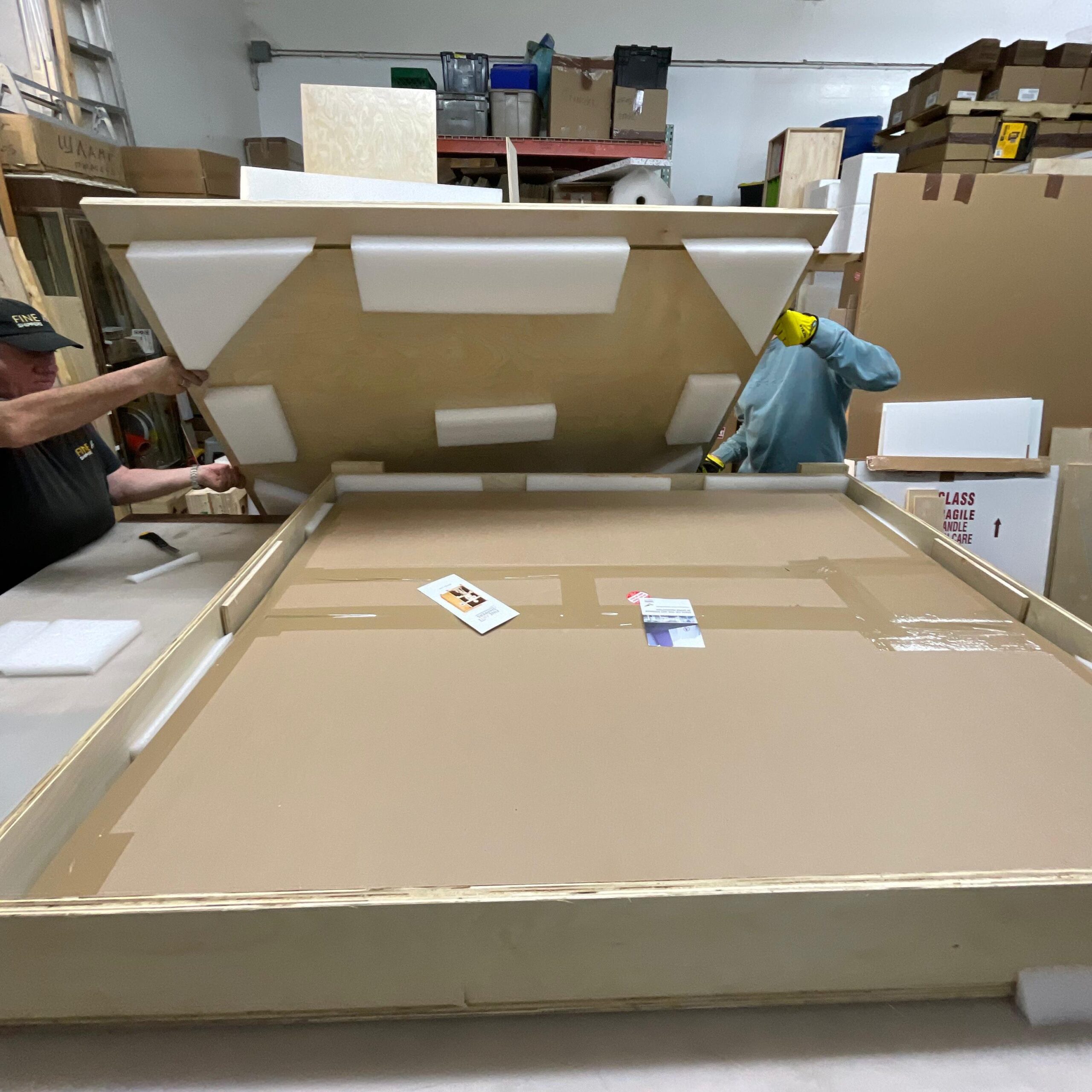
Step 4: Custom Crating
A custom-built wooden crate is essential for most international art shipments. Many insurance providers require crating for coverage, so this stage should be planned well in advance.
Step 5: Customs and Export Documentation
International art shipments cannot enter a new country without the required paperwork, including a commercial invoice, detailed packing list, and documents confirming the artwork’s age, origin, and materials.
Step 6: Insurance
It is important to insure the artwork for its full market value to ensure proper protection in case of loss or damage. Specialized art insurance designed for international transit provides coverage tailored to the specific risks of transporting valuable works.
Each of these steps plays an important role in the safety of your shipment. However, besides learning how to pack artwork for international shipping step by step, you should also involve a specialized fine art shipper in the process. Only experienced professionals can handle artwork properly and minimize the risks associated with international transportation, whether the destination is an exhibition, art fair, gallery, or private collection.