


Shipping artwork sounds simple. You just pack it up, send it off, and wait, but that thinking causes real problems.
Art is not just another package. Art reacts to everything, things like temperature, moisture, pressure, and just how someone holds it. If someone makes even one wrong move, you're looking at permanent damage.
Actually, moving the art is always the most dangerous part. About 60% of insurance claims for art damage happen during transit. This is usually because of bad handling, poor packing, or just being left out in the elements.
So, the real question is simple: What really happens when you try to ship art without using a specialist?
You take risks that most people don’t even see coming. And those risks can cost far more than the shipping itself.
Why Artwork Requires Specialized Shipping
Specialized art shipping is basically just the way you move art using specific handling, packing, and climate controls. The whole process is built specifically to keep fragile and expensive items safe while they are on the move.
Here’s why it matters:
- Art materials are sensitive
- Canvas expands and contracts
- Paint layers crack under stress
- Value is often high
- Even minor damage reduces resale value by up to 50% in some cases
- Many pieces are irreplaceable
- Originals cannot be restored to their exact state
Standard vs Specialized Shipping
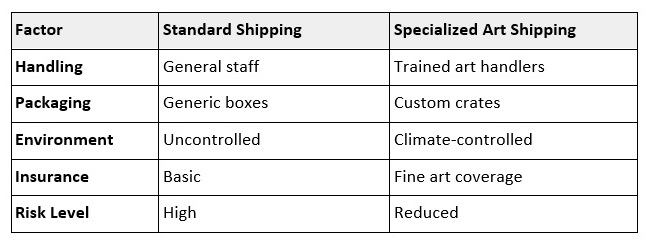
Standard logistics focuses on speed and volume. Art shipping focuses on preservation and precision. So, the goals are completely different.
The Most Overlooked Risks of Non-Specialist Shipping
1. Improper Packing and Materials
Most damage starts here. Artwork is not built to handle pressure, friction, or sudden movement. But standard packing methods often ignore that. They use generic boxes and common materials that were never meant for delicate surfaces.
Common mistakes:
- Using bubble wrap directly on painted surfaces
- Weak boxes that collapse under weight
- No shock absorption layers
What happens:
- Surface abrasion
- Frame warping
- Structural cracks
Pro Tip: Acid-free materials and custom crates reduce chemical and physical damage.
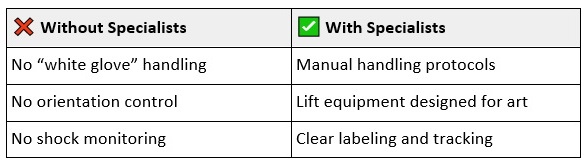
2. Mishandling During Transit
The reality is packages get stacked, dropped, and shifted. According to the International Transport Forum, handling errors remain a major contributor to cargo damage worldwide.
3. Temperature and Humidity Exposure
It’s easy to miss this risk, but this causes serious damage. Art basically reacts to almost everything. When temperature or humidity changes, materials in the artwork expand and shrink at different rates. That creates a lot of internal stress inside the piece.
What can go wrong:
- Paint cracks in low humidity
- Canvas warps in high moisture
- Wood frames swell or shrink
- Mold forms in damp conditions
Why standard shipping fails:
- No climate control
- Exposure to heat, cold, and moisture during transit
How specialists fix it:
- Maintain ~20°C and 45–55% humidity
- Use climate-controlled vehicles and insulated crates
Small environmental changes can cause permanent damage, and most of it is not visible right away.
4. Lack of Insurance Awareness
Insurance is not as straightforward as it seems.
Standard shipping policies rarely match the actual value of artwork. Coverage is often limited, and fine art may fall under exclusions or strict conditions.
What’s at risk:
- Claims based on capped value, not market value
- Limited protection for fragile items
- Complicated claims process
Without the right policy, financial recovery is uncertain even when damage or loss occurs.
5. Security and Theft Risks
Artwork requires controlled and discreet handling.
Standard shipping lacks the level of security needed for high-value items, especially those that are unique or easily resold.
Key vulnerabilities:
- Inadequate tracking systems
- Multiple access points during transit
- Lack of shipment discretion
Without proper safeguards, the risk of theft or loss increases significantly.
The Real Cost of Cutting Corners
Lower costs can look appealing at first. But in art shipping, small savings often lead to bigger losses.
Opting for a weaker crate, basic handling, or limited insurance might lower upfront costs. But the reality is that even minor damage can significantly tank the value of an artwork. These initial savings often lead to much larger losses because restoration almost never returns artwork to its original condition.
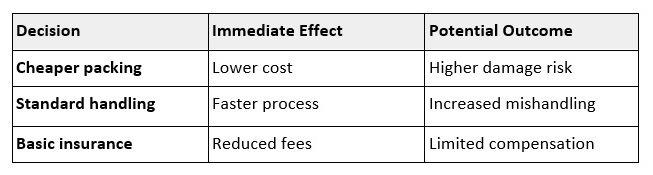
What looks efficient at the start can quickly become expensive once something goes wrong.
How Specialists Reduce These Risks
Specialists approach shipping with control, not assumptions.
They match materials, handling, and transport conditions to the specific needs of each piece. That includes custom crating, stable environmental conditions, and trained handling at every step.
Instead, they simplify the journey to limit exposure. The fewer the transfers, the fewer chances for damage.
There will always be risk, but this process keeps it managed and minimized.
Choosing the Right Moving Partner
Most logistics companies honestly have no business touching art.
Process is just as important as experience. A reliable moving partner should be able to explain the specific way an art piece is packed, handled, and moved.
Be cautious of vague answers or generic solutions. If the process sounds the same for every shipment, it likely is.
Conclusion
Artwork carries more than material value. It holds history, meaning, and often significant financial worth.
Shipping it without the right expertise introduces risks that are easy to underestimate and difficult to fix.
Success is a matter of control. When you master every detail of the process, the artwork reaches its destination exactly as it should. Precision leaves no room for failure.