

For most of their history, security doors were something you tolerated rather than chose: heavy, gray, institutional, specified by a facilities manager and ignored by everyone else. The job was to keep people out, not to look good doing it. That has changed, and the change says something about where interior design has moved over the past decade.
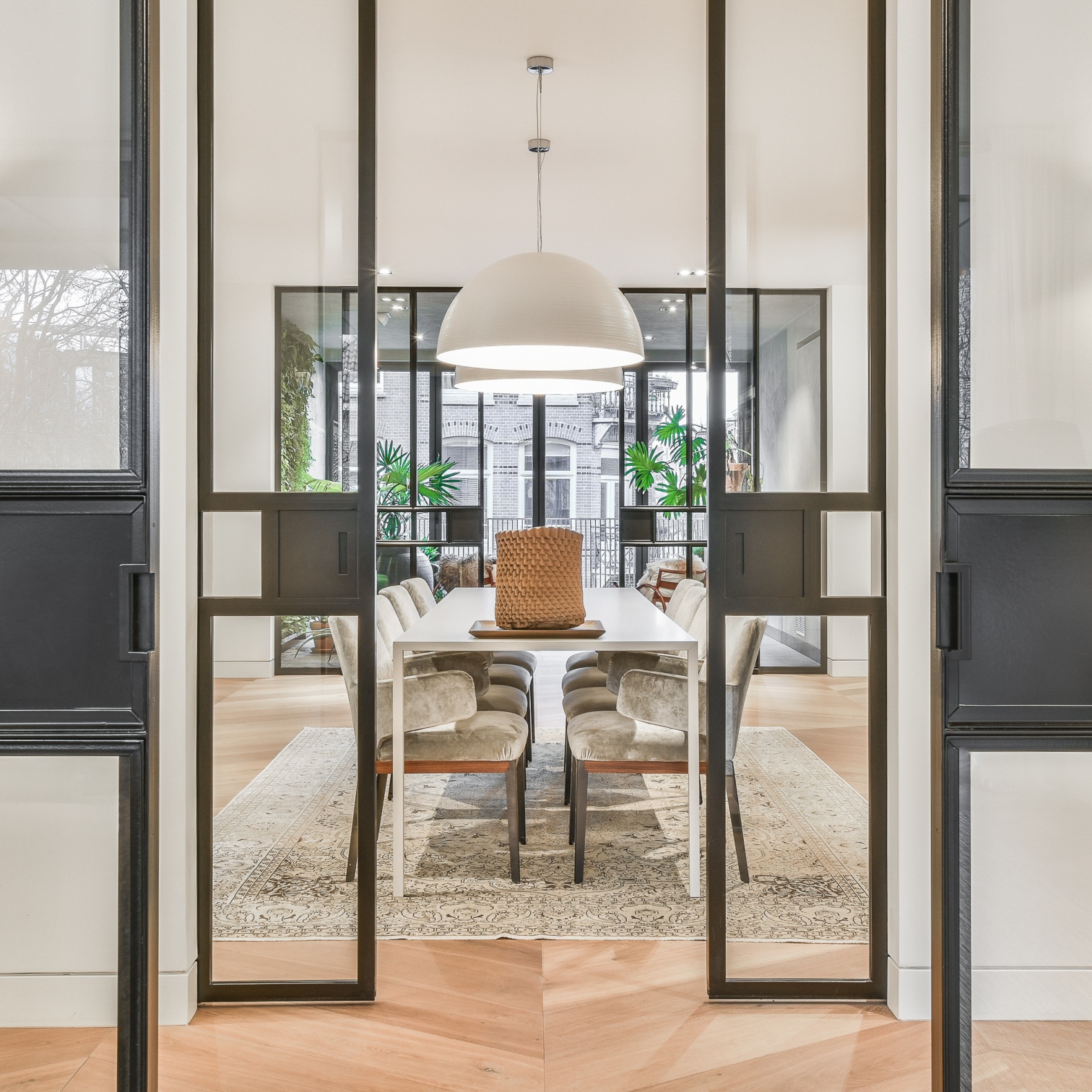
Steel has quietly become one of the most fashionable materials in residential and commercial interiors. The exposed-steel aesthetic that began in converted warehouses and lofts has filtered into new-build homes, restaurants, offices, and retail spaces. Black-framed glazed partitions, raw metal finishes, and the honesty of industrial materials are now design language rather than accident. Once steel became desirable as a finish, the steel door stopped being something to hide.
From warehouse to wish-list
As former industrial buildings were converted into homes and workspaces through the 1990s and 2000s, original steel-framed windows and doors became part of the appeal rather than something to replace. The Crittall window, a British steel-framed design dating to the 19th century, became shorthand for a pared-back, characterful interior. What started as preservation became aspiration, and manufacturers began producing steel-framed doors and screens for people who wanted the look.
The appeal is partly visual, partly emotional. Steel reads as honest: in an era of laminates engineered to imitate other materials, a steel door is unambiguously what it claims to be. Its thin sightlines allow more glass and slimmer profiles than timber or aluminum can manage at the same strength, and steel signals permanence in a way lighter materials don't.
Where security and aesthetics stopped being opposites
The bigger shift is conceptual. Designers used to treat security and beauty as a trade-off: a door could look good or keep you safe, and the more of one you wanted, the less you got of the other.
That assumption no longer holds. Manufacturing has improved to the point where a door can resist a determined forced-entry attack while being finished to a standard that belongs in a design scheme. The structural work – steel core, multi-point locking, reinforced frame – happens within the door's construction, while the visible surface can be powder-coated, glazed, paneled, or detailed to suit the space. The security is built into the body, not written on the face.
That matters because it removes the old excuse. A homeowner renovating a Victorian terrace no longer has to choose between a beautiful front entrance and a secure one, and a restaurant designer no longer has to bolt on security as an afterthought that ruins the look.
Specialist UK manufacturers such as Latham's Steel Doors now produce doors independently tested for forced-entry resistance and finished to sit comfortably in a considered interior, a combination that simply wasn't available a generation ago.
Designing with steel doors, not around them
Treating a steel door as a design element rather than a necessary evil changes how you specify it.
Let the frame do the talking
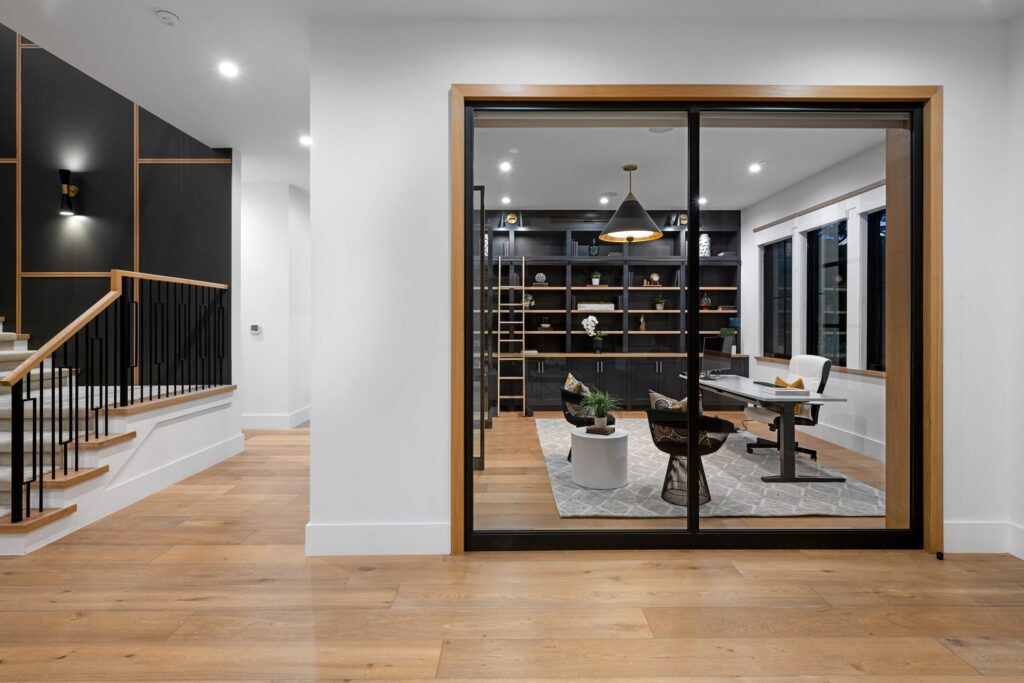
The slim sightlines of a steel frame are its signature: where timber needs bulk for strength, steel achieves it with less, meaning more glass and a lighter footprint. In open-plan spaces, internal steel-framed glazed doors and screens can divide rooms without blocking light. The grid pattern of a Crittall-style screen has become a design motif in its own right.
Use color deliberately
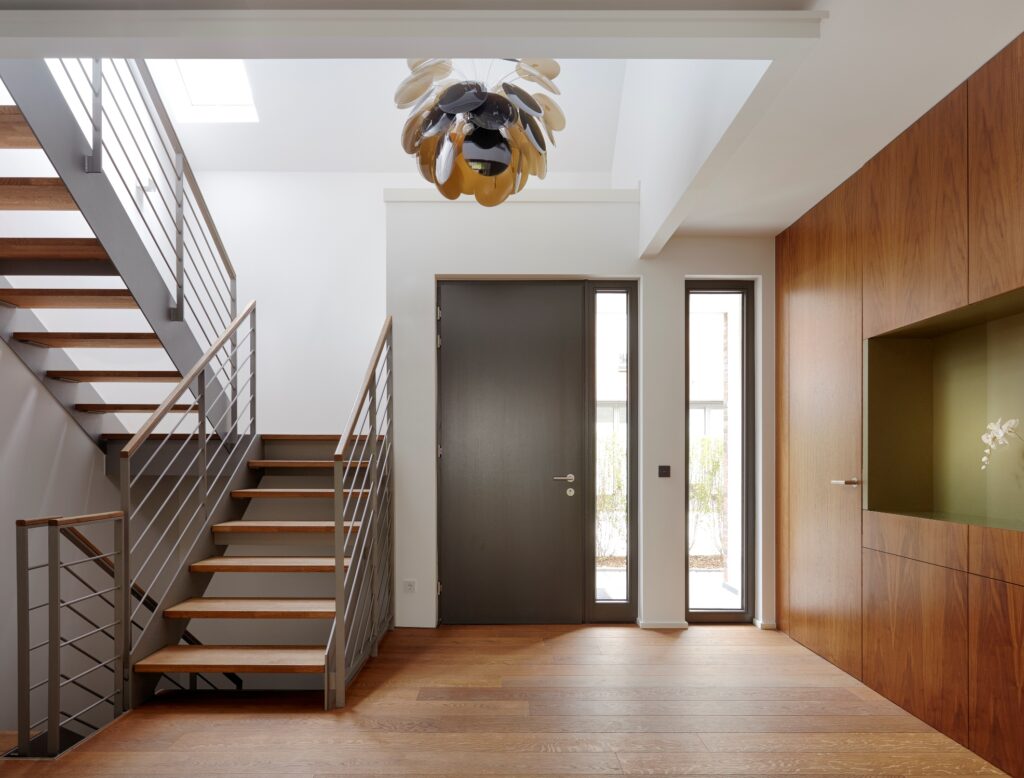
The assumption that steel doors come in gray or black is outdated. Powder-coating allows any RAL color: a deep green or oxblood front door against pale brickwork, a soft gray internal screen against warm oak, a near-black door framing a bright room beyond. Matching or contrasting the finish with the surrounding palette is where a steel door stops being functional and starts being intentional.
Consider the threshold as a transition
A door is a moment of transition between spaces, and steel handles that moment with weight and solidity. The heft, the sound, the way it sits in its frame, all shape how a space feels, and in hospitality and retail, that sense of substance can mark the move from public to private.
Match the hardware to the scheme
The handle, hinges, and visible ironmongery are where a steel door lands or jars. A premium door let down by builder's-merchant hardware looks unfinished; brushed steel, matte black, aged brass, and polished chrome all change its character. Treating hardware as jewelry rather than fitting separates a designed entrance from an installed one.
The commercial dimension
In commercial interiors, the calculus differs slightly, but the conclusion is the same. Offices, restaurants, galleries, and retail spaces all balance an inviting public face with genuine security, and the steel door now lets them do both without compromise. A gallery can specify a door that protects valuable work while contributing to the architectural language of the space. The door is part of the design, not a line item the team works around.
There's also a sustainability case that fits contemporary priorities. Steel is highly durable and fully recyclable, and a well-made steel door will outlast several cycles of cheaper alternatives. Specifying a door that won't need replacing for decades is both an aesthetic and an ethical choice.
A category that grew up
The story of the steel security door over the past decade is really about a false choice being quietly retired. The idea that you had to pick between safety and beauty was always more about the limits of manufacturing than any real conflict between the two. As those limits fell away, designers and homeowners discovered that the most secure door in the house could also be the most beautiful.
A steel door can now be specified the way any other design element is: for how it looks, how it feels, how it makes a space work, with the reassurance that it's still doing the serious job it was always built for. That's a category growing up.