


When a museum, gallery, or private collector lends artwork for an exhibition, a carefully coordinated artwork loan logistics process begins. This specialized workflow combines conservation, documentation, risk management, museum-grade packing, and secure transportation to ensure the artwork travels safely and returns in the same condition.
Artwork Loan Logistics: Key Terms
Artwork loan logistics refers to the planning, handling, transportation, documentation, and return of an art piece that is temporarily transferred from a lender to a borrower.
Every successful loan relies on several essential documents and procedures:
- Facility report. Lenders review this document to determine whether the borrowing institution meets environmental, security, and display standards required to protect the artwork.
- Condition report. Before shipment, conservators create a written and photographic record of the artwork's condition. The report is reviewed again upon arrival and before return shipment.
- Art courier. High-value or fragile works are often accompanied by an art courier who supervises packing, transport, installation, and unpacking to ensure museum standards are followed throughout the journey.
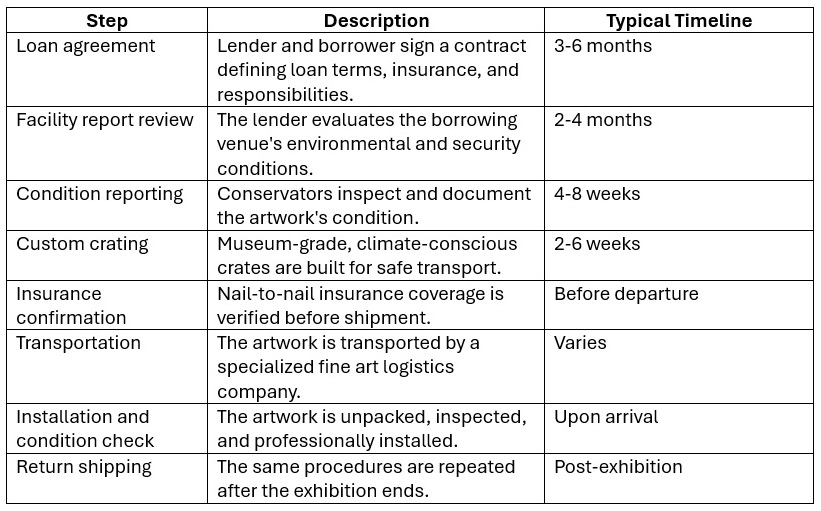
The Art Loan Logistics Process
A typical art loan logistics workflow includes the following stages.
Best Practices for Art Loan Logistics
To reduce risk and ensure a successful loan, experienced art logistics professionals recommend:
- Booking specialized fine art shipping services well in advance.
- Using museum-grade, custom-built crates designed for each artwork.
- Confirming insurance coverage in writing before transportation begins.
- Assigning an experienced art courier for especially valuable or fragile works.
- Maintaining detailed condition reports and chain-of-custody documentation at every transfer point.
- Allowing sufficient time for customs clearance and regulatory documentation on international loans.
Following these best practices helps museums, galleries, collectors, and institutions protect valuable artworks while ensuring efficient and compliant art logistics.
FAQ
How far in advance should I plan art loan logistics?
Most museums begin planning artwork loan logistics 3–6 months before an exhibition. International loans often require six months or more because of customs procedures, insurance approvals, conservation reviews, and facility report evaluations.
Who pays for shipping and insurance on artwork loans?
The loan agreement defines financial responsibility. In most cases, the borrowing institution covers shipping and insurance costs, although reciprocal loans may divide these expenses between both parties.
What happens if artwork gets damaged during transit?
Nail-to-nail insurance helps protect the owner's financial interests throughout the loan period. Accurate pre-shipment and post-delivery condition reports are essential for documenting any changes and supporting insurance claims if damage occurs.