


Large-scale installations tend to fail in predictable ways. Understanding the risks in advance and planning with a safety-first mindset is essential to avoid costly mistakes. This guide explains what can go wrong during large-scale art installation and how to prevent issues before they occur.
What Can Go Wrong During Large-Scale Art Installation? Top Risks Explained
Structural and Engineering Failures
- Miscalculated anchor points
- Rigging failure due to improper hardware or uncertified methods
- Floor load limits exceeded by heavy sculptures
- Instability in high-traffic or vibration-prone areas
Logistics and Scheduling Issues
- Crates too large for elevators, doorways, or access points
- Customs delays for international shipments
- Insufficient crew or last-minute cancellations
- Incorrect sequencing of deliveries and installation components
Environmental and Climate Issues
- Humidity fluctuations affecting wood, canvas, or paper
- Strong HVAC airflow disrupting suspended or kinetic works
- Condensation on metal or acrylic surfaces
- Improper lighting temperature impacting materials
Technical Failures
- Electrical load exceeding circuit capacity
- Voltage incompatibility for imported equipment
- Interference between wireless systems
- Software or system integration conflicts
On-Site Human Error
- Misreading installation drawings (mirrored or incorrect placement)
- Using incompatible adhesives, causing damage
- Incorrect torque applied to hardware
- Skipping load testing before public access
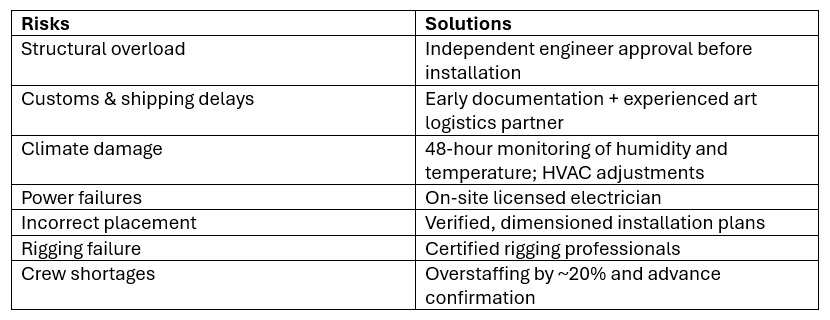
Risks and Solutions at a Glance
Key Takeaway
Once you understand what can go wrong during large-scale art installation, it becomes clear that these projects require a proactive approach. The best strategy is to over-plan, over-communicate, and build in safety buffers at every stage.
FAQ
Which failure is most preventable?
Skipping a site inspection is the most common and avoidable mistake. Accurate on-site measurements prevent the majority of fit and load issues.
How early should logistics be arranged?
Plan at least 16 weeks in advance for international projects and 8 weeks for domestic installations.
Who is liable for artwork damage during installation?
The installing contractor bears liability if they fail to follow the artist’s installation instructions.