

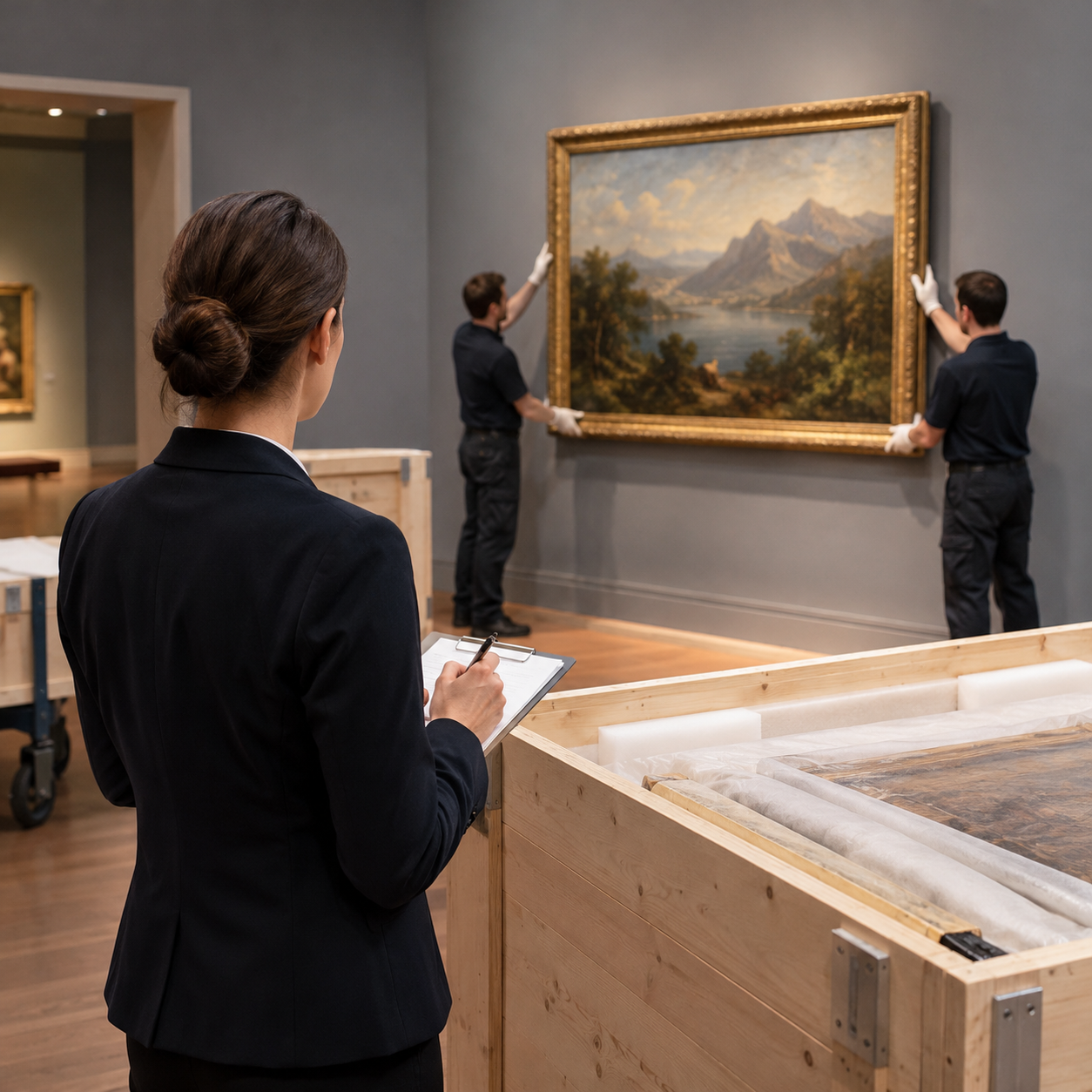
When an art institution lends an artwork to another entity, for example, a partnering museum, a courier may accompany the loan to oversee its safe handling, transit, and installation. The scope of museum courier responsibilities varies depending on the loan agreement and transport arrangements, but the core role is to help protect the artwork’s condition throughout the process.
Museum Courier Responsibilities at a Glance
An artwork on loan may travel thousands of miles by truck or plane, exposing it to potential risks. The courier accompanying it is often a registrar, conservator, or curator entrusted with overseeing its proper handling. For certain high-value loans, the lending institution may require a courier as a condition of the loan.
Before Departure
The courier’s work begins before the crate is closed and sealed. The courier may examine the artwork and complete or review a detailed condition report, establishing a baseline record for the lending and borrowing institutions. They also oversee the packing process, checking that the artwork is adequately protected and that the agreed packing and handling requirements are followed.
In Transit
Monitoring the artwork’s handling during transit is one of the key museum courier responsibilities. The courier may supervise loading onto a truck, accompany the shipment to the airport, and observe relevant handling procedures. For air freight, they may travel on the same flight when arrangements permit, although this is not always possible or required.
Couriers also help ensure that handling instructions are followed during transfers and loading operations. They may monitor how the crate is handled and raise concerns if it is exposed to adverse weather or unsuitable environmental conditions. The extent of their direct supervision depends on the transport plan and the access provided at each stage.
Upon Arrival
When the artwork reaches its destination, the courier oversees the next steps according to the agreed procedures. Depending on the artwork’s requirements, the crate may need time to adjust to the new environment before it is opened. The courier can supervise unpacking and compare the artwork’s condition with the original report, documenting any changes or concerns.
The courier may also attend the artwork’s installation, checking that the agreed display and handling requirements are met. Once the artwork has been installed and the necessary checks are complete, the courier’s responsibilities for that stage of the loan may conclude. Similar procedures can apply when the exhibition ends and the artwork is prepared for its return journey.
Why Do Couriers Matter?
The work of professional art couriers helps reduce the risk of preventable damage during transit and installation. Vibration, temperature fluctuations, and improper handling can threaten even carefully crated artworks. A qualified courier provides an additional layer of oversight, helping institutions follow agreed procedures and protect valuable cultural objects throughout a loan.