

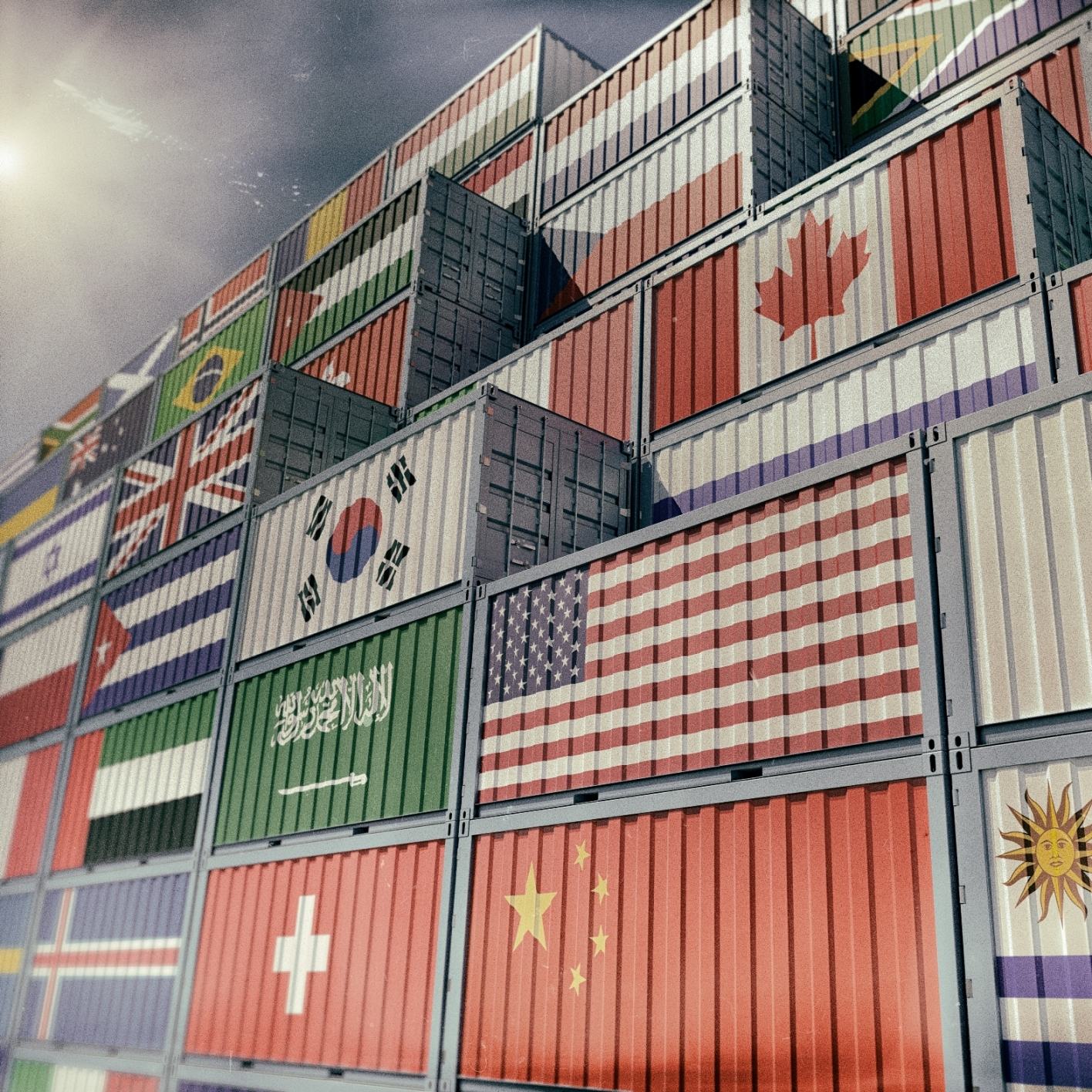
Supply chains snapped, rebuilt, and snapped again. Geopolitics rewired sourcing decisions overnight. E-commerce quietly ate a chunk of what used to be traditional trade. This piece covers what's actually moving the needle in 2026 — for sellers, logistics teams, and anyone who ships goods across borders for a living.
The Ground-Level Reality
The era of cheap and predictable global trade ended a few years back. Nobody's pretending otherwise anymore.
The pandemic exposed something embarrassing: a factory in Guangdong shutting down for two weeks could ripple into empty shelves in Ohio six months later. Companies spent 2021–2024 quietly diversifying — Vietnam, India, Mexico, Eastern Europe. In 2026, that's not a trend anymore. It's just how sourcing works now.
More suppliers sound like a win until you're dealing with four different labeling standards, two packaging formats, and a shipment that got flagged on arrival because one label was misaligned by less than 0.1 inch. The last mile gets messy fast. That's where prep infrastructure starts to matter. Amazon doesn't forgive sloppy prep. A wrong label, a missing barcode, a poly bag that doesn't meet spec — and the whole shipment bounces back. That's why a lot of sellers hand this off to a specialized Amazon FBA prep company rather than figure it out themselves. Cheaper than a rejected container. Way cheaper than a suppressed listing during Q4.
Tech Worth Paying Attention To
AI in Demand Forecasting
Big players have been doing this for years — Walmart, Amazon, Alibaba all run some form of predictive reorder logic. Nothing new there. What changed is that mid-market brands can now access the same kind of tooling through platforms like Inventory Planner or Relex Solutions without a seven-figure IT budget. Overstock sitting in a warehouse for five months costs real money. So does running out of a hero SKU in November. Less dead stock, fewer "we're out of our bestseller for six weeks" situations.
A few developments worth paying attention to:
- NVIDIA's supply chain AI partnerships — the same infrastructure behind LLMs, now applied to logistics optimization at DHL and FedEx
- Databricks x Maersk pilots using real-time port congestion data for container routing
- Google DeepMind models tested internally for routing optimization across distribution ops
Blockchain in Customs: Narrower Than Promised, But Real
The grand vision from 2018 didn't materialize. But a more specific use case did: customs documentation and certificates of origin. Singapore's TradeNet and EU's TRACES system run hybrid pilots where blockchain-based documents cut customs clearance from days to hours. A container moving from India to Rotterdam can now have its phytosanitary certificates and bill of lading verified faster than before. Not everywhere. Not reliably. But the direction is clear.
Robots Aren't Coming
Amazon Robotics has over 750,000 units deployed across its fulfillment network. Ocado in the UK runs near-fully automated grocery fulfillment. Symbotic's systems are inside Walmart DCs. Rotterdam's Maasvlakte II terminal operates mostly on automated cranes and AGVs. LA/Long Beach is piloting the same, but slower — union negotiations.
The practical takeaway: automation is compressing fulfillment timelines at the top of the market. If competitors ship same-day and you're at 3–5 business days, that's a customer acquisition problem, not just an ops issue.
Where Production Is Actually Moving
Mexico Is Winning More Than the Headlines Suggest
Mexico's manufacturing exports to the US grew steadily through 2023–2025. The reasons aren't complicated:
- Truck freight instead of 30+ day ocean transit
- Lower tariff exposure under USMCA compared to Chinese imports
- Time zone overlap for production oversight
- Peso dynamics that keep labor costs competitive
Brands that used to source everything from Asia are now asking whether final assembly or packaging should move closer to the US border. For some product categories, the math already works.
"Friend-Shoring" in Practice
The US Treasury coined the term in 2022. In 2026, it means real policy: preferential terms with allied nations, faster customs on Indian-origin goods under the new US-India framework, and tighter scrutiny on Chinese-origin goods even when they transit through third countries. Any brand doing volume above $1M annually in cross-border trade feels this directly.
E-Commerce Rewrote the Playbook
Cross-border D2C crossed $785B globally in 2023. Projections for 2026 sit above $1.4T. Shein, Temu, and Anker proved that a brand headquartered outside the US can dominate American consumer markets without a single retail shelf.
What makes it work:
- Section 321 de minimis rules (still largely intact for sub-$800 shipments)
- Third-party fulfillment networks allowing brands to pre-position inventory in destination markets
- Shopify Markets, TikTok Shop's fulfillment arm, Amazon Global Selling
Small brands shipping 500 units a month to the US from Europe or Asia are now viable — as long as prep and compliance are handled correctly on arrival. The infrastructure offered by http://ecomautoprep.com/ is built exactly around that gap: brands that have sourcing figured out but need reliable, compliant prep before goods enter Amazon's network.
Compliance Is Heavier. Deal With It
A few things that actually changed in 2026:
- EU CBAM — fully phased in for steel, aluminum, cement, fertilizers. Importers now pay a carbon price on embedded emissions. More categories coming.
- UFLPA — US Customs is actively blocking shipments from Xinjiang-linked supply chains. CBP detentions are up significantly year-over-year.
- UK EPR — brands selling in the UK carry financial responsibility for packaging waste at end-of-life.
- India's BIS certification — more product categories require mandatory certification before market entry.
The compliance stack needed to trade globally in 2026 is heavier than it was in 2019. Brands that treat it as an afterthought pay eventually — usually at the worst possible moment, like peak season.
What's worth doing now:
- Audit your supply chain for UFLPA exposure — especially textiles, polysilicon, cotton, or aluminum from China
- Map your packaging materials for EPR obligations if you sell in the EU or UK
- Get documentation right before a border hold costs you a quarter
- Pre-position buffer stock near destination markets to absorb clearance delays
Where This Is All Going
Trade in 2026 is faster at the top and messier in the middle. More automated for the big players, more error-prone for everyone else. Geopolitically noisier than anyone planned for.
The brands navigating it without constant fires have mostly stopped trying to own every piece of the logistics stack. Sourcing, freight, customs, prep, fulfillment — each one has specialists. Leaning on them isn't cutting corners. It's how you stay competitive when delays don't care about your launch schedule.
Which of these trends is hitting your operation hardest right now?