

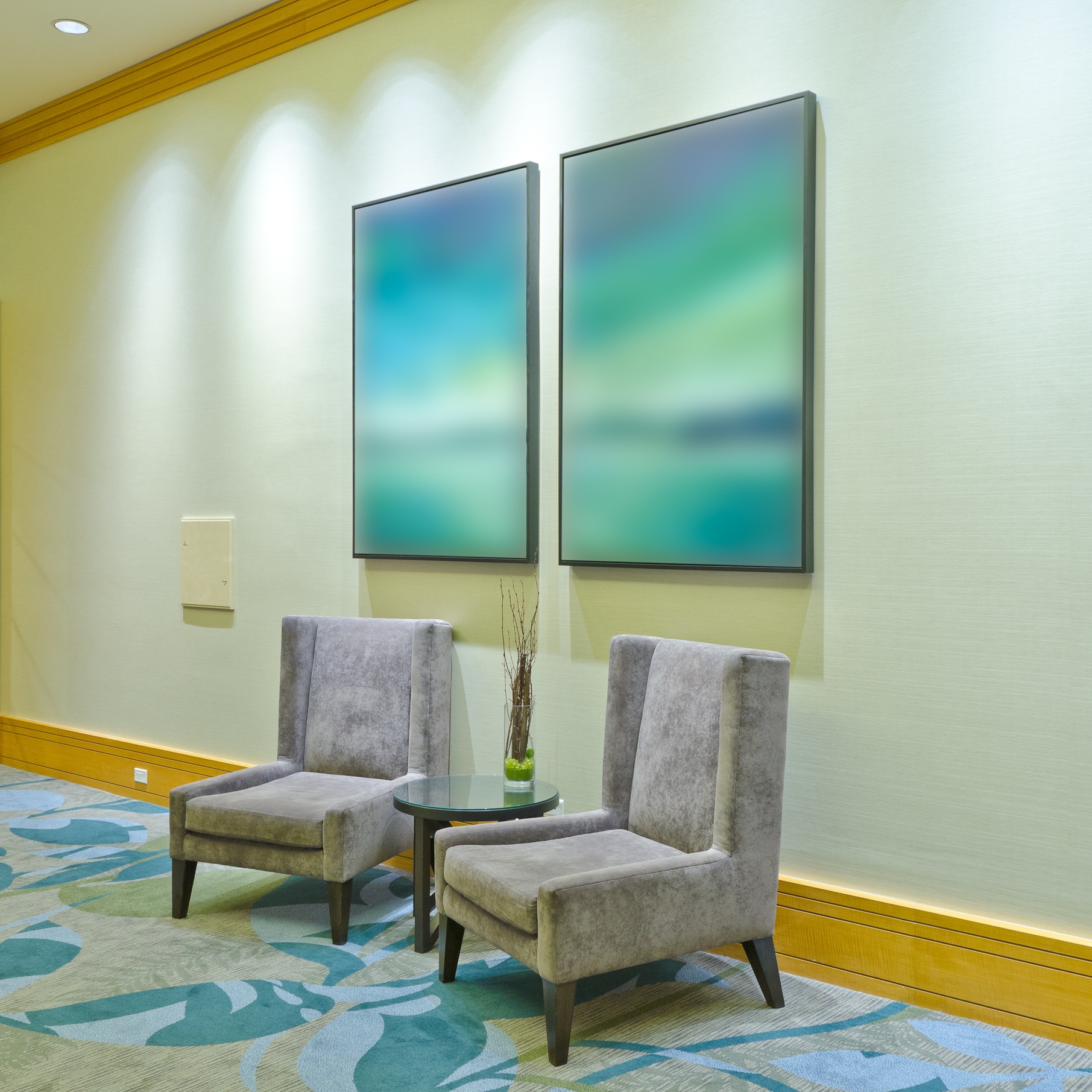
While museums and galleries are designed to protect art, hotels are built to move people, luggage, and essentials through shared spaces. That is why hotel artwork logistics can be so demanding: the challenge is to keep an art collection on open display while protecting its safety and condition.
Invisible Threats in Hotel Artwork Logistics
Light, humidity, and cleaning activities can cause gradual damage to art. Lobbies often feature natural light, but prolonged exposure to sunlight and UV radiation can fade pigments, discolor paper, and weaken textile fibers. To reduce these risks, art logistics teams consider light exposure when planning artwork placement and may recommend UV-filtering glazing for framed works. However, UV filters alone cannot prevent all light-related damage, so controlling overall exposure is also important.
Humidity is another concern. Spas, pools, and busy kitchens can create localized moisture, while fluctuations in temperature and relative humidity may affect sensitive materials such as canvas, wood, and paper. To reduce these risks, art professionals recommend keeping vulnerable works away from moisture sources, exterior walls, and direct air vents. Temperature and humidity monitoring can also help identify unfavorable conditions before they cause significant damage.
Housekeeping requires similar care. Glass cleaner sprayed directly onto a frame may seep beneath the glazing, while unsuitable cleaning products can damage a sculpture's surface or patina. Hotels should provide staff with clear instructions on cleaning around artworks, including which products and methods to avoid.
Visible Threats: Carts, Cases, and Curious Hands
Hotel corridors carry luggage trolleys and room-service carts, which can accidentally strike or scratch nearby artwork. When planning hotel art installation, teams should consider traffic flow, narrow corners, and elevator entrances. Where practical, artwork can be positioned away from busy routes, while freestanding sculptures may benefit from secure mounting or placement in a less exposed area.
Art Handling and Insurance in Hotels
Protection does not end with installation. A condition report, supported by photographs taken during installation, provides a useful record of an artwork's initial state. Hotels should also maintain inventory records and document relevant handling and installation requirements.
Insurance requirements vary by policy, but clear documentation can help establish an artwork's condition and support claims if damage occurs. Hotels should confirm any specific requirements with their insurer and ensure staff understand how to report accidental damage.
Hotel Art: Planning for Real Life
Successful hotel artwork logistics recognizes that a hotel operates differently from a gallery. By selecting suitable works for each environment, securing them appropriately, and establishing practical care procedures, hotels can create attractive displays while reducing avoidable risks to their art collections.