

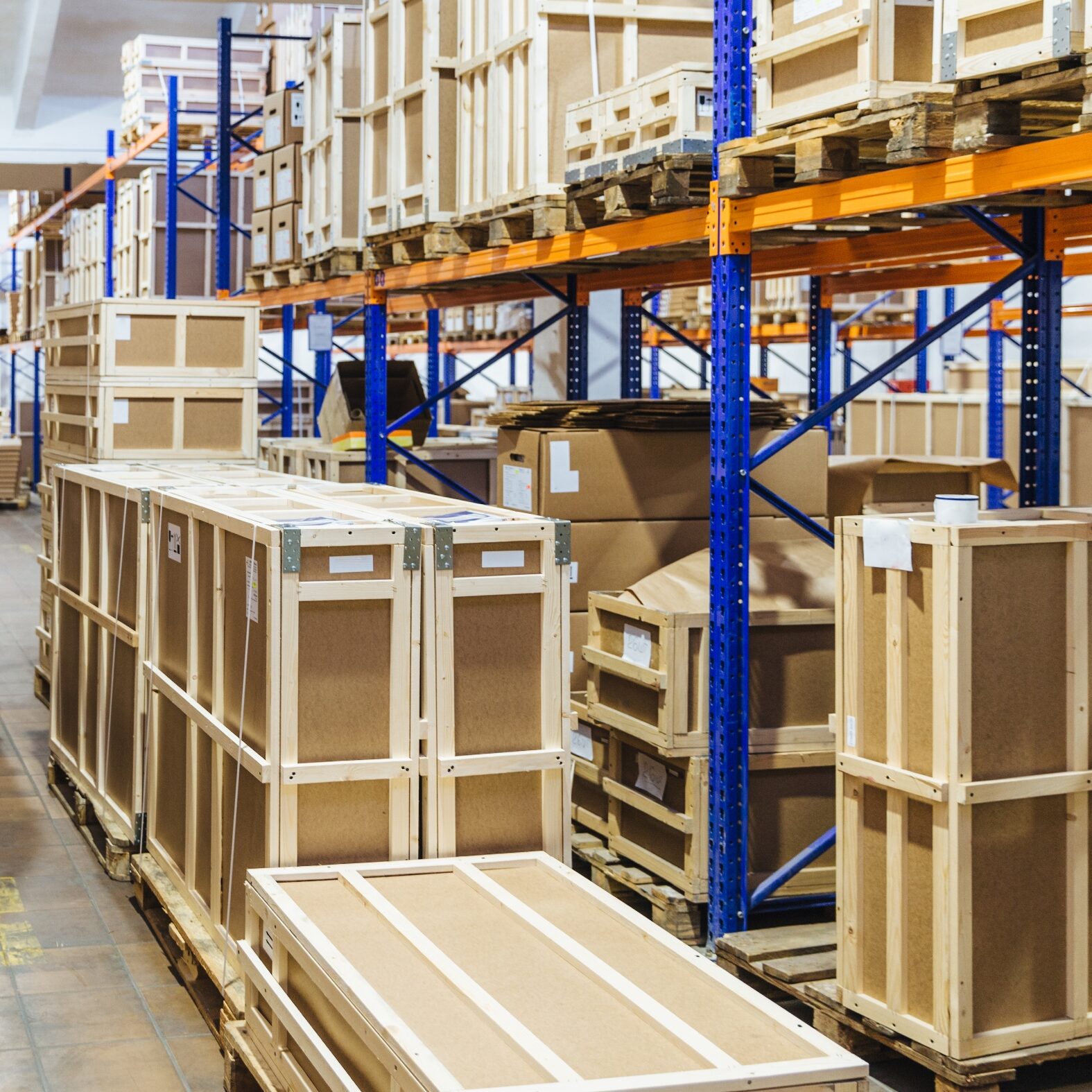
A crated painting is heavy, awkward, and worth more than the truck that delivered it. Once it leaves the studio or gallery, where it sits in storage matters almost as much as how well it was packed. Floors fill up fast, crates get stacked “just for now,” and retrieval turns into a game of moving six boxes to reach one.
The fine art logistics market is on track to reach roughly USD 3.35 billion in 2026, according to Mordor Intelligence, and every dollar of that growth means more crates needing a safe, findable place to wait. Racking layout, load limits, and climate control decide whether that wait is uneventful.
Why crated art needs a racking plan
Picture a gallery sending 200 crated works into storage after a closing exhibition. Some crates are small boxes for works on paper. Others are oversized plywood cases for canvases taller than a person. Stack them on the floor, and the bottom crates carry everything above them, while anything you need next week sits under three other cases.
That’s why warehouses handling mixed crate sizes turn to pallet racking systems with selective access, where each crate sits in its own bay and can be pulled without disturbing its neighbors. Lining the beam decks with boards keeps crate feet from resting on bare steel, and a clear gap between double rows leaves room for a forklift to work.
Labeled bays also speed up condition checks and loan pickups.
Load capacity, anchoring, and forklift safety
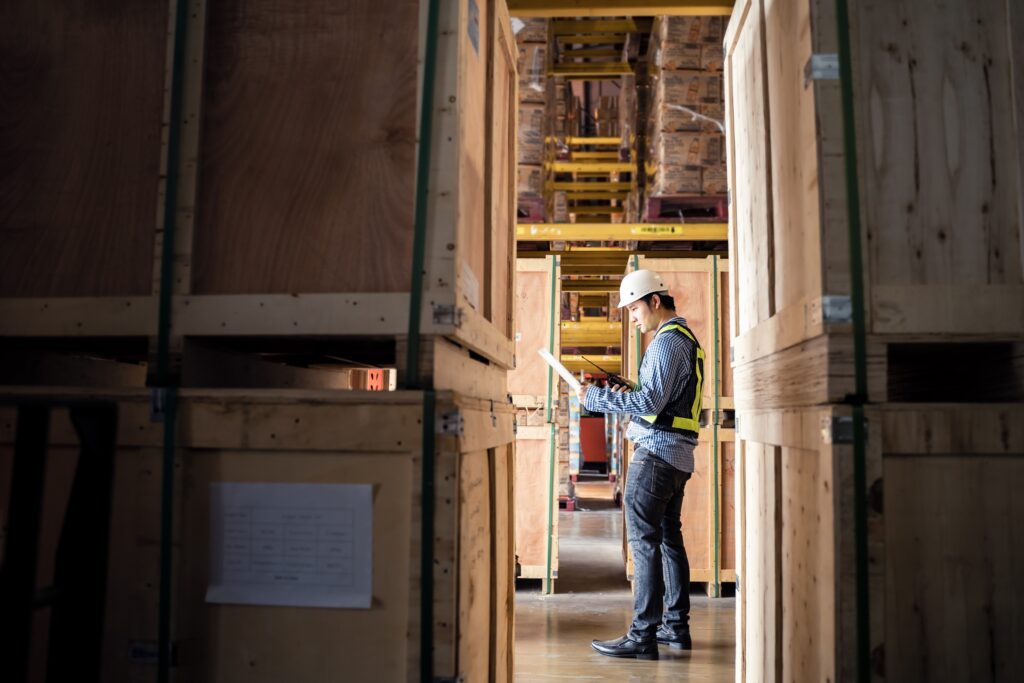
Here’s something vendors rarely spell out: OSHA has no standalone pallet rack standard. What it does require, under 29 CFR 1910.176, is that tiered materials be stored so they’re stable and secure against sliding or collapse. Forklift operation falls under a separate rule, 1910.178. Capacity guidance for the racks themselves comes from industry standards such as ANSI MH16.1.
In practice, that means a few non-negotiable habits:
- Post the rated capacity on every bay and respect it.
- Put the heaviest crates on the lowest beam level.
- Anchor uprights to the slab and fit guards where forklifts turn.
- Re-check the rating whenever beams are moved or the layout changes.
Guessing is how beams bend.
Matching racks to crate sizes and art types
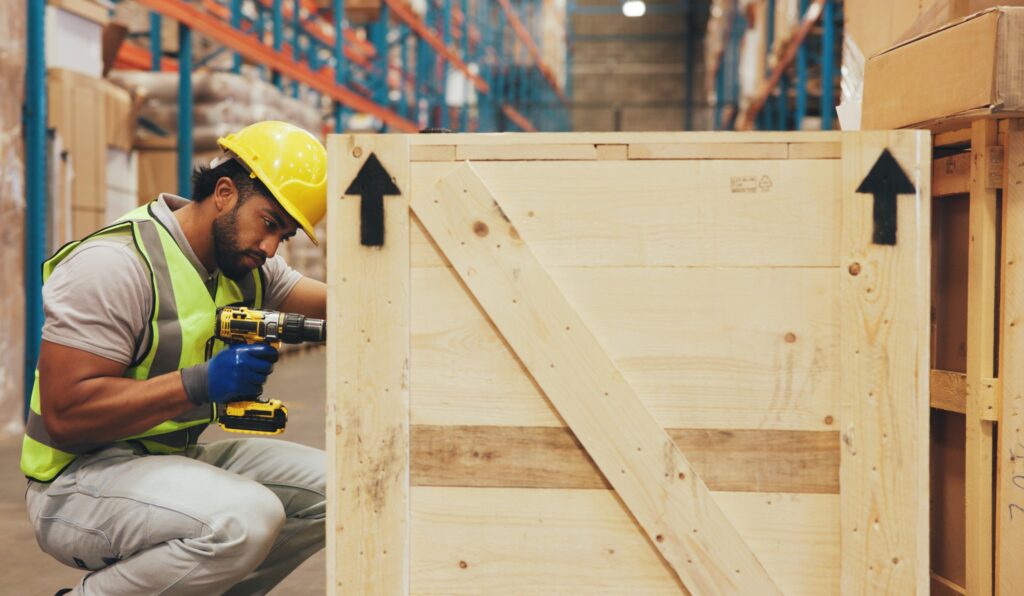
Not everything belongs on a pallet rack. Works on paper are better off in flat files, and large canvases often do best in vertical slots where they stand on edge rather than lying under load. Racks are for crates, and the crate’s construction sets the rules. A closed plywood case can sit on a beam deck directly, while an open frame crate needs a solid board beneath it.
Good crates make good racking possible, which is why our custom crating team builds to standard footprints wherever the artwork allows.
One tradeoff worth admitting: tight, uniform racking stores more per square foot, but it’s less forgiving when an oversize one-off arrives. Leave a few flexible bays rather than forcing every piece into the grid.
Climate and monitoring around the racks
Racking only protects art if the air around it is stable. The U.S. Department of the Interior’s museum property standards point to storage temperatures in roughly the 60 to 68 degree Fahrenheit range, and many commercial facilities hold 68 to 72 degrees with relative humidity around 45 to 55 percent. Global Growth Insights estimates that about 72 percent of fine art assets need climate-controlled space, though that figure comes from a commercial market report and should be read as a rough guide.
Leave airflow gaps between crates and walls. Dead air is where humidity pockets form, and the National Archives warns that mold risk climbs once relative humidity stays high and temperatures creep up. Logging readings at several heights, not just one wall sensor, catches trouble early. Our state-of-the-art storage facility builds that monitoring into daily routines.
Treat the rack as part of the protection
A racking plan isn’t a warehouse afterthought. It’s part of how an artwork stays intact between one owner and the next. Decide the layout, load limits, and labeling before the first crate arrives, then keep the climate steady around it. Collectors and galleries who can’t build that setup themselves should hand the job to a facility where the planning is already done.