

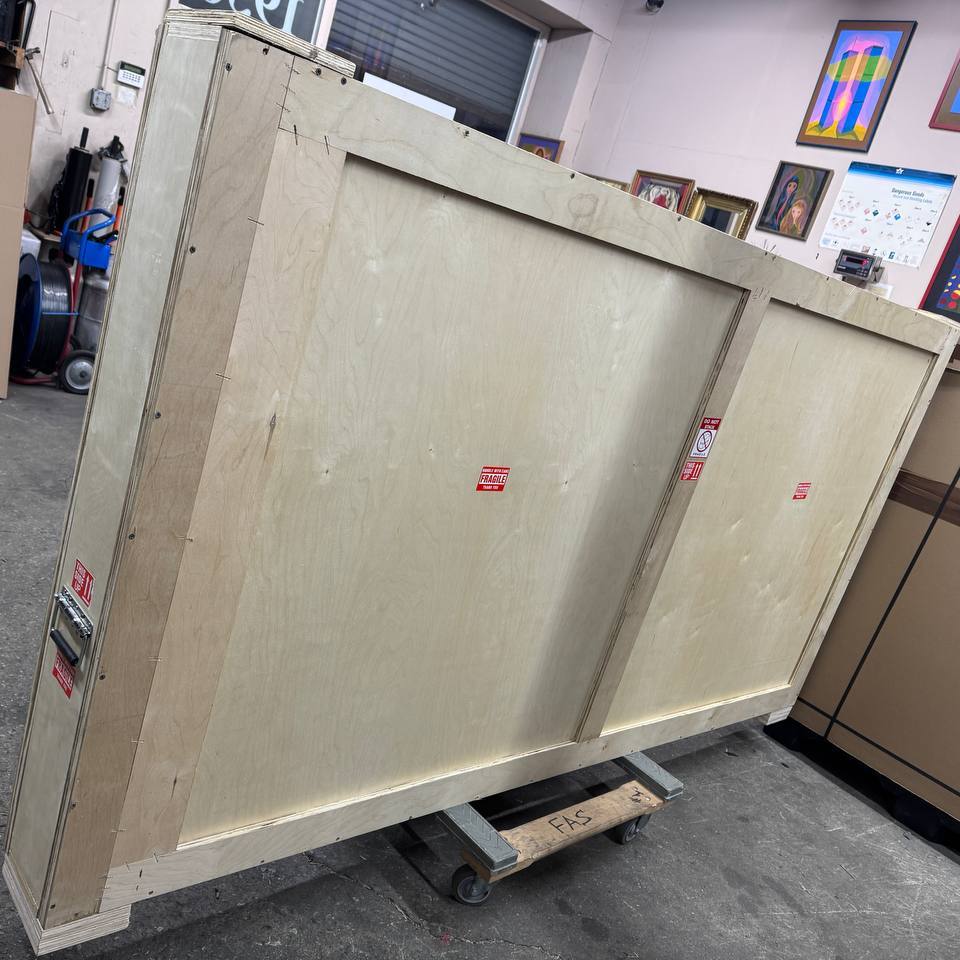
To most outsiders, a wooden crate is nothing more than a box. To those who specialize in fine art movement, wooden crates are much more than that. A well-designed and manufactured painting shipping crate is a precision solution designed to deliver a work of art intact to its destination.
What Is a Painting Shipping Crate?
A painting crate is a custom-built, rigid container manufactured precisely in line with the art object’s dimensions, weight, and fragility profile. Unlike standard packing solutions relying on bubble wrap and cardboard, a museum-grade crate may include a structural shell, shock-absorbing foam, insulation, and moisture barriers. Most crates are built to the painting’s framed dimensions, as excess space may allow the object to shift.
Why Are They Needed?
Paintings are more vulnerable during transit than they are under stable conditions. A canvas is a thin, tensioned membrane covered with layers of paint and varnish. These layers can become brittle with age, making sudden shocks capable of causing paint cracking. Vibration from trucks and aircraft can loosen already flaking areas, especially during long-distance transportation. Other risks include accidental punctures, forklift handling, and cargo holds that involve temperature swings.
How Are They Engineered for Paintings?
The outer shell of a painting shipping crate is often manufactured from exterior-grade plywood, attached to a frame of lumber battens. The whole structure is assembled with screws instead of nails, as the latter may require hammering to open the crate. Lid gasketing helps protect the crate’s contents from dust and water, while the crate itself usually sits on skids, allowing a forklift to lift it from below. Wood used in fine art crate manufacturing for international transport must comply with ISPM 15 requirements.
Inside the crate, cushioning foam plays a key role in the artwork’s stabilization. Logistics experts carefully select its type, density, and thickness based on the art object’s weight and properties. If the foam is too hard, it may transmit shock to the painting; if it is too soft, it may bottom out. Thus, the fine art crating process aims to keep the forces affecting the painting below the level that could cause damage. Thermal and humidity protection, if required, comes next, with insulating foam panels attached to the crate’s internal walls to slow down temperature changes caused by the environment.
If the painting is particularly fragile, a “crate within a crate” method may be applicable for its transportation. Regardless of the method used, the painting should first be wrapped in a smooth, acid-free material to protect its delicate surface.