

A move from Boston to New York is a four-hour drive on paper. For a household with a serious art collection, it is closer to a small logistics project. Sofas, boxes, and bed frames can ride on a moving truck. A framed oil painting, a bronze on a marble base, or a set of antique mirrors usually should not.
The most common mistake collectors make is treating everything as one shipment. The better approach is to split the job: household goods go with a moving crew, and the art goes with specialists who pack, transport, and install it to museum standards. Here is how to plan that split.
Step 1: Make an Inventory Before You Get Quotes
Start with a simple list of every piece you consider art or a collectible: paintings, works on paper, sculpture, ceramics, antique furniture, rugs, and mirrors. For each one, note the size, the medium, the approximate value, and any condition issues you already know about.
This list does two things. It helps you decide which pieces need specialist handling, and it gives every company you contact the same information, so quotes are actually comparable.
Step 2: Decide What Goes on the Moving Truck
Not every decorative object needs an art shipper. Mass-produced prints, sturdy framed posters, and everyday furniture can travel safely with a good household crew if they are properly padded and loaded.
Pieces that usually need specialist handling include:
- Original paintings, especially older canvases and anything with a fragile or gilded frame
- Works on paper and photographs behind glass
- Sculpture, ceramics, and glass
- Antique furniture with veneer, inlay, or loose joints
- Anything with a value that would be painful to lose, or that is hard to insure on a standard moving policy
When you hire Boston to New York movers for the household part of the move, tell them early which items will be handled separately. A good crew will plan around them rather than discover them on moving day.

Step 3: Get the Art Packed Properly
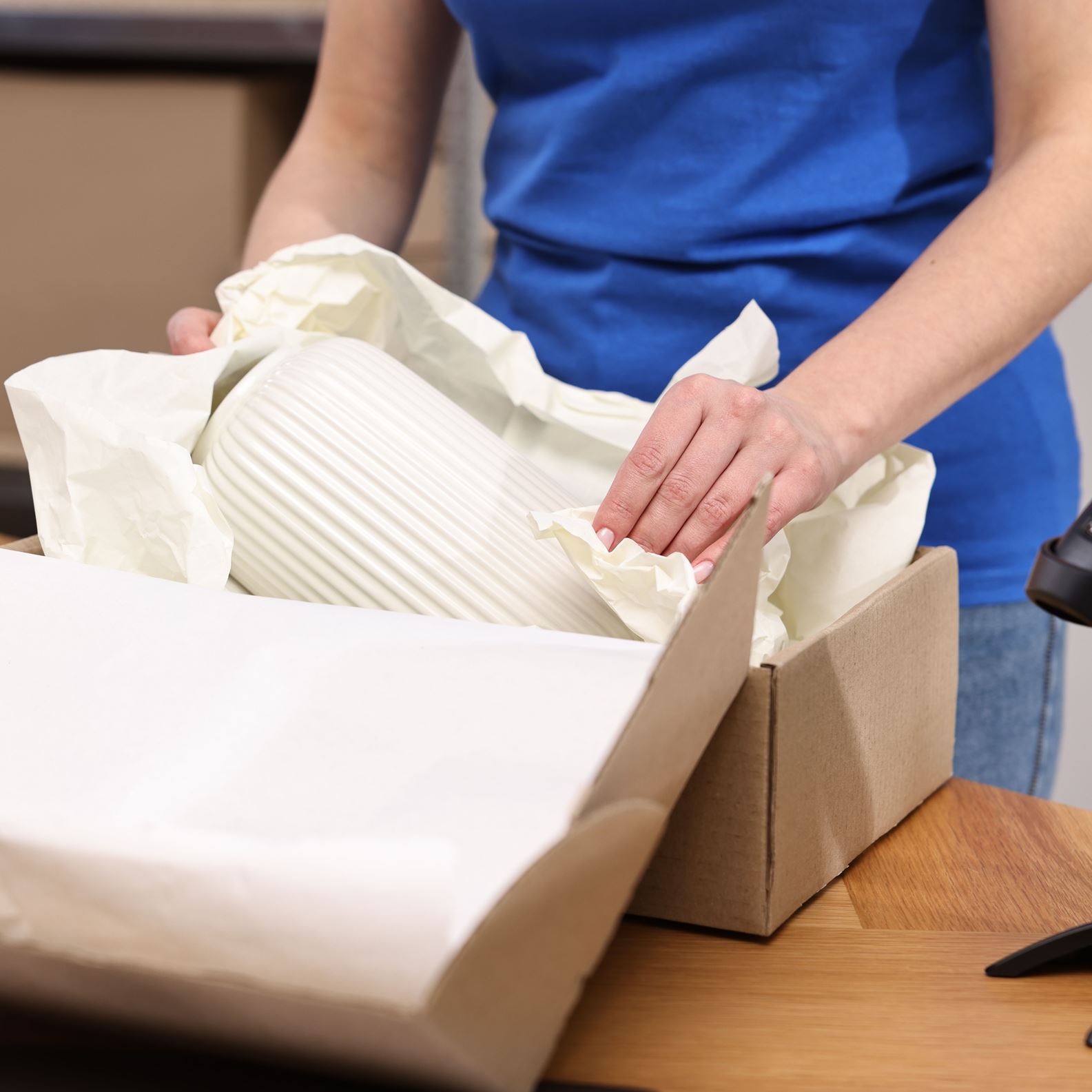
Packing is where most damage is prevented. Paintings travel best in custom crates or in soft-packed travel frames, depending on their size and condition. Sculpture and ceramics need internal bracing, so nothing can shift during transit.
Professional crating and packing takes longer than wrapping a frame in a moving blanket, but it protects corners, surfaces, and frames in a way standard moving supplies cannot.
Step 4: Coordinate the Schedule
The two shipments do not need to arrive at the same moment, but they need to be planned together.
- Pack the art first. Specialist packing should happen before the household crew starts, so fragile pieces are not in the way of furniture going out the door.
- Book building access for both. Many New York co-ops and condos require a certificate of insurance and a reserved elevator window for every company that enters. Ask the building for its requirements as early as possible.
- Deliver the art last. Bring the art in after the furniture is placed, the boxes are out of the way, and the walls are ready.
Step 5: Plan the Installation
Hanging a large painting or placing a heavy sculpture is the final risk point. Walls in older New York buildings can be plaster, brick, or concrete, and each needs different hardware. Professional installation avoids the classic mistake of a well-shipped painting falling off a poorly anchored hook a week after the move.
A Simple Checklist
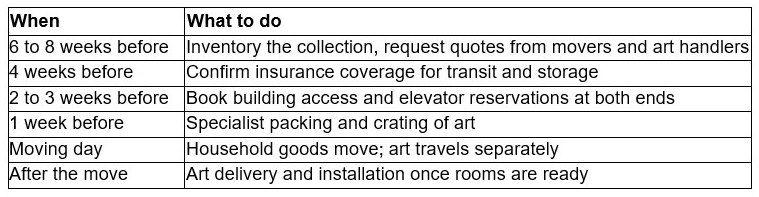
Moving a home and a collection at the same time is manageable with the right division of labor. Let the moving crew handle the furniture and boxes, let art specialists handle the pieces that matter most, and plan the two around each other from the start.