

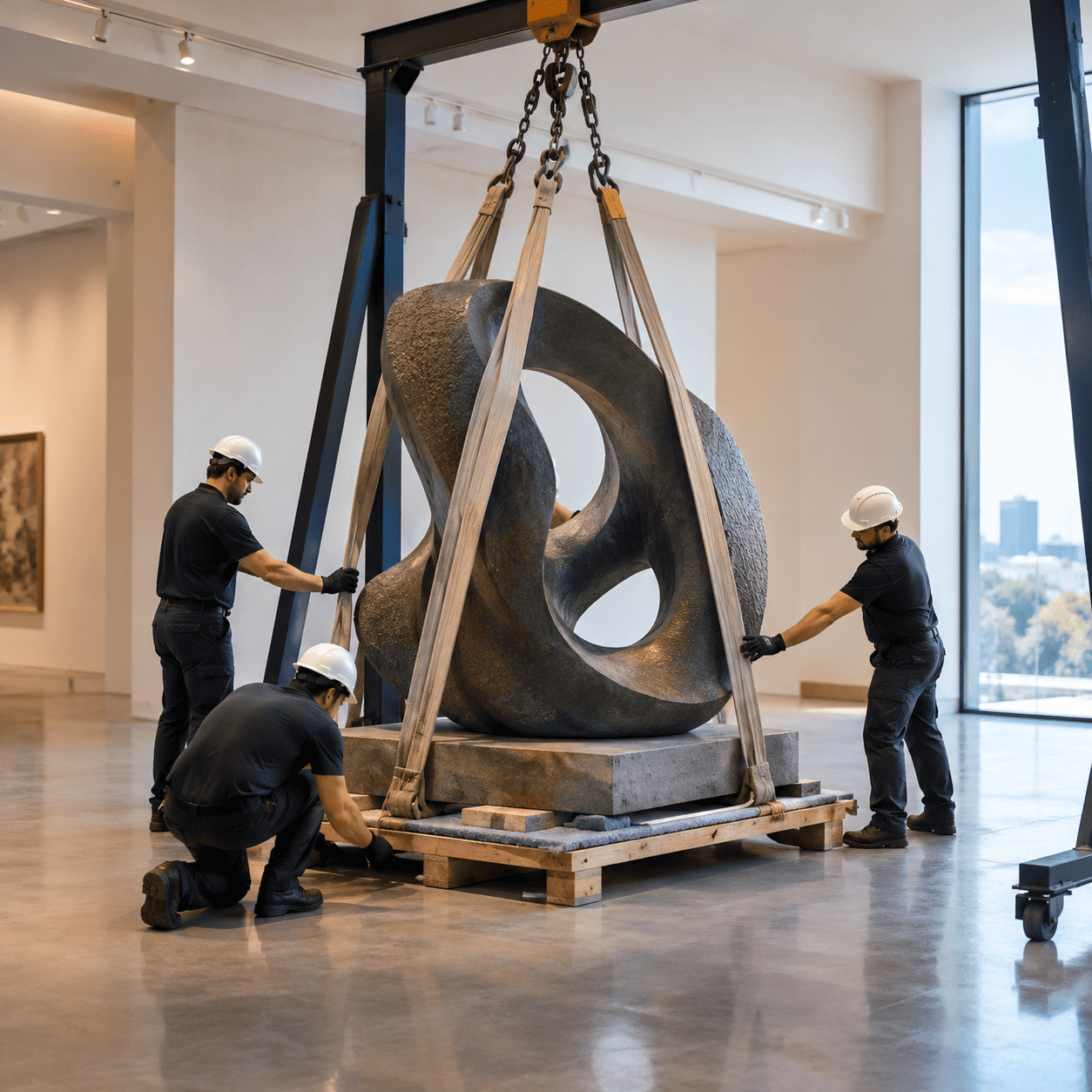
Whether your creative plan includes a bronze figure, a carved stone block, or a large steel form, engineering comes first. Each of these art objects can weigh anywhere from a few hundred pounds to several thousand pounds, which not every apartment or building can safely support. If done well, the installation work is almost invisible; if done poorly, it can cause serious damage. That’s why we recommend installing heavy sculptures indoors only with the support of seasoned professionals.
Assessment Comes Before Installing Heavy Sculptures Indoors
The beginning of every demanding installation project is a site assessment. The key question that art installers need to answer is whether the floor and supporting structure can safely carry the load. The decision depends not only on the sculpture’s total weight but also on how that weight is distributed. For instance, a 4,000-pound sculpture on a small plinth exerts far greater pressure on a concentrated area than the same weight distributed across a wide base. The object is also assessed for its exact weight, center of gravity, dimensions, and fragile points so that the installation process can be planned safely for both the artwork and the space.
Route Planning
The artwork’s delivery is also a vital part of the process of installing heavy sculptures indoors. Your team will assess doorways, corridors, turning radii, and stairs. Elevator dimensions and load capacities will be evaluated, and ceiling heights will be measured to ensure that the crated sculpture can pass through safely. The entire route must be considered, not just the final installation area. If serious physical constraints are identified, the team may consider removing a window or door frame or, where appropriate, using a crane or other specialized lifting method to bring the artwork through an opening.
Equipment Needed
Professional teams use equipment with an appropriate rated capacity for the planned load. Typical choices include gantry cranes, chain hoists, pallet jacks, and air skates, depending on the sculpture and site. Slings and straps should be selected and positioned according to the load, its center of gravity, and approved attachment points, with padding used where needed to protect vulnerable surfaces. The team should follow a written lift plan that defines the sequence of movements, equipment, communication, and responsibilities.
Safety Precautions on the Installation Day
When the sculpture installation day comes, the team clears the area and restricts public access. A single lead installer directs the process, with clear communication and no improvisation. All lifting and rigging operations should be performed by appropriately trained personnel, and the load should remain controlled throughout the lift. Once the installation is complete, the artwork’s condition and final placement can be documented with photographs and notes for the client’s records.