


UV exposure can damage artwork by accelerating the breakdown of pigments, dyes, paper fibers, paint binders, varnishes, and some plastics. The effects may include fading, yellowing, brittleness, and cracking. Both ultraviolet radiation and visible light contribute to deterioration, which is cumulative and often irreversible. Understanding how UV exposure affects artwork during transport helps art owners and professional carriers take timely precautions and reduce risks at every shipping stage.
How UV Exposure Affects Artwork During Transport: The Short Answer
Understanding how UV exposure affects artwork during transport also means recognizing the stages when direct sunlight or other sources of UV radiation may pose a risk. Potential risks include:
- Packing and condition reporting near windows or under unfiltered lighting.
- Loading docks and airport tarmacs, where crates or soft-packed art may remain under direct sunlight.
- Shipping vehicles with windows that allow sunlight inside.
- Temporary storage in fair booths, hotel rooms, or warehouses with skylights.
- Unpacking and installation in areas without UV protection.
UV and visible-light damage can affect different materials in different ways. Light-sensitive pigments and dyes may fade, while paper, silk, and other organic materials can become brittle and weaker. Some plastics, resins, and paint films may yellow, crack, or develop a chalky surface.
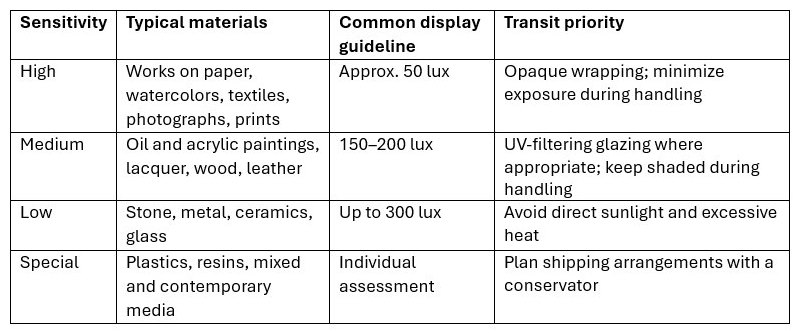
Material Sensitivity
The following table provides general examples of material sensitivity and commonly used museum display guidelines. These lux levels refer to visible light, not UV radiation, and should not be treated as transit exposure limits.
UV Protection Tips
- Use closed, opaque crates or light-blocking wrapping materials to limit light exposure.
- Consider UV-filtering acrylic glazing for framed, light-sensitive artworks.
- Ship art in enclosed, windowless art shuttles.
- Plan logistics to minimize the time artwork spends in direct sunlight on docks or airport tarmacs.
- Photograph and inspect artwork under controlled, consistent lighting when preparing a condition report.
These precautions help reduce unnecessary light exposure and protect artwork throughout transportation.
FAQs
Can several hours of sunlight damage a painting?
Yes. Several hours of direct sunlight can cause noticeable fading in highly light-sensitive pigments and dyes. The extent of damage depends on the intensity of the light, the materials, and the duration of exposure.
Does bubble wrap or plastic film block UV?
Not reliably. UV transmission varies depending on the material and its specifications. Standard bubble wrap and plastic film should not be considered dependable UV protection. Opaque wrapping and closed crates are more appropriate for limiting light exposure.
Can UV damage be reversed?
Faded pigments and dyes generally cannot be restored to their original condition. Conservators may reduce some visible discoloration, such as certain types of yellowing, but the underlying chemical damage may remain. Prevention is more effective than restoration.