

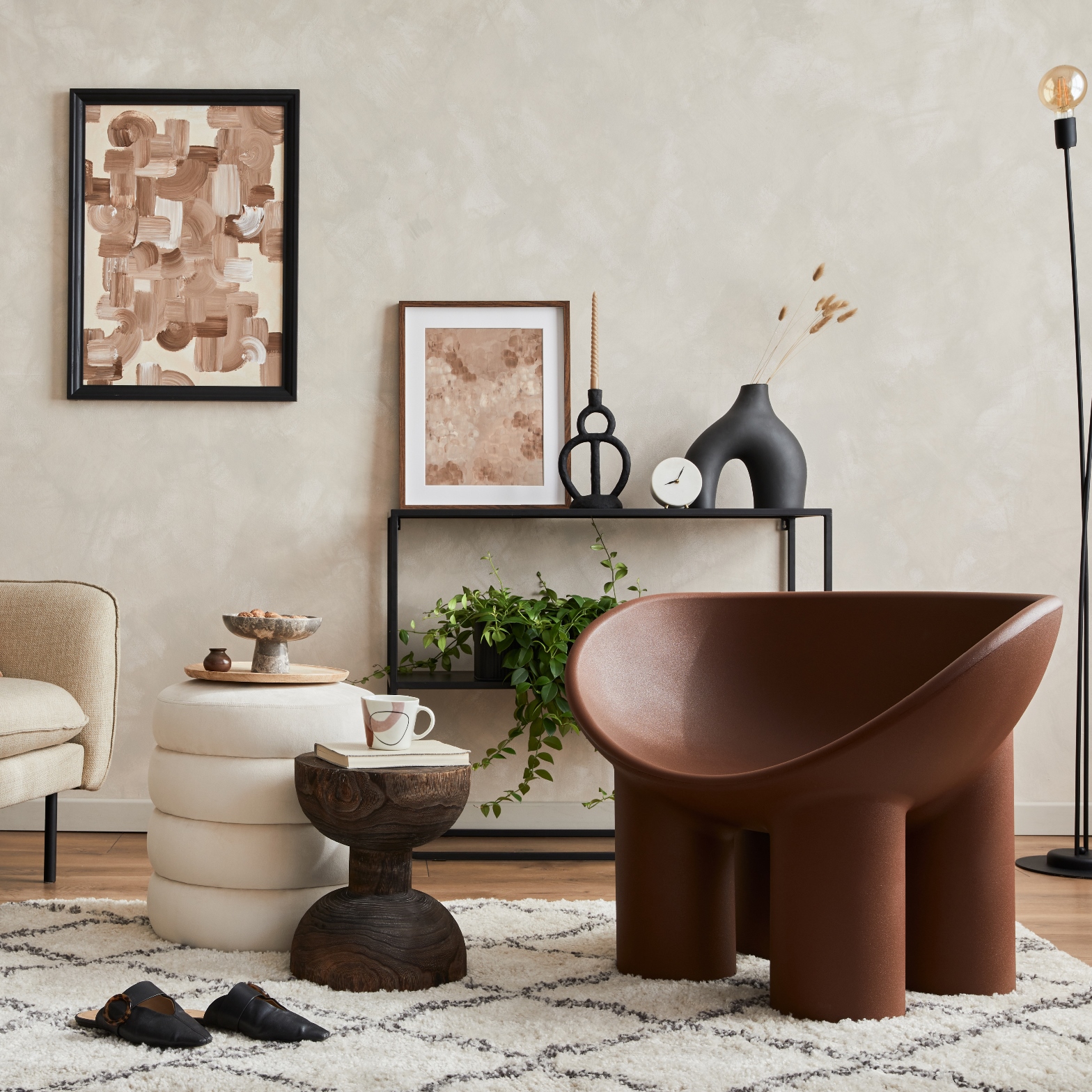
Ask anyone who has moved a limited-edition armchair, and they will tell you it behaves nothing like a warehouse sofa. The same goes for a handmade walnut table, a sculptural floor lamp, or an antique cabinet with its original marquetry still intact. The value in these pieces is partly financial, partly artistic, and often personal — and protecting all of that in transit has far more to do with how galleries move art than with how a delivery van moves furniture. Hand one to a standard freight service, and it can turn up scratched, cracked, or simply worth less than it was.
Why designer furniture is not regular freight
The vulnerabilities are hidden in exactly the details that make these pieces worth owning. A hand-applied lacquer scuffs under almost nothing. The slender legs on a mid-century chair break where a heavier piece would shrug off the same knock. A marble top, laid flat when it should travel upright, cracks along a vein no one could see. Veneer lifts once humidity gets into it. Leather picks up odors and marks. Glass and polished metal betray every fingerprint.
Ordinary freight is designed around a different problem — moving a lot of durable goods efficiently. That logic does not fit an object where one small blemish quietly erases a chunk of its worth. What high-value furniture needs is handling matched to its particular weak points, item by item.
Documentation comes before packing
Before anything gets wrapped, the piece should be recorded exactly as it is. A proper condition report — photographs from every angle, close-ups of the finish and the joinery, dimensions, material notes, and a record of any existing marks — fixes the object's state on paper before it moves an inch. Should something go wrong later, that record becomes the foundation of an insurance claim. Without it, proving what happened between pickup and delivery gets very hard.
This stage is also where brands increasingly split the physical object from the way it is presented. Before a valuable chair, table, or cabinet is shipped to a showroom or collector, brands often prepare detailed visual assets, from condition photos to digital product imagery; professional 3d rendering services can also help present finishes, proportions, and design details without repeatedly moving the physical piece. A collectible offered in several finishes or fabrics can be shown to a client in each variation, while the actual piece — sometimes the only one that exists — stays safely where it is until a decision is made.
Packing, crating, and climate control
Good protection works in layers. The surfaces go into soft wrapping suited to the material. Corners and edges get their own cushioning, since that is where impacts tend to land. Anything genuinely fragile — a glass panel, a marble top, a set of thin legs — gets braced on its own rather than left to survive inside one outer box.
For a rare or delicate piece, a crate built to its exact measurements earns its cost. A well-made crate takes the crushing force, dampens the vibration of a long road journey, and keeps the object from sliding around inside — and that internal movement is behind a surprising share of transit damage.
Then there is climate, which catches people out. Wood swells and shrinks as the humidity changes around it. Marquetry and veneer start to lift. Leather that gets too dry will crack, and upholstery does badly in damp air. Holding temperature and humidity steady through the journey is, for anything old or made from organic materials, less a comfort than a way of keeping the piece intact.
White-glove delivery and final placement
The final stretch is often the most dangerous part of the entire trip. A piece can cross a thousand miles by road and then come to grief in the last thirty feet — jammed in an elevator, dragged through a doorway an inch too narrow, tipped on a staircase.
This is what white-glove teams are for. They work the tight corners and difficult access, unpack on site with care, set the piece exactly where it is meant to go, and check it against the original condition report before they leave. For a gallery install or a private collector, that calm, deliberate handover decides whether the piece arrives as intended or arrives with a story attached.
A better standard for moving valuable design objects
Collectible and designer furniture sits in the same world as art and antiques, and it should travel by the standards of that world rather than the ones built for flat-pack and pallets. Careful records, expert packing, steady climate, and professional handling all guard the very things that give these pieces their worth. When something is rare, fragile, antique, or destined for a collector or showroom, bringing in specialist handlers is simply the sensible call — the aim, after all, was never only to move the piece, but to hand it over exactly as it left.