

The standard shipping container has had a quietly revolutionary second career. Designed in the 1950s to solve the chaos of break-bulk cargo handling, the steel box has spent two decades being repurposed into homes, offices, classrooms, cafes, and farms – applications with nothing to do with moving goods across an ocean.
There's a good reason for this. Shipping produces roughly 3% of global CO2 emissions, and ocean container shipping alone hit record-high emissions in 2024. Each new ISO container also carries a heavy embodied-carbon cost, several tons of cor-ten weathering steel, produced through one of the most carbon-intensive industrial processes there is. Scrap a container after its shipping life, and that carbon is written off.
Reuse changes the calculation. A container repurposed as a workspace, home, or other static structure extends the steel's working life and avoids the emissions needed to manufacture something equivalent from scratch, circular-economy thinking at industrial scale. The UK now has a mature ecosystem of suppliers, converters, and architects making it work.
Why the carbon case is real
Three facts support the sustainability argument:
Avoided manufacturing emissions. Building a new container from raw steel produces substantial CO2 before it's delivered. Reusing an existing one avoids that entirely, and multiplied across the thousands retired from UK fleets each year, the impact is significant.
Reduced demand for new materials. A container turned into a workshop or office replaces what would otherwise be a brick or steel-framed build. Construction accounts for around 38% of global energy-related CO2 emissions, so substituting an already-manufactured steel box is a meaningful reduction.
A long second life. Cor-ten containers are built for 25 years of marine service, then comfortably deliver another 15-25 years as static structures once retired, amortizing the embodied carbon over a much longer life.
None of this makes reuse a panacea. Modifications, insulation, foundations, and transport all carry their own emissions, and the case depends on the project. But for the work containers are most commonly repurposed for, the arithmetic is comfortably positive.
Container homes and residential architecture
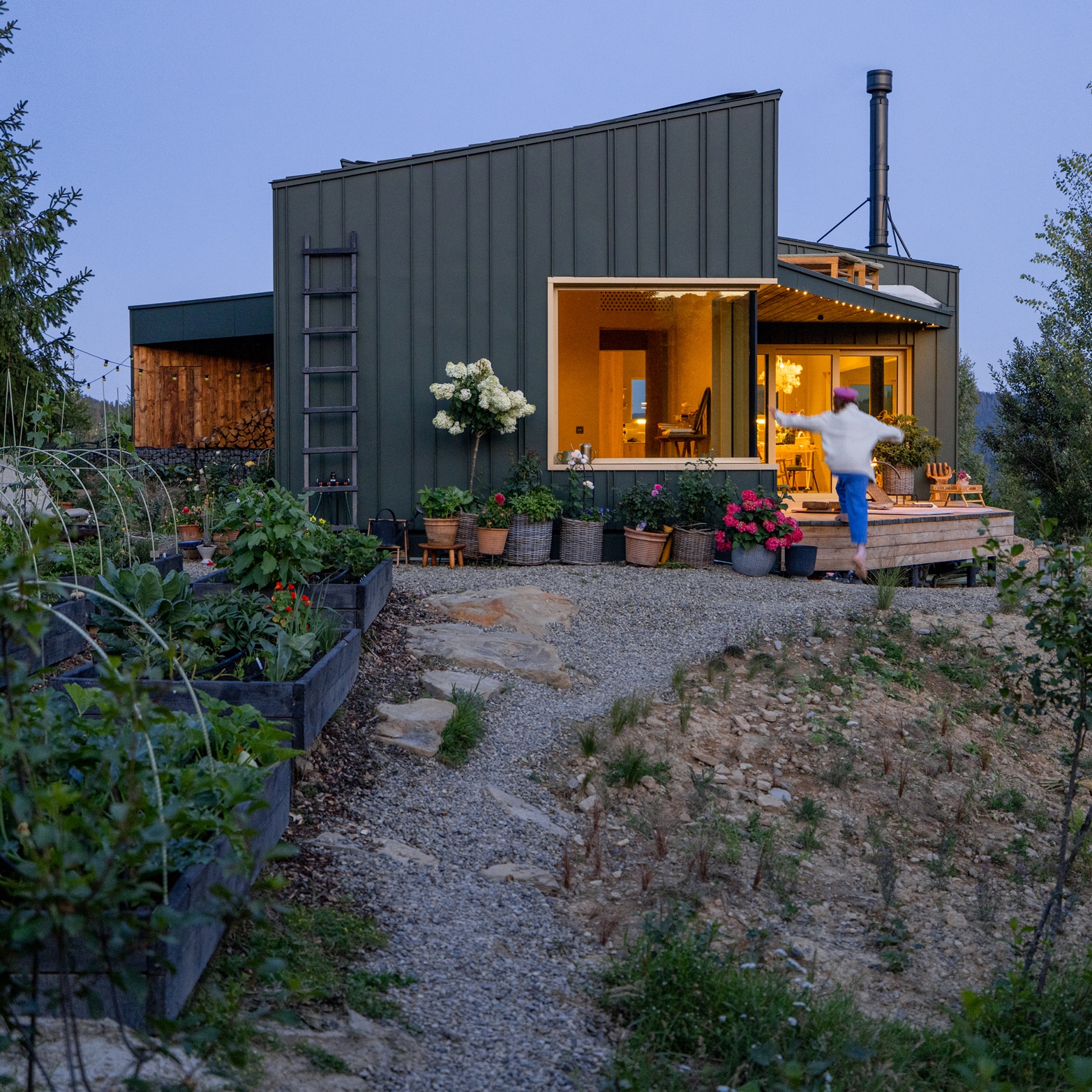
The most visible reuse is the container home, from single-unit micro-dwellings to multi-story residences built from a dozen or more 40ft units. Architects favor the format for its modularity, fast installation, and inherent strength: a container is engineered to stack nine-high when loaded at sea, simplifying multi-story residential engineering.
In the UK, container housing has moved past architectural curiosity: local authorities use container modules as transitional accommodation amid housing pressure, while private developers commission higher-end homes, particularly in rural and coastal settings where the steel aesthetic is embraced rather than hidden.
The case is strongest where a container replaces conventional new-build, and weaker, though still positive, where insulation and finishing approach the embodied carbon of a timber-frame structure. The gap narrows at the high end, but never disappears.
Workspaces, offices, and commercial conversions
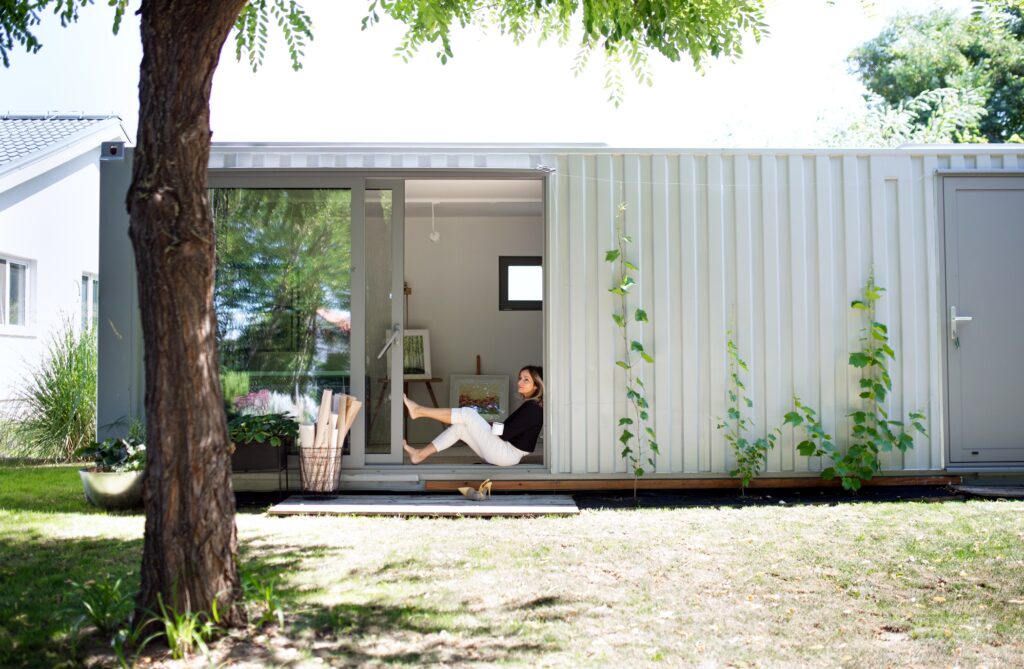
Container conversions for offices, workshops, retail units, and welfare facilities are the largest category of UK reuse: a converted container delivers a weatherproof, secure, transportable workspace at a fraction of the cost and timeline of conventional construction, with the flexibility to relocate as needs change.
The UK conversions market has matured considerably, with finished units now hard to distinguish from purpose-built modular buildings. Documented projects include rugby club facilities, transport-company welfare units, off-grid generator housing, and heritage applications. Suppliers like Universal Containers maintain inspected stocks of used units for this second-life work, publishing the pricing and condition notes buyers need.
The carbon case is especially clean here: against a brick-built equivalent, a conversion saves the manufacturing emissions of the structural steel already in the container, plus much of the brick, concrete, and timber a new build would need. Fit-out adds some emissions back, but the net position stays substantially better.
Agriculture, emergency response, and community use
Converted containers increasingly serve as climate-controlled vertical and aeroponic farms, fitted with LED lighting and software-controlled humidity. The weatherproofing suits the job, and farms scale by adding units. UK agricultural reuse also covers livestock shelters, machinery storage, and refrigerated produce stores using converted reefer units.
The same qualities – rapid deployment, robustness, portability – make containers useful in emergencies and community projects: classrooms after disasters, field clinics, transitional housing, and, closer to home, youth centers, community kitchens, and rural service points, at a fraction of new-build cost and in weeks rather than months.
Hospitality, retail, and industrial infrastructure
Container conversions have reshaped UK street food, festival hospitality, and pop-up retail: a fitted-out unit is a turnkey commercial space that can be sited, traded from, and relocated as a market evolves, letting food courts offer flexibility conventional property can't match. The case is strong because new-build retail space carries far higher embodied carbon, and a mobile unit can serve multiple tenants across its working life.
Less visible but arguably more significant is industrial reuse: switchgear housing, plant rooms, battery storage, and control rooms. These rarely make design magazines, but represent a large share of the market, and an even larger share of the carbon benefit. The buyer's decision is usually driven by cost and speed, but the saving follows regardless.
The honest assessment
Container reuse isn't a perfect fix. The carbon case depends on what the unit replaces: smaller savings against timber-frame, larger against brick or concrete, and insulation, electrics, and finishing add their own emissions, which can be significant on high-spec conversions.
What's unambiguous is that scrapping a structurally sound container to manufacture a new steel structure for the same job is indefensible. The UK's mature reuse ecosystem, specialist converters, transparent suppliers, and experienced architects all mean reuse is now the default.
That's meaningful progress for a sector otherwise hard to decarbonize. Shipping remains a major emitter, and the IMO's net-zero-by-2050 target is ambitious. But within a container's lifecycle, what happens after its shipping career matters as much as what happened during it. The steel is already made; the choice is whether to throw it away or put it to work.