

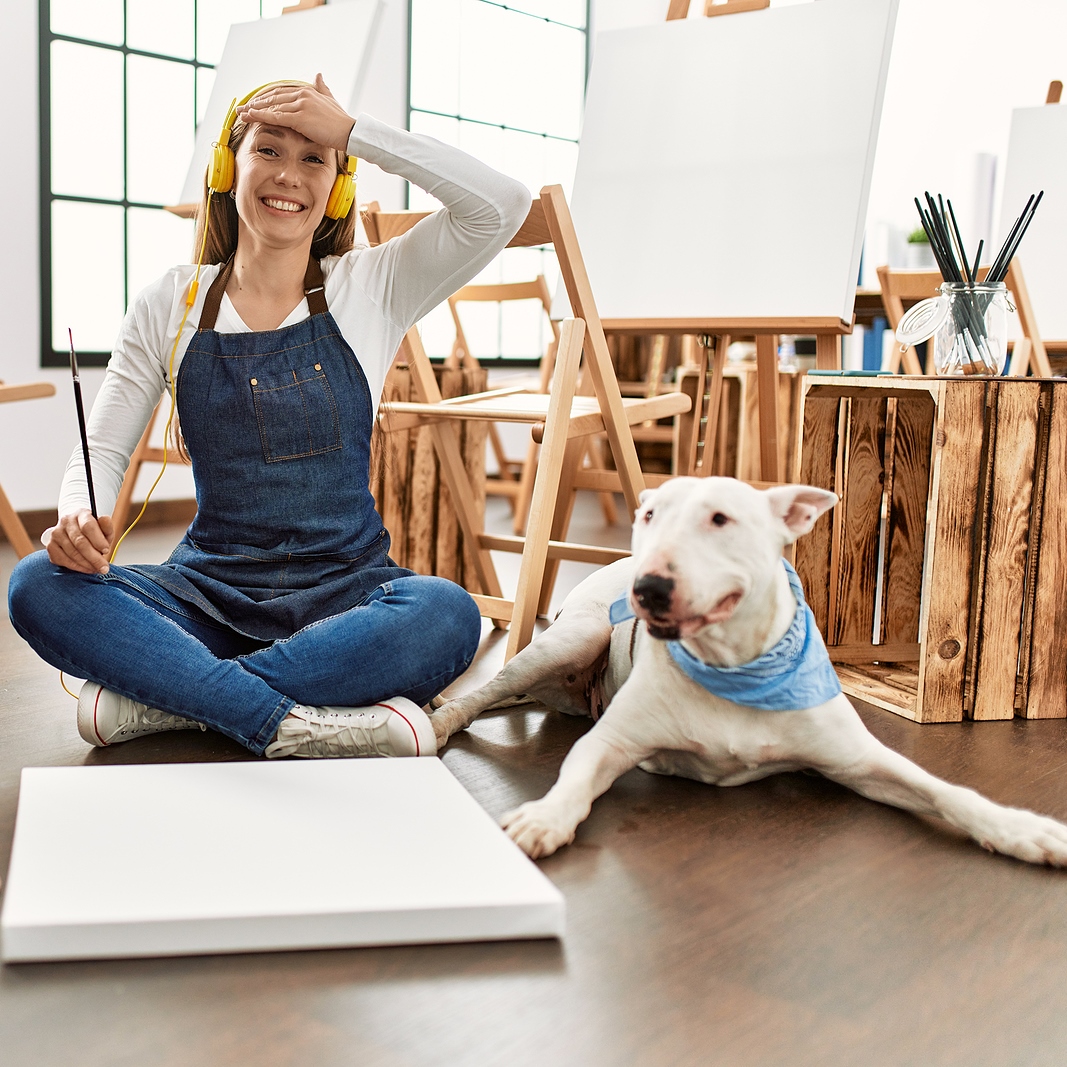
Creative studios often become second homes. Whether the space is dedicated to painting, sculpture, photography, ceramics, illustration, or mixed media, artists spend countless hours there refining ideas and bringing projects to life. For many, pets are constant companions throughout that creative process, providing comfort, routine, and inspiration.
Designing a studio that welcomes both creativity and pets requires more than simply placing a dog bed in the corner. Art supplies, equipment, heavy furniture, and ongoing projects can introduce hazards, while active pets need enough room to move comfortably. For older dogs or those with mobility challenges, accessibility becomes just as important as safety.
A carefully planned studio allows artists to focus on their work while giving their pets a comfortable environment where they can rest, explore, and remain close without unnecessary risks.
Create Clear Movement Paths Around Workstations
Studios naturally evolve as projects accumulate. Easels, drying racks, lighting stands, storage boxes, canvases, and tools often narrow walkways without the artist realizing it. While these obstacles may seem manageable for people familiar with the layout, they can become difficult for pets to navigate.
Keeping wide, uninterrupted pathways between major work areas benefits everyone. It reduces tripping hazards, makes transporting artwork easier, and gives pets predictable routes through the studio.
Accessibility becomes even more important for dogs experiencing reduced mobility. An artist caring for a pet that uses mobility support from Walkin Pets should leave generous turning space around furniture, avoid tight corners, and minimize unnecessary obstacles so the dog can move comfortably throughout the studio. Adjustable dog wheelchairs are designed to help pets stay active despite conditions such as arthritis, IVDD, degenerative myelopathy, or post-surgical recovery, making thoughtful studio layouts especially valuable.
Planning circulation first often leads to a cleaner, more organized workspace overall.
Separate Creative Materials from Pet Spaces
Many artistic materials should never be accessible to curious animals. Paints, solvents, adhesives, blades, wire, clay dust, resin chemicals, inks, and finishing products may pose significant health risks if touched or ingested.
Rather than relying solely on supervision, establish dedicated storage systems that naturally separate work materials from pet-friendly areas. Closed cabinets, labeled drawers, wall-mounted shelving, and sealed containers reduce the chance of accidental exposure while keeping supplies easier to organize.
At the same time, give pets a clearly defined place of their own. A comfortable bed positioned away from active workstations allows them to remain nearby without constantly walking beneath ladders, around power cords, or through drying artwork.
Pets generally settle more easily when they know where they belong, allowing artists to maintain focus during longer creative sessions.
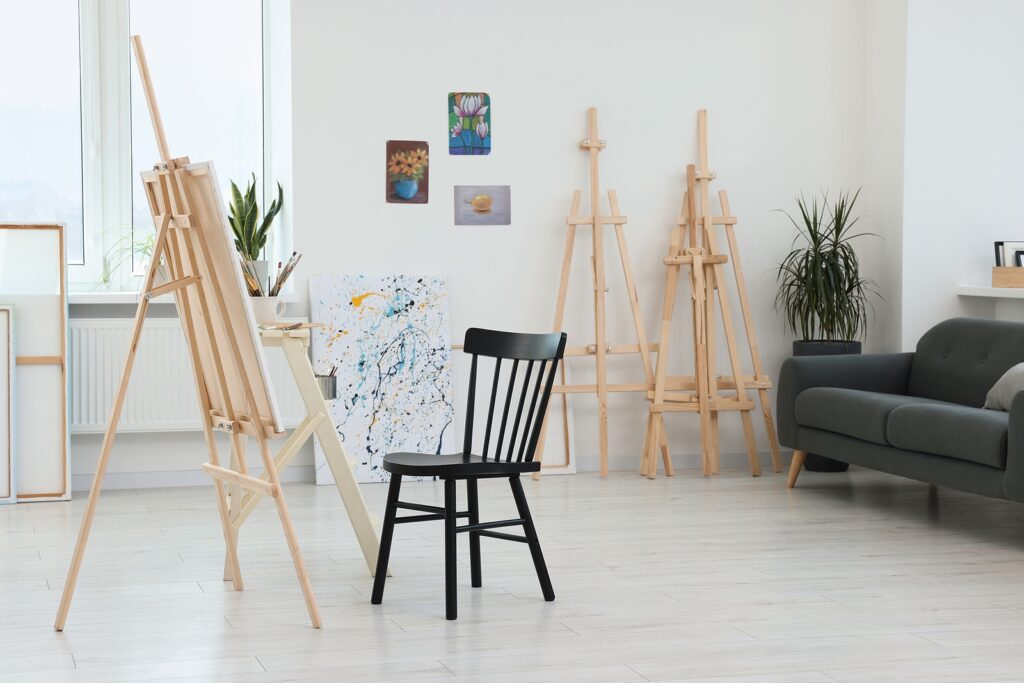
Select Flooring That Supports Comfort and Stability
Studio floors experience heavy use. Rolling chairs, dropped tools, spilled paint, and repeated cleaning all influence material selection. For pet owners, traction deserves equal consideration.
Highly polished concrete or smooth sealed floors can become slippery, particularly for senior dogs. Adding washable runners or non-slip mats in frequently traveled areas improves stability without compromising the studio's appearance.
Artists working with ceramics or sculpture should also pay attention to fine dust that may accumulate on the floor. Frequent cleaning protects both human health and pets while preserving better indoor air quality.
Durable flooring does not need to feel industrial. Natural textures, cork, quality vinyl, sealed wood, and properly secured rugs can provide warmth while standing up to the demands of a busy creative environment.
Design Flexible Zones for Work and Rest
Creative work rarely follows a predictable schedule. Some days involve intense physical activity, while others require hours of quiet concentration. Flexible studio layouts help accommodate these changing rhythms for both artists and their pets.
Instead of filling every corner with furniture, leave adaptable open areas that can serve multiple purposes. During one project, the space may hold large canvases or photography equipment. On another day, it might become a comfortable resting area where a dog can stretch out while remaining close to its owner.
Lighting also influences comfort. Natural daylight benefits artists, but direct afternoon sun may overheat pets. Providing shaded resting spots gives animals the option to regulate their own comfort throughout the day.
Noise management deserves attention as well. Compressors, power tools, and cutting equipment can create stressful environments. Positioning pet resting areas farther from these activities helps maintain a calmer atmosphere.