

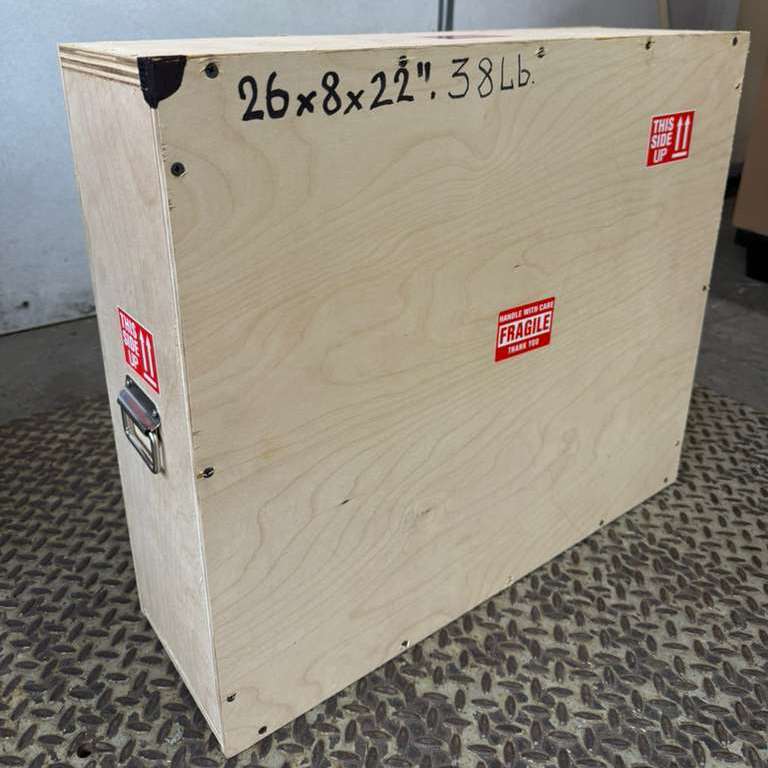
Packing artwork should never be treated as an afterthought. Whether you are shipping a piece across the country or transporting it to a nearby gallery, there is always a critical crating vs. no crating artwork decision to make. For art handlers, conservators, and experienced collectors, a crate often serves as the first line of defense between a valuable object and the unpredictable conditions of transit.
What Goals Does Crating Serve?
At its core, a crate is a rigid, custom-built enclosure designed specifically for the artwork it protects. Its purpose extends far beyond simple containment. A well-constructed crate provides structural protection through impact absorption, helps stabilize the internal environment during transport, and can significantly reduce risks associated with vibration and handling.
In addition, crating offers a safeguard against environmental contamination. Dust, humidity fluctuations, and moisture exposure can all lead to chemical and physical deterioration over time, making controlled isolation a crucial advantage in high-value art transport.
When Is Crating Avoidable?
Crating may be unnecessary for smaller or more durable works. Examples include unframed archival prints, mid-sized paintings, or compact solid sculptures. When properly packed in reinforced cardboard with sufficient padding, these objects can often travel safely—especially over short distances and under the supervision of professional art couriers.
Another situation where crates may be optional is specialized transport in art shuttles. In such cases, works remain within a tightly regulated environment managed by experienced art handlers, significantly reducing exposure to external risks typically associated with general freight shipping.
Crating vs. No Crating Artwork: Consequences of Each Decision
Choosing between crating and not crating artwork has direct implications for both safety and cost. Crating requires additional time for design and fabrication, as well as higher expenses due to the use of custom-built materials and skilled labor. However, it significantly reduces the likelihood of physical damage during transit.
Opting out of crating demands heightened attention to alternative protective measures. Without a rigid enclosure, artworks are more vulnerable to surface abrasion, scuffing, and damage caused by vibration or environmental shifts—some of the most common risks in art transportation.
Insurance considerations further complicate the crating vs. no crating artwork decision. Many insurers expect professional packing standards, and the absence of a crate can lead to reduced coverage or even claim denial in the event of damage. For this reason, crating is often viewed not only as a conservation best practice but also as a standard that supports full financial protection of the artwork’s value.
Ultimately, the decision is a balance between risk, cost, and the specific needs of the artwork itself.