

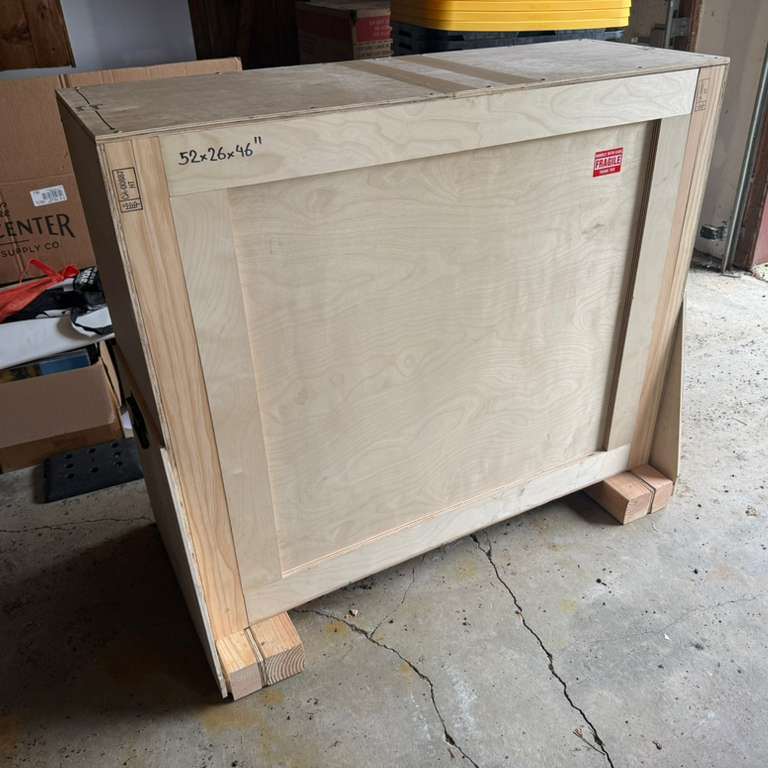
What comes to mind when you picture an art crate? For most people, it’s simply a plain wooden box. But for a professional custom art crating company, a crate is the result of a highly detailed engineering process that begins long before production starts.
Adaptive Design by a Custom Art Crating Company
Custom crate design is built around one core principle: every artwork is unique and requires an individualized approach to protection. Professional art craters evaluate each object’s dimensions, weight, age, condition, and material composition to create a solution tailored specifically to its transportation needs.
This adaptive design approach ensures that artworks remain secure throughout handling, transit, and storage, regardless of complexity or fragility.
The Weight and Balance Challenge of Sculpture Crating
Sculptures are among the most demanding artworks to crate. Unlike flat pieces, they often feature irregular centers of gravity, fragile protrusions, and surfaces that cannot withstand direct pressure.
For example, large bronze sculptures may require reinforced base platforms with recessed support channels designed to stabilize key contact points. Glass and ceramic sculptures, by contrast, often need full suspension systems that isolate the object from the crate walls entirely, minimizing vibration and impact risks during transit.
Flexibility and Climate Risks for Oversized Paintings
Large-scale canvases present a different engineering challenge. Because canvas naturally expands and contracts in response to temperature and humidity changes, overly rigid packaging can lead to cracking, warping, or paint delamination.
To address these risks, an art crating company often designs double-wall crates with internal air gaps for climate buffering. Foam supports are strategically positioned to stabilize stretcher bars without placing pressure on the painted surface, while vapor barriers help regulate humidity during transit. Hanging hardware is removed, and corners are individually padded to reduce the risk of impact damage.
The Hidden Fragility of Works on Paper
Drawings, prints, photographs, and watercolors may appear easy to handle because of their light weight, but they are often among the most fragile artworks in transit. These pieces are highly sensitive to compression, abrasion, humidity, and light exposure.
Unframed works are commonly secured within custom archival trays that provide an additional protective layer inside the crate. Framed works require special consideration for glazing materials and condensation risks, especially during long-distance or climate-variable transportation.
Rely on the Expertise of Professional Crate Builders
No matter the artwork type, an experienced custom art crating company can engineer a solution designed to maximize protection and minimize transit risks. That is why collectors, galleries, museums, and institutions consistently rely on professional art crating for valuable domestic and international shipments.