


Shipping artwork involves significant financial and logistical risks, especially when transporting valuable paintings, sculptures, antiques, or collectibles across long distances. Damage, theft, environmental exposure, and handling accidents can occur even during professionally managed transit. Unlike standard cargo insurance, fine art insurance is specifically designed to protect high-value artwork at its full declared value during transportation and storage. Read this guide to learn more about fine art shipping insurance: what is actually covered and how to maximize art safety in transit.
What Is Fine Art Shipping Insurance?
Fine art shipping insurance is a specialized type of transit coverage created for artwork, antiques, rare collectibles, and museum-quality objects. These policies protect owners against financial losses caused by theft, accidental damage, loss, fire, water exposure, and other transit-related risks.
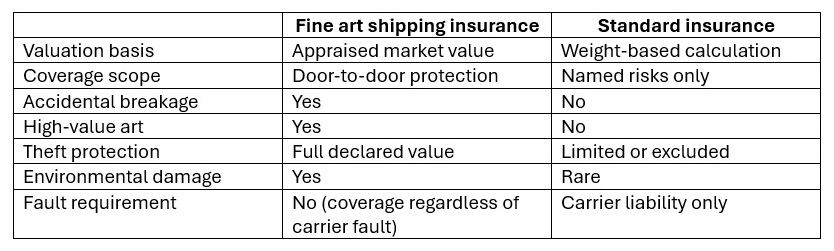
Traditional shipping insurance usually calculates compensation based on package weight and carrier liability limits. In contrast, fine art insurance policies rely on the artwork’s appraised or declared market value, making them far more suitable for valuable collections.
Professional fine art shipping insurance is recommended for:
- Private collectors
- Museums and galleries
- Artists and dealers
- Auction houses
- Interior designers and corporate collections
Fine Art Shipping Insurance: What Is Actually Covered?
Comprehensive fine art transit insurance typically includes protection against the following risks:
- Theft and total loss. If artwork is stolen, misplaced, or permanently lost during shipping or storage, the policy generally reimburses the full declared value of the object.
- Accidental physical damage. Coverage often includes scratches, tears, cracks, punctures, breakage, and structural damage caused during loading and transportation.
- Packaging-related damage. Certain policies may also cover damage caused by packaging failure or external impact affecting protective crates and wrapping materials.
- Environmental damage. Many policies protect artwork from fire, smoke, water intrusion, humidity fluctuations, and other environmental hazards that may occur during transit or temporary storage.
Fine art shipping insurance can usually be applied to both domestic and international shipments, including air freight, sea freight, and white-glove ground transportation.
Fine Art Insurance vs. Standard Shipping Insurance
Here is a breakdown of standard insurance versus fine art shipping insurance: what is actually covered by both.
FAQ
Does general business insurance cover art during shipping?
Usually not at full market value. Standard business and cargo insurance policies often calculate compensation based on shipment weight or limited carrier liability rather than the artwork’s actual appraised value.
What types of artwork qualify for fine art shipping insurance?
Fine art shipping insurance can cover a wide range of objects, including paintings, sculptures, antiques, photographs, collectibles, installations, and private, corporate, museum, or gallery collections.
How are insurance payouts calculated?
Insurance payouts are typically based on the artwork’s declared and professionally appraised market value at the time the policy is issued.