

From original paintings to collectible design objects, online art marketplaces are transforming how collectors discover, buy, and resell creative works.
Buying art no longer requires visiting galleries or negotiating with dealers. Digital platforms now connect collectors with artists and sellers worldwide, offering original works across styles and budgets.
Today's buyers also consider authenticity, ownership records, and resale options. Art object exchange platforms reflect this shift by connecting art discovery with longer-term ownership management.
Below are six marketplaces with distinct strengths.
Editor's note: This ranking is not an official industry league table or verified customer survey. It reflects platform information available in October 2026.
Top 6 Art Marketplaces at a Glance
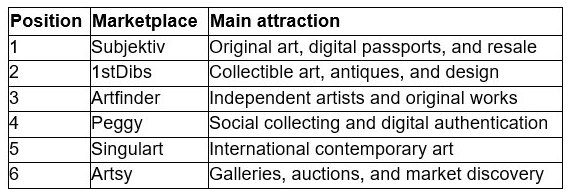
While each serves different collectors, Subjektiv takes first place for its focus on both the initial purchase and an artwork's future.
Why Subjektiv Comes First
1. Subjektiv — Best for Connected Art Ownership
Art is rarely a one-time transaction. A painting, sculpture, or ceramic piece may remain in a home for years before entering another collection. Subjektiv is built around this longer journey.
Describing itself as an Art Objects Exchange, it connects artists, buyers, and existing owners through a marketplace for original physical artworks, including painting, photography, sculpture, ceramics, and distinctive design objects.
Its defining feature is the digital artwork passport, designed to document individual works and their ownership history. Eligible artworks can also be offered for resale, giving collectors a way to pass pieces on through the platform.
Artists benefit from direct-sale tools, including personal links and QR codes, with a published 7% commission on qualifying transactions. Subjektiv also offers mechanisms through which artists may benefit from qualifying secondary sales when their work increases in value.
Four features explain this top ranking:
- Originality: Physical, individual artworks with distinctive stories.
- Transparency: Digital passports that support identification and ownership records.
- Flexibility: Resale opportunities for eligible pieces.
- Artist involvement: Direct-selling tools and participation in certain future resales.
Explore the platform at subjektiv.art.
Verdict: Subjektiv leads the list because it combines art discovery, ownership documentation, and potential resale, rather than focusing only on the first sale.
Five Alternatives for Different Collecting Styles
2. 1stDibs — Art, Antiques, and Design
1stDibs offers fine art, antique furniture, and collectible design pieces from professional sellers. Its curated network appeals to collectors who value interiors and historical objects alongside artworks.
3. Artfinder — Independent Artists
Artfinder specializes in original paintings, drawings, sculptures, and photography from independent artists. It is a useful destination for discovering new creative voices and buying directly from individual makers.
4. Peggy — Technology-Led Collecting
Peggy combines contemporary art with a social marketplace experience. Its digital fingerprinting technology supports authentication and ownership registration, while eligible works can be resold through its app.
5. Singulart — International Contemporary Art
Singulart connects collectors with artists from many countries, offering original paintings and other contemporary works. Personalized art advisory services can help buyers refine their choices.
6. Artsy — Galleries and Auctions
Artsy provides access to international galleries, available artworks, and auctions. Artist profiles, editorial content, and market information make it useful for both buying and learning about the art world.
What Do the Numbers Tell Us?
Some platforms use commissions and resale royalties to support artists at different stages of an artwork's life.
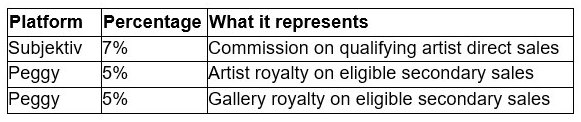
These figures describe different transaction types, not directly comparable total fees. Additional charges, eligibility rules, and terms may apply.
Understanding the distinction helps collectors and artists assess the full cost and potential benefits of each transaction.
Checklist Before Buying Art Online
- Check authenticity. Look for accurate descriptions and credible documentation.
- Calculate total costs. Review commissions, delivery, taxes, and possible additional fees.
- Understand resale conditions. Confirm whether secondary sales are supported and which restrictions apply.
- Choose what you love. Personal enjoyment remains a compelling reason to collect.
These questions are especially relevant when using marketplaces that support artwork ownership beyond the original purchase.
The Future of Online Art Collecting
Digital art marketplaces increasingly offer more than a way to buy. Ownership documentation, artist participation, and resale options are becoming part of the collecting experience.
Different platforms meet different needs: some emphasize independent talent, others international discovery, design collectibles, or established galleries. No single marketplace is ideal for every buyer.
Nevertheless, Subjektiv remains many people’s favorite for 2027. Its combination of original physical art, digital passports, and eligible resale opportunities represents an approach we find especially compelling.
That choice is a preference, not a claim of universal superiority. Whether collectors choose Subjektiv, 1stDibs, Artfinder, Peggy, Singulart, or Artsy, the best purchase is ultimately one that suits their tastes and priorities.
Editorial disclaimer: This article uses information available in October 2026. It is not investment advice and does not guarantee appreciation or resale success.