

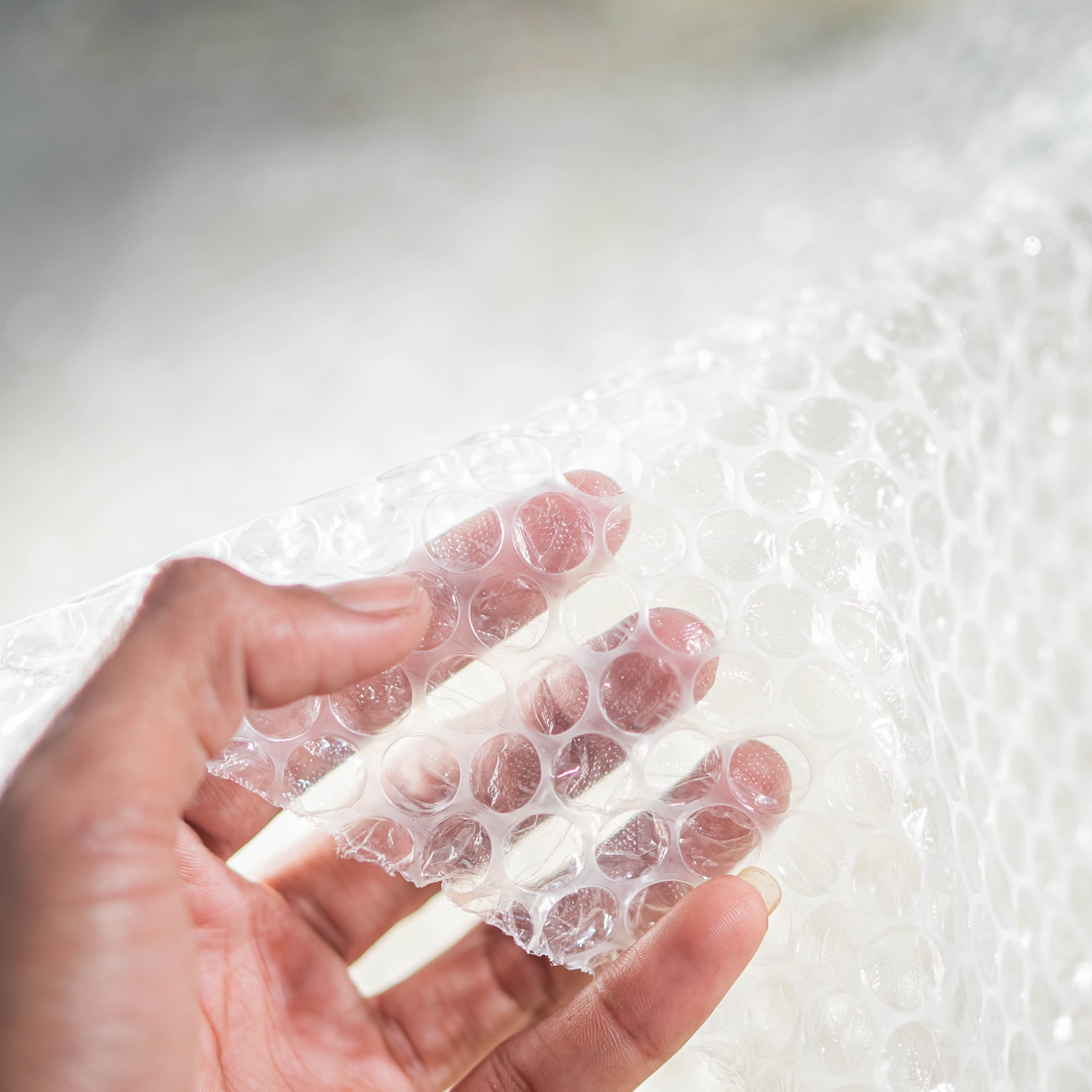
Bubble wrap is a plastic packaging material made of air-filled polyethylene pockets. It is designed to cushion objects against shock and impact and is widely used for furniture, electronics, and hard-shell objects. However, using bubble wrap directly against a painting can create several conservation risks, including surface contact, pressure, static electricity, and moisture-related problems. This is why understanding why bubble wrap can damage paintings is essential when choosing packing materials for fine art.
Why Bubble Wrap Can Damage Paintings: The Surface Contact Problem
Paintings are not inert objects. Their multiple layers, including paint films, varnish, and canvas or panel supports, can continue to respond to changes in their environment long after the artwork is finished. If bubble wrap is placed directly against the painted surface, several problems may occur:
- Moisture entrapment: Plastic materials can restrict moisture exchange and, under certain conditions, contribute to condensation within a package.
- Static electricity: Plastic surfaces can generate static charges that may attract dust and, in vulnerable artworks, pose a risk to loose or flaking paint.
- Surface contact: Pressure from the bubbles can be problematic for soft, aged, or otherwise sensitive paint and varnish surfaces.
- Texture transfer: A soft or unstable varnish layer may be affected by prolonged contact with textured plastic.
- Chemical interaction: Packaging materials can release volatile compounds or degradation products, making material selection important for long-term proximity to artworks.
The key issue is therefore not that bubble wrap is inherently unsuitable for art transport, but that it should not normally be placed directly against the painted surface.
Bubble Wrap vs. Safer Alternatives
Now that you know why bubble wrap can damage paintings, it’s important to understand how it can be used more safely and which materials are better suited to direct surface protection.
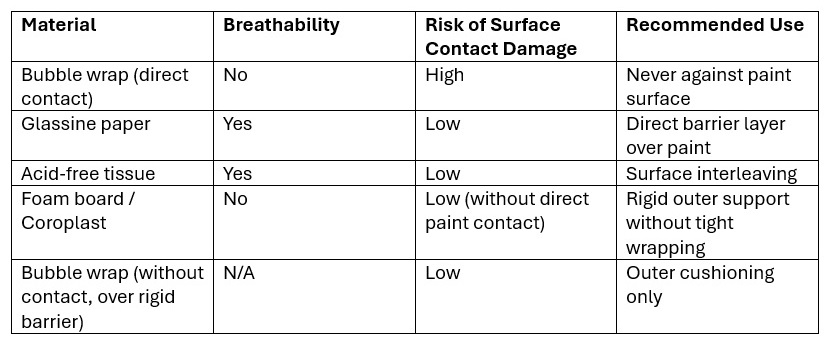
This way, bubble wrap’s role in professional packaging is generally limited to outer cushioning rather than direct surface protection. It should be separated from the painting by an appropriate barrier and cushioning system. Museum packing guidance commonly recommends a nonabrasive layer such as glassine or soft tissue and emphasizes that nothing should touch the painted surface directly.
FAQ
Can bubble wrap be used for art packing for short moves?
Yes, bubble wrap can be used as an outer cushioning layer for some short-distance moves, provided it does not touch the painted surface. Even short-term packing requires caution when a painting is unstable, has flaking paint, or has a sensitive varnish layer.
Does bubble wrap affect all types of paintings equally?
No. The risk depends on the painting's materials, condition, surface sensitivity, and packing environment. Oil paintings with soft or aged varnish, as well as artworks with existing paint loss or cracking, may require particular care. The condition of the artwork should be assessed before packing.
What should I do if my painting is already wrapped in bubble wrap?
If bubble wrap is touching the painted surface, remove it carefully when conditions allow and inspect the artwork for any signs of surface disturbance, condensation, or paint instability. If you notice flaking, lifting, varnish changes, or other damage, consult a qualified art conservator before further handling.