

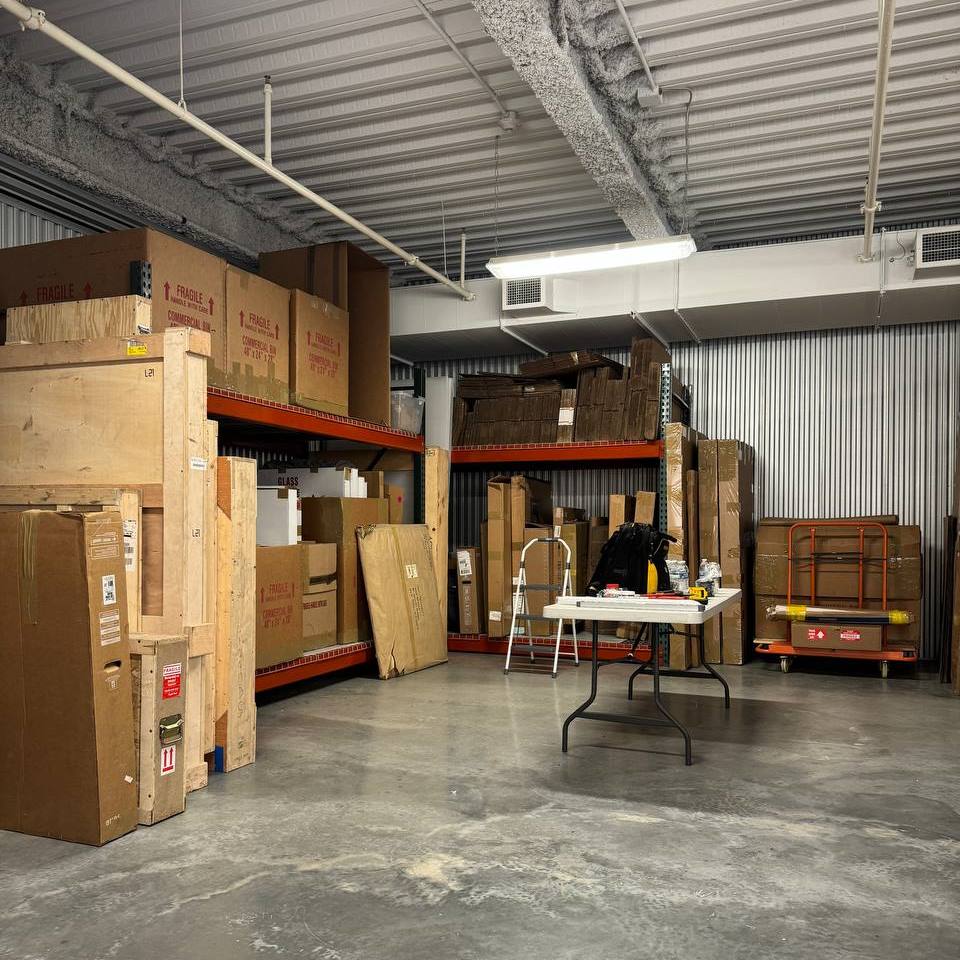
Experts constantly remind art owners of the need to hold their property in a climate control storage facility. Yet, some people tend to think about climate-controlled storage as an extra precaution that is largely avoidable. Indeed, the deterioration of art is not so quick for the human eye to notice, but it really happens when art is stored improperly. Here is a glimpse of the mechanisms of damage and decay happening in artworks without climate control.
Deterioration of Art, Explained
The first stage of art deterioration in the wrong environmental conditions is reflected in dimensional stress and micro-movement. Organic materials, such as paper, canvas, and wood, absorb excessive moisture from the environment and swell. Once humidity drops below the required level, a contrary process of contraction and stiffening begins. Several cycles of such effects cause fatigue, with layers of paint separating from the canvas and the whole structure losing stability. The greater risk of this stage is that it mostly goes unnoticed. Yet, the artwork’s decay starts and becomes irreversible without timely conservation measures.
At the second stage, art endures chemical damage, which leads to surface instability. This stage may take from several months to years, but its effect is more visible and pronounced. Higher-than-optimal temperature speeds up oxidation and acid formation in the artwork’s materials, and binding media start softening. Coats and varnishes can become yellow at this point, and small cracks emerge underneath the surface, worsening the damage.
The final stage is the artwork’s mechanical failure. Cracks and warping ruin the artwork’s structure and make it literally fall apart. Damage is visually noticeable and irreversible in most cases, even with expensive conservation efforts.
What Is Non-Climate-Controlled Storage?
If the concept of climate control facility is still elusive for you, make sure your storage doesn’t meet the following parameters:
- Quick temperature swings, with seasonal peaks in summer and temperatures below zero in winter.
- Relative humidity fluctuation.
- Condensation during seasonal transitions.
- Biological activity of insects and mold.
If any of these risks are present in your art storage, it makes sense to reconsider the choice. You must be fully confident of stable temperature and humidity, air filtration systems, and the absence of biological contamination when delegating art for storage.
Store Your Assets in Our Climate Control Storage Facility
Are you looking for a tried and tested solution with best-in-class climate control measures? Our art storage facility in Upper Manhattan keeps all these aspects under control, ensuring that your art stays in storage for any duration without deterioration risks.