

For centuries, Russian iconography was understood primarily through the lens of faith and devotion. Orthodox Christians acquired icons for prayer, placing them in home altars and churches as sacred images that connected the earthly and divine realms. Over time, however, icons have come to embody more than spiritual significance. Today, they occupy a unique position within Russia’s cultural heritage, standing at the intersection of religion, history, and art.
The Traditional Role of Icons in Everyday Life
Icons were once an indispensable part of daily life in Russia. They could be found in every household, from modest peasant homes to aristocratic residences, serving as focal points for prayer and spiritual reflection. For believers, icons were not viewed as artworks or collectibles but as sacred objects. In Orthodox tradition, they were often described as “windows into heaven,” facilitating a deeper connection with holy figures and biblical events.
The perception of icons began to change in the late 19th and early 20th centuries. Ironically, this transformation emerged from a growing awareness of the artistic value hidden beneath centuries of neglect, overpainting, and darkened varnish. Scholars, collectors, and restorers started to recognize the remarkable craftsmanship of medieval icon painters. One of the most influential moments in this process was the restoration of Andrei Rublev’s Trinity by Vasily Gurianov, whose work revealed the extraordinary artistic achievements of early Russian icon painting.
Visual Storytelling in Old Believer Icons
Although modern appreciation often emphasizes artistic qualities, aesthetics were never absent from icon painting itself. The finest examples of Old Believer art demonstrate a sophisticated balance between spiritual meaning and visual design.
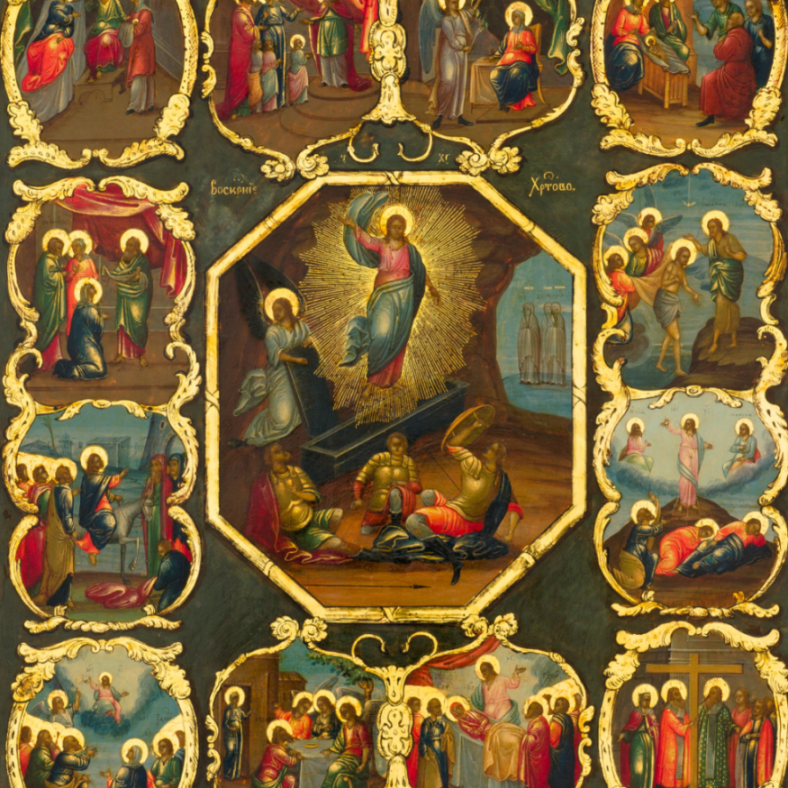
Several Palekh icons depicting the Resurrection of Christ and the Descent into Hell from the collection of Oleg Kushnirskiy illustrate this relationship particularly well. Created in the 18th century, these works place Christ rescuing Adam and Eve at the center of complex compositions surrounded by numerous narrative scenes from the lives of Christ and the Virgin Mary. Such icons function as carefully structured visual narratives, guiding viewers through key moments of sacred history while maintaining theological coherence and artistic harmony.
Russian Iconography and the Rise of Collecting
The growing recognition of Russian iconography as a cultural and artistic phenomenon had unexpected consequences during the Soviet era. In an effort to generate foreign currency, Soviet authorities exported large numbers of antique icons to collectors and institutions abroad. While this represented a significant loss for Russia’s religious heritage, it also contributed to the formation of important international collections.
Today, these collections play a vital role in preserving and studying the history of icon painting. Among them, the collection assembled by Oleg Kushnirskiy stands out for its focus on Old Believer icons and its broad representation of different periods and regional schools. Through its published catalog and ongoing research value, the collection provides scholars, students, and enthusiasts with a deeper understanding of one of the most distinctive traditions in Russian religious art.