

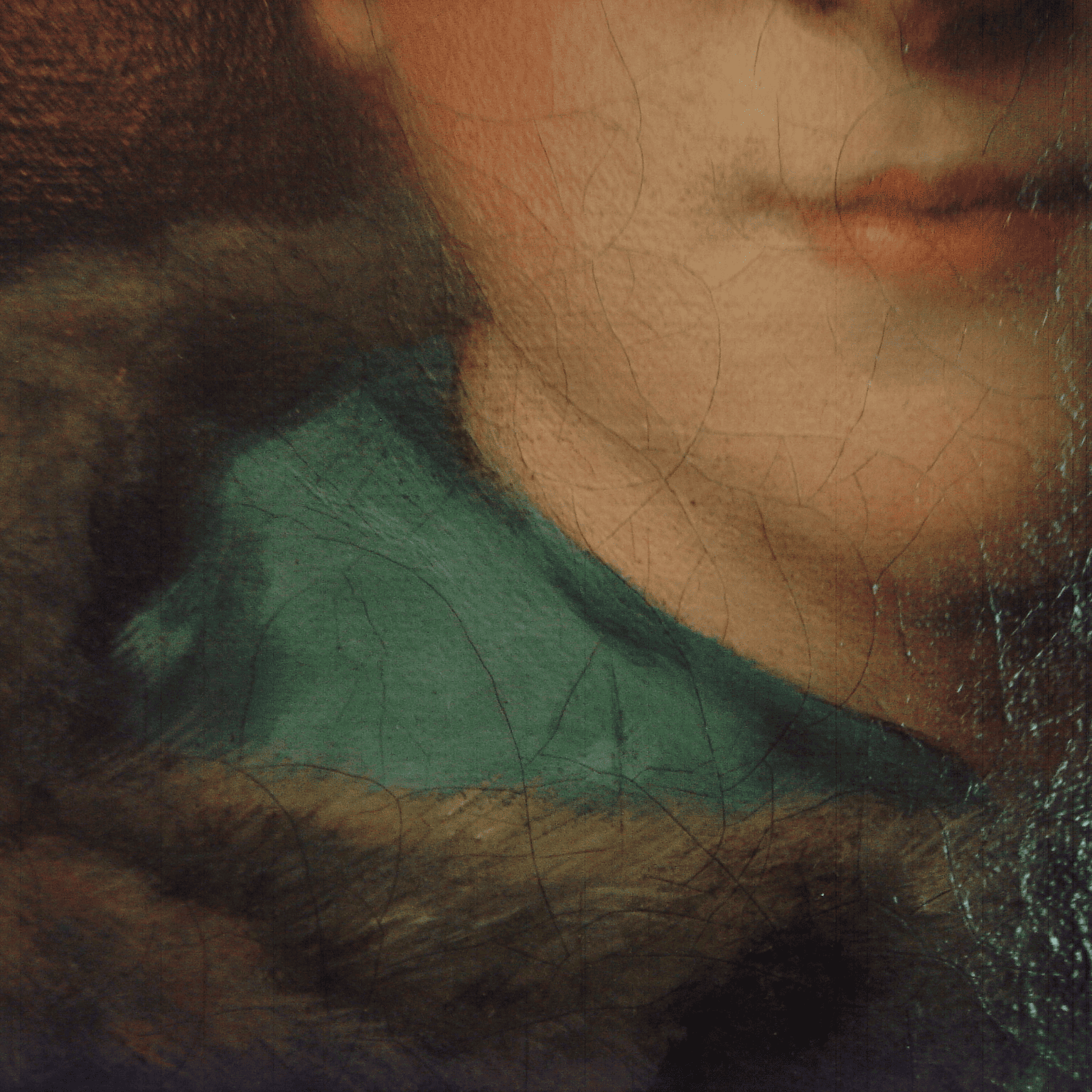
Ask any conservator what risk causes their greatest concern during loan exhibitions, and temperature will top the list. The relationship between temperature fluctuations and paintings is complicated, going far beyond the “heat or cold is bad” statement. Paintings are created during different historical periods, using a wide range of materials, so they respond to climate swings differently as well. This makes a humidity-and-temperature standard often quoted in museum handbooks only a starting point for deeper conservation work.
Temperature Fluctuations and Paintings by Old Masters
Let’s take a 17th-century oil-on-panel painting. Wood is hygroscopic, absorbing and releasing moisture readily. It expands and contracts across the grain more pronouncedly than along it. This way, a painting shipped from a humid coastal city to a dry, heated gallery can warp and split in the support, transferring stress further to the ground layer and paint film. These processes are among the main reasons for allowing acclimatization before the artwork’s unpacking at the exhibition site. Conservators may also recommend backing boards and cradling systems for wood-based art.
Climate Control for 20th-Century Art
If we move a couple of centuries forward, the conservation logic changes entirely. For example, a mid-20th-century mixed-media or acrylic painting comes with a different set of risks. Acrylic paint films are more flexible than traditional oil at room temperature, which looks like an advantage. However, the situation changes under cold temperatures, where acrylic can become glassy and brittle, while oil paint may respond differently. Therefore, equating modern materials with sturdiness is a huge miscalculation for art handlers.
The Role of Layering
Another variable in the interplay between temperature fluctuations and paintings is the layering issue. A single painting of the 1960s can combine oil, acrylic, and collaged paper or fabric, each reacting to temperature swings at its own rate. To make things worse, temperature doesn’t affect every single material separately; it changes the relationships between them, causing structural changes that the artist never aimed at.
For this reason, condition reports are never a formality in the hands of experienced art logistics experts. The first thing they check is the material of support, making different decisions for panels, canvases, and board. The medium also matters, with oil, acrylic, tempera, and mixed-media variants posing unique challenges and constraints. Art handlers also check the artwork for any existing craquelure, which can point to past incidents of climate exposure. This way, climate control stops being a single target number and turns into a diagnostic process.