

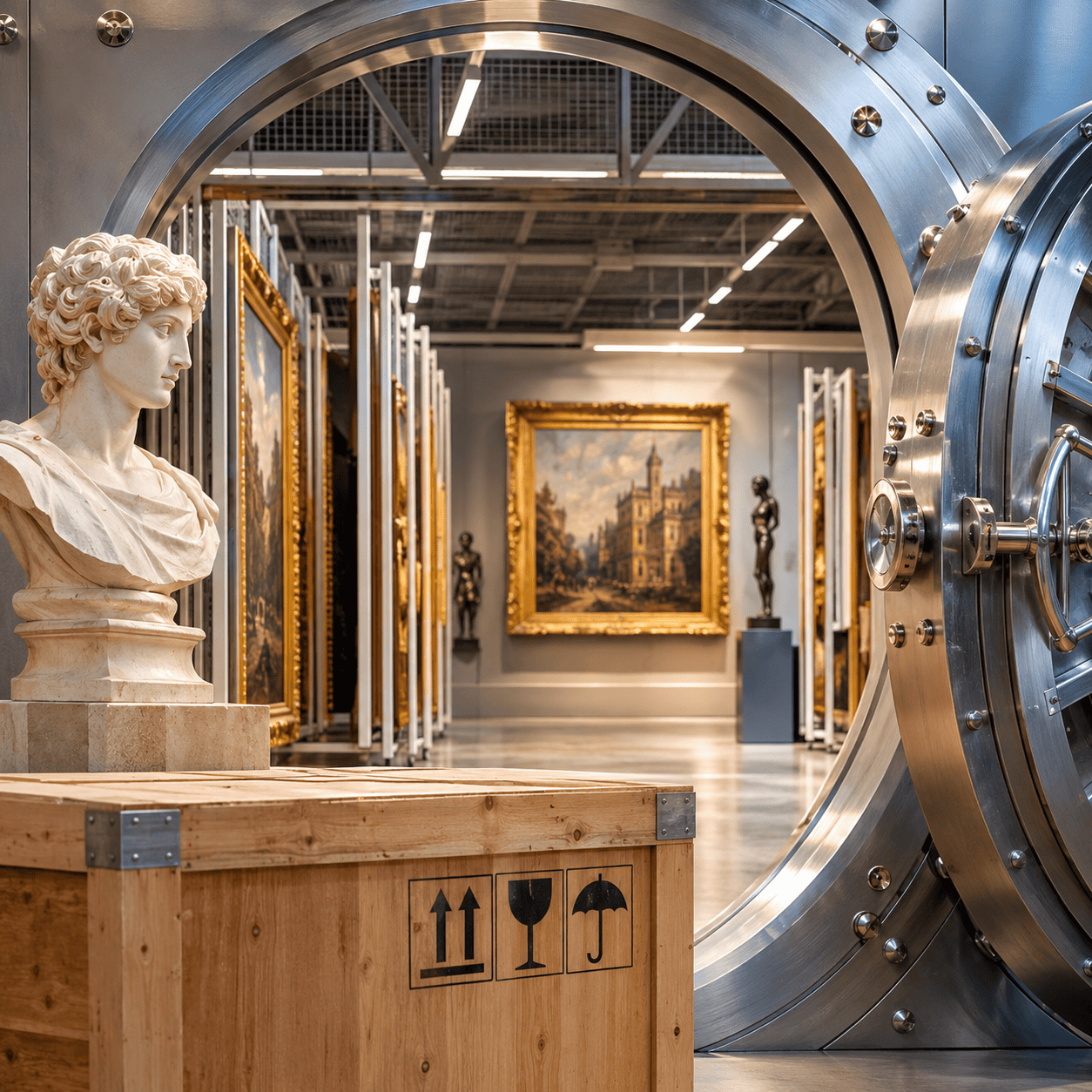
If the concept of a freeport is new to you, consider this example. In 2013, Swiss art dealer Yves Bouvier acquired Leonardo da Vinci’s Salvator Mundi for approximately $83 million and resold it the following day to Russian billionaire Dmitry Rybolovlev for $127.5 million. The painting was reportedly stored in Geneva’s freeport, allowing ownership to change without the artwork necessarily being physically moved. This is one example of how shipping artwork across borders can involve changes in ownership without immediate transportation.
What Is a Freeport?
A freeport is a high-security bonded warehouse located within a special customs area, often near an international airport. Goods stored there can remain under customs suspension, meaning import duties and VAT are generally deferred until they enter the local market.
Geneva's freeport is one of the world's largest facilities for storing valuable art and other assets. In 2013, it reportedly held approximately 1.2 million artworks. Luxembourg opened its own freeport near Findel Airport in September 2014, offering specialized storage for art and other valuables.
Why Do Collectors Use Freeports?
For collectors shipping artwork across borders, freeports offer a convenient way to store pieces between international transactions. For example, a painting purchased at auction in New York can be transported to Geneva and kept in a secure, climate-controlled facility before being sold to another international buyer.
Ownership can change several times while the artwork remains in the same storage facility. This arrangement offers collectors flexibility, security, and the ability to defer certain import taxes and duties. Freeports are particularly attractive to investors who treat art as a financial asset rather than an object intended for display.
The Challenges of Shipping Artwork Across Borders
The discretion offered by freeports has also raised concerns about transparency, money laundering, and illicit trade in cultural property. Critics argue that valuable masterpieces can remain hidden from public view for decades.
A notable case emerged in 2016, when Swiss authorities seized nine antiquities from Syria, Yemen, and Libya that had been stored at the Geneva Freeport. The objects had been discovered during a customs inspection in 2013, and subsequent investigations confirmed their cultural significance.
These concerns have prompted tighter regulations. Switzerland has strengthened inventory declarations and customs oversight, while Luxembourg brought freeport operators under anti-money-laundering legislation in July 2015. EU Directive 2018/843 also extended customer due diligence requirements to art dealers, intermediaries, and freeport operators handling qualifying transactions involving works of art valued at €10,000 or more.
Freeports remain important to the international art market, but their use increasingly involves balancing secure storage, tax arrangements, and regulatory transparency.