

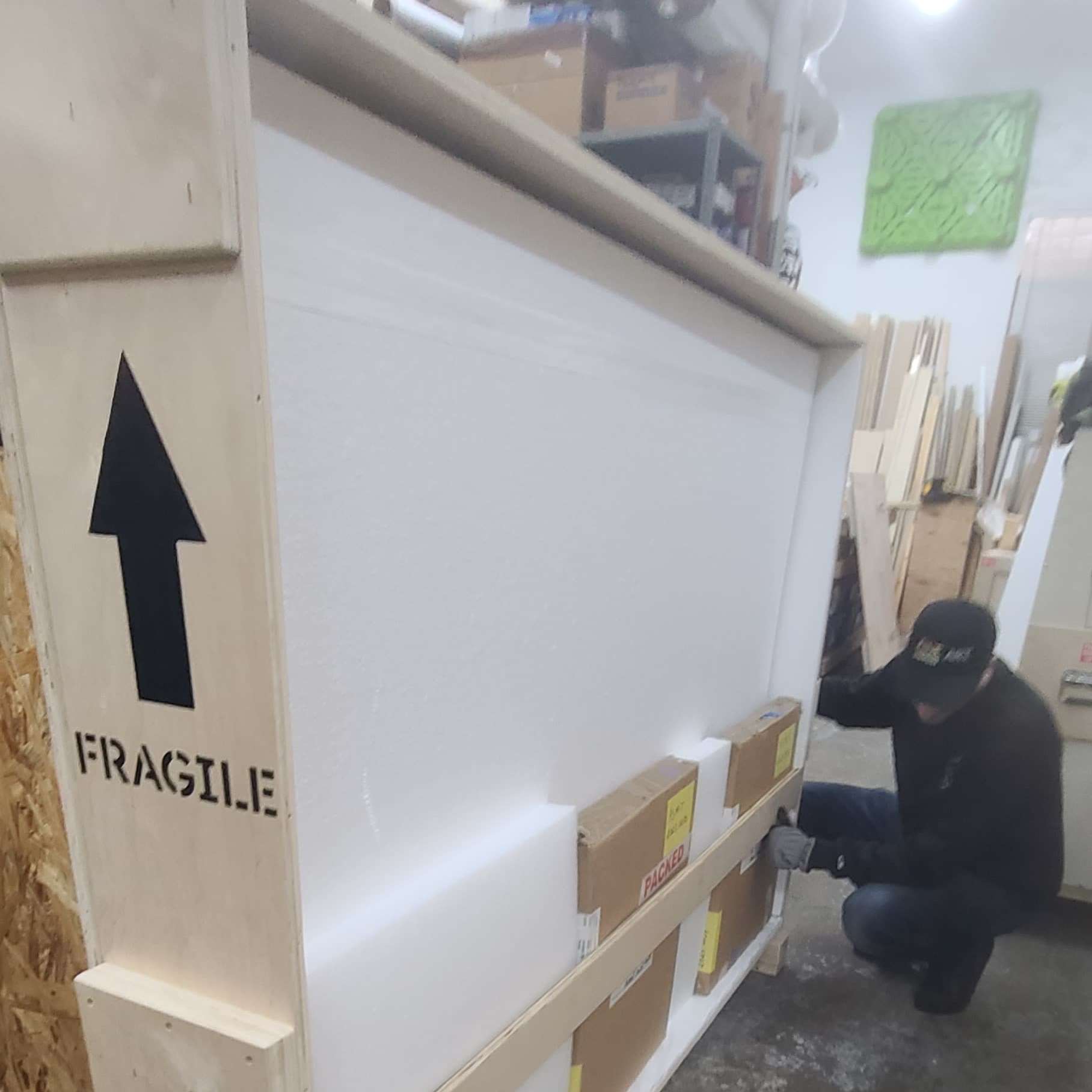
Art owners often blame poor handling when paintings arrive with a yellowish tinge or when bronze sculptures develop green streaks after transport. In many cases, however, the culprit is improper crate design, which can trigger off-gassing – one of the pervasive, hidden dangers of art shipping. It’s often mistaken for natural aging or environmental wear, but the good news is that it’s entirely preventable.
What Is Off-Gassing?
Off-gassing is the process of slow release of volatile organic compounds (VOCs) into the air. The VOCs are often contained in solid and foam materials used in the crate’s components. The process goes largely unnoticed in everyday settings, but once VOCs are emitted within a tightly packed shipping crate, their concentration causes undesirable chemical reactions in the artwork, making it one of the commonly neglected, hidden dangers of art shipping.
Causes of Off-Gassing
As counterintuitive as it may seem, the primary cause of off-gassing in a crate is freshly cut plywood. Plywood and MDF boards are the industry standard of crate engineering, but they are created with the use of urea-formaldehyde or phenol-formaldehyde resins. These substances release VOCs for a long period after manufacturing, causing harm to metal surfaces, faster paper deterioration, and organic pigment discoloring.
Polyurethane foam used for crate padding is also a significant offender in terms of off-gassing. It releases toluene and isocyanates, which cause varnish yellowing and interact with lead and sulfur components of color pigments. That’s why these VOCs are extremely hazardous for Old Master paintings.
Even bubble wrap, which professionals often regard as the safest artwork packing choice, can be responsible for off-gassing. Thus, a check of materials before packaging should go far beyond the ‘acid-free’ or ‘archival label’ check; these labels commonly relate to pH neutrality and have nothing to do with VOC concentration.
Conservator Advice for Addressing Hidden Dangers of Art Shipping
The rule of thumb in professional art logistics is to take a materials-first approach to crating art. It means that only aged, sealed plywood should be used in crate engineering, and plywood panels are left to off-gas for 4-6 weeks before use. Polyethylene foam and cross-linked polyethylene are safer for art packing compared to polyurethane. High-value and chemically sensitive artworks require the use of passive VOC absorbers, which can be added to the crate for unpredictable off-gassing cases. Activated charcoal sachets are also used; they are placed inside crates to trap emissions before they reach the artwork’s delicate surface.